



















On heavy-duty dozing sites, the biggest concern is not pushing less per pass, but being forced to stop mid-task. In tasks such as mine stripping, large-scale earthmoving and mountain grading, shifts are long, material impact is severe, and slopes and gravel roads repeatedly act on the running gear. Once a machine stops during a shift, the downstream loading and hauling links queue up. So when judging whether a large bulldozer can handle continuous dozing, horsepower is only the starting point; more important are how the power and drivetrain absorb impact, the cushioning structure of the undercarriage, the passage design of hydraulic components, and whether routine maintenance can be easily completed between shifts.
Taking the SD46-6 from this site's materials as an example, the following breaks the goal of "continuity" into several verifiable whole-machine conditions, explains which configurations correspond to which needs, and notes the parts not covered by the materials that must be confirmed before purchase.
Where the Difficulties of Continuous Dozing Lie
Under heavy-load conditions, the machine bears loads from three directions: instantaneous impact during material cutting, vibration and impact between the tracks and the ground during travel, and alternating stress on the power transmission chain under load fluctuations. Continuous operation means these loads are not occasional but repeated over the long term. The materials show that this model targets heavy-duty tasks such as heavy earthmoving, rock stripping and mountain grading in large mining and major infrastructure projects, and the common feature of such tasks is precisely long duration, high intensity and complex material conditions.
The order of concerns during selection can therefore be listed as follows:
- Whether power output is sufficient to maintain traction without excessive consumption when loads change;
- Whether the transmission chain can absorb the impact of load fluctuations and avoid stress concentration;
- Whether the undercarriage has cushioning structures to reduce cumulative damage to core components from travel and working impacts;
- Whether hydraulic and electrical monitoring allow the operator to see abnormalities in time;
- Whether maintenance access is smooth and between-shift inspections can be completed quickly.
Power and Transmission Chain: First Look at Structures That Withstand Fluctuations
This model is equipped with a Cummins KTA19-C525 turbocharged and intercooled diesel engine, rated at 340 kW (600 hp), with a rated speed of 2000 rpm and a displacement of 18.9 L. The materials state that the cylinder block and cylinder head use an integrated design to reduce common faults such as water seepage and oil leakage; they also mention that compared with large-horsepower bulldozers of the same class, core supporting parts are reduced by more than 25%. These statements point to reducing sources of failure rather than simply increasing output, which is closer to actual needs for continuous dozing.
For the drivetrain, the materials specify a hydraulic power-shift transmission combined with a planetary final drive structure, and the system can adjust power output according to changes in external load; the transmission has a built-in hydraulic cushioning structure to absorb impact loads during power transmission; the transmission assembly is equipped with multi-plate hydraulic clutches and forced circulation lubrication, and the final drive uses high-precision spiral bevel gears with splash lubrication. For heavy-duty dozing, load fluctuations are normal, and cushioning and forced lubrication correspond to the durability conditions of transmission parts under repeated impact, not merely whether shifting is smooth.
It should be noted that the materials do not provide data on shift output, measured fuel consumption or transmission part life for this model at specific mine sites. Production capacity or operating costs therefore cannot be inferred from them, and separate verification should be made based on the material conditions declared by the user.
Undercarriage and Travel: Cushioning Structures for Long-Term Impact
This model adopts a K-type suspension floating drive structure plus an integral articulated undercarriage. The materials state that it can cushion impact loads during travel and operation, and it is equipped with a multi-stage damping assembly to offset vibration on complex roads; the track chain is fully sealed and lubricated, with an integrated master link design. Operating weight is 54,000 kg, ground pressure is 0.123 MPa, gradeability is 30°, minimum ground clearance is 525 mm, and track gauge is 2,260 mm.
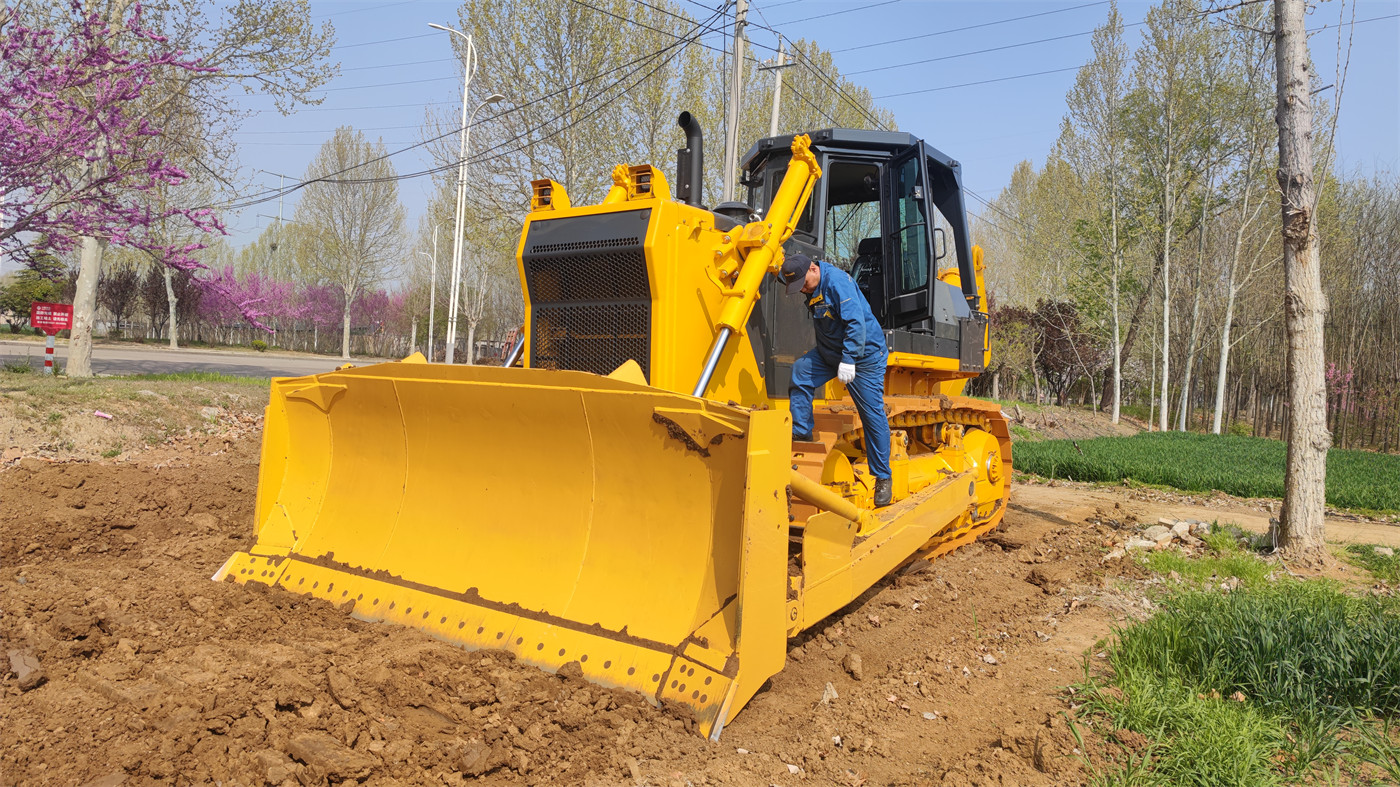
Putting these data back into heavy-duty dozing scenarios: vibration on mine and rocky roads is a continuous input, and undercarriage cushioning and multi-stage damping directly affect driver comfort and fatigue of structural parts; ground pressure and gradeability determine its passage conditions on slopes and soft material piles. A boundary must be noted here—0.123 MPa is the ground pressure value given in the materials, and whether it suits a particular soft foundation or collapsible site still needs to be calculated according to on-site bearing capacity and cannot be applied directly.
Hydraulics and Monitoring: Letting Abnormalities Be Seen Earlier
The materials state that the working hydraulic cylinders have been optimized, core seals and high-pressure hydraulic hoses use imported high-standard parts, and the externally mounted distribution working valve group facilitates inspection, disassembly and maintenance; electrically, an imported high-precision combination instrument panel provides electronic monitoring of key data such as hydraulic oil temperature, oil level and coolant temperature, with automatic alarms when limits are exceeded. In continuous dozing, abnormal oil temperature and level are often the early signals of downtime, and being able to read them on the instrument panel is more valuable than troubleshooting afterward. This part is a configuration description; specific alarm thresholds and handling procedures should be based on the onboard manual.
Matching Relationship Between Work Equipment and Whole-Machine Structure
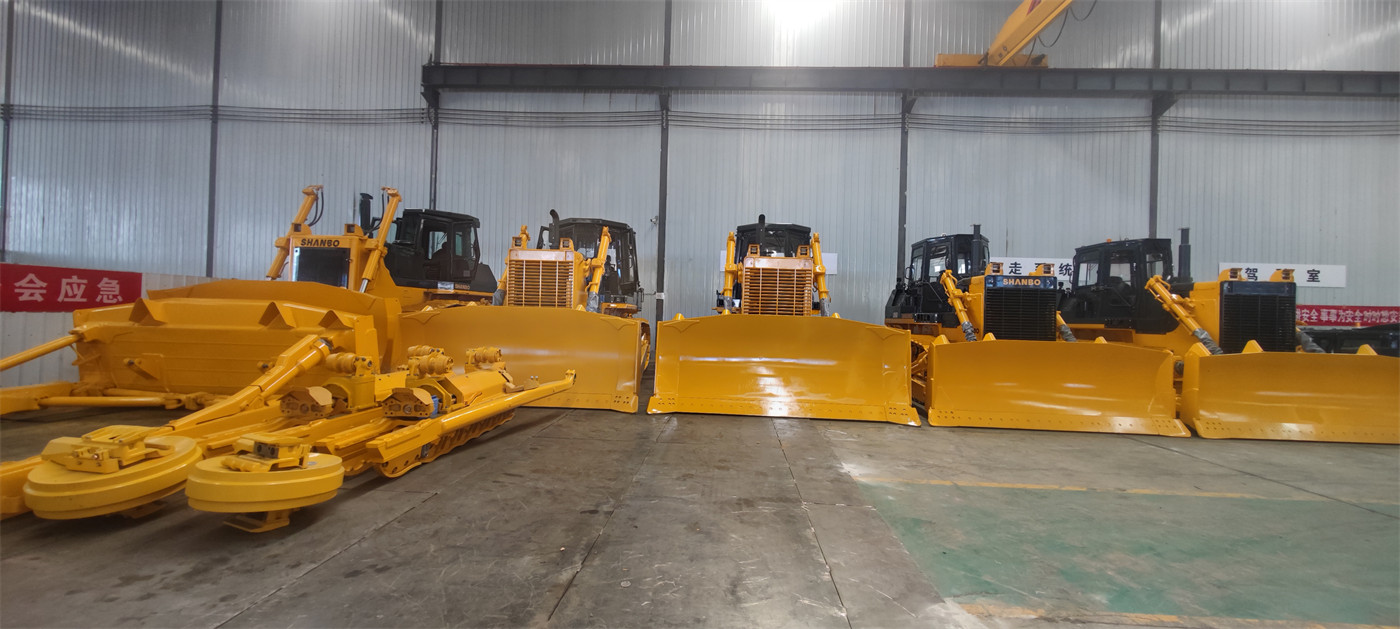
This model is standard-equipped with a large-capacity semi-U blade. The materials give a blade capacity of 16 m³, width of 4,314 mm, height of 1,841 mm, maximum cutting depth of 700 mm, and maximum blade tilt of 1,000 mm; the rear attachment is an adjustable-angle single-shank heavy-duty ripper. The main frame is a fully enclosed box structure made of high-strength wear-resistant steel and heavy cast steel parts.
For heavy-duty dozing, blade capacity and cutting depth affect the volume pushed per pass and the cutting approach, while the ripper relates to pre-treatment arrangements for hard ground and before rock breaking. At purchase, it is necessary to distinguish which items are standard and which are optional: in the materials, the semi-U blade and single-shank ripper are described as standard configuration and rear attachment configuration, while the upgraded integrated ROPS&FOPS protective frame is explicitly written as "can be optionally installed," making it an optional item that cannot be counted as standard in comparisons. The undercarriage, blade and ripper are part of the whole-machine matching, and work equipment configuration directly affects the dozing method, but the materials do not explain the performance of each configuration combination in specific strata, so this must be confirmed item by item with the manufacturer.
| Data Item | Value or Description | Significance for Continuous Dozing |
|---|---|---|
| Engine | KTA19-C525, 340 kW/600 hp, 2000 rpm | Source of traction power; integrated cylinder block and head |
| Transmission | Hydraulic power-shift transmission + planetary final drive | Built-in hydraulic cushioning absorbs impact loads |
| Undercarriage | K-type suspension floating drive, integral articulated | Cushions travel and working impacts |
| Operating weight | 54,000 kg | Whole-machine basis for heavy-load conditions |
| Blade capacity | 16 m³ | Configuration basis for volume pushed per pass |
Between-Shift Maintenance Access and Conditions Still to Be Confirmed
The materials mention that maintenance reminder stickers are placed in prominent positions on the machine, a maintenance-free battery is standard, a wide-opening engine hood facilitates daily inspection and parts replacement, and side protective baffles isolate the engine from the radiator and prevent debris blockage. These are conveniences for daily inspection and cleaning; specific inspection items, intervals and torque values should be based on the manual, and this article does not provide repair procedures.
Before purchase, it is recommended to confirm the following items one by one rather than looking only at the whole-machine materials:
- On-site material type, density and moisture content, and whether a ripper is needed to break rock first;
- Working face slope, road conditions and turning radius, and whether they fall within the arrangeable range of the 30° gradeability and whole-machine dimensions;
- Foundation bearing capacity in soft or wet areas, and whether ground pressure meets on-site conditions;
- Whether the protective configuration requires the upgraded integrated ROPS&FOPS protective frame, which is optional;
- Spare parts supply and technical support response methods; the materials mention a service network, but actual coverage must be confirmed according to the project location;
- Equipment transport and site access routes; the materials do not cover transport dimensions and weight distribution, which must be calculated separately.
Overall, the whole-machine conditions for continuous heavy-duty dozing can be summarized in several lines: power, transmission cushioning, undercarriage damping, status monitoring and maintenance access. The verified materials for the SD46-6 have corresponding configurations on these lines and can be used to evaluate it as a candidate machine for heavy-load conditions; however, capacity, fuel consumption, service life and applicability still need further verification in combination with specific working conditions and the manufacturer, and the materials are insufficient to reach a definitive conclusion.