












Equating hydrostatic drive with "light load" is a common preconception in dozer selection. Those who hold this view usually worry about two things: whether the hydrostatic system can output stably during continuous heavy-load dozing, and whether stepless speed regulation "lacks power" when the blade penetrates deeply into the soil. These two points need to be considered separately: the former depends on the matching of power and hydraulic system, while the latter depends on the combination of transmission form with undercarriage and blade configuration, rather than being determined solely by the word "hydrostatic."
Below, using the public information of a 178HP hydrostatic dozer as a clue, this explains the applicable conditions of this type of transmission in heavy-load dozing, narrow sites and soft-ground operations, as well as the items that should be confirmed one by one before purchase. The conclusions in this article apply only to the configurations listed for this model and are not extended to other tonnages or models.
First Clarify: What Problem Does Hydrostatic Drive Solve?
The core feature of hydrostatic drive is continuously adjustable transmission ratio. Power is transmitted between the engine and the travel system through a hydraulic circuit rather than fixed-gear mechanical shifting. This brings three direct changes: travel speed can be adjusted steplessly; steering and speed control can be finer; and the hydraulic system can respond when load changes.
Mapped to the construction site, these three points mainly affect two types of work: first, speed control when the blade cuts in, soil accumulates, and dozing resistance changes continuously; second, working conditions where the site is restricted and frequent direction correction or small-radius turning is required. In other words, hydrostatic drive first improves "control precision" and "load adaptation." Whether it is suitable for heavy loads still depends on power reserve, hydraulic system design and undercarriage load-bearing capacity.
What Conditions Matter for Heavy-Load Dozing Beyond Transmission Form
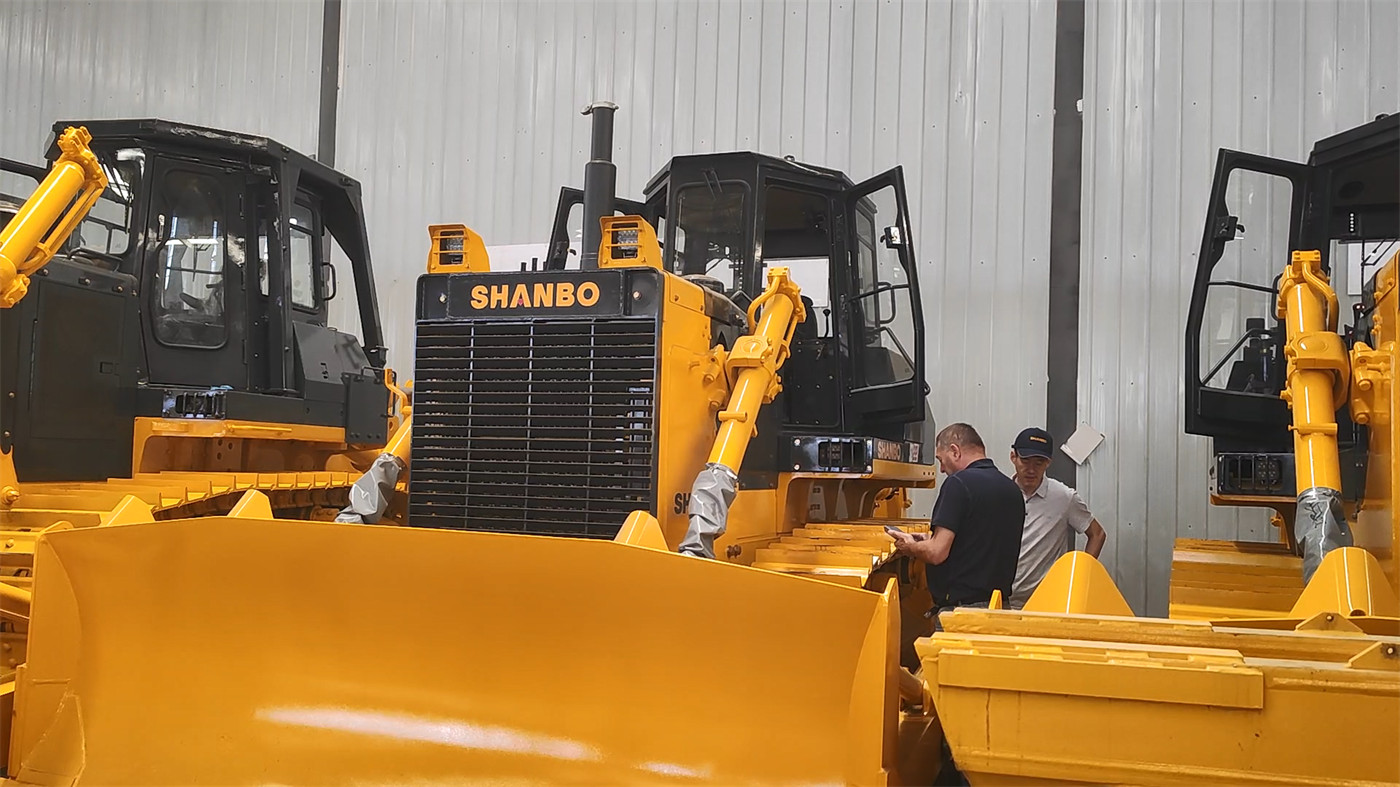
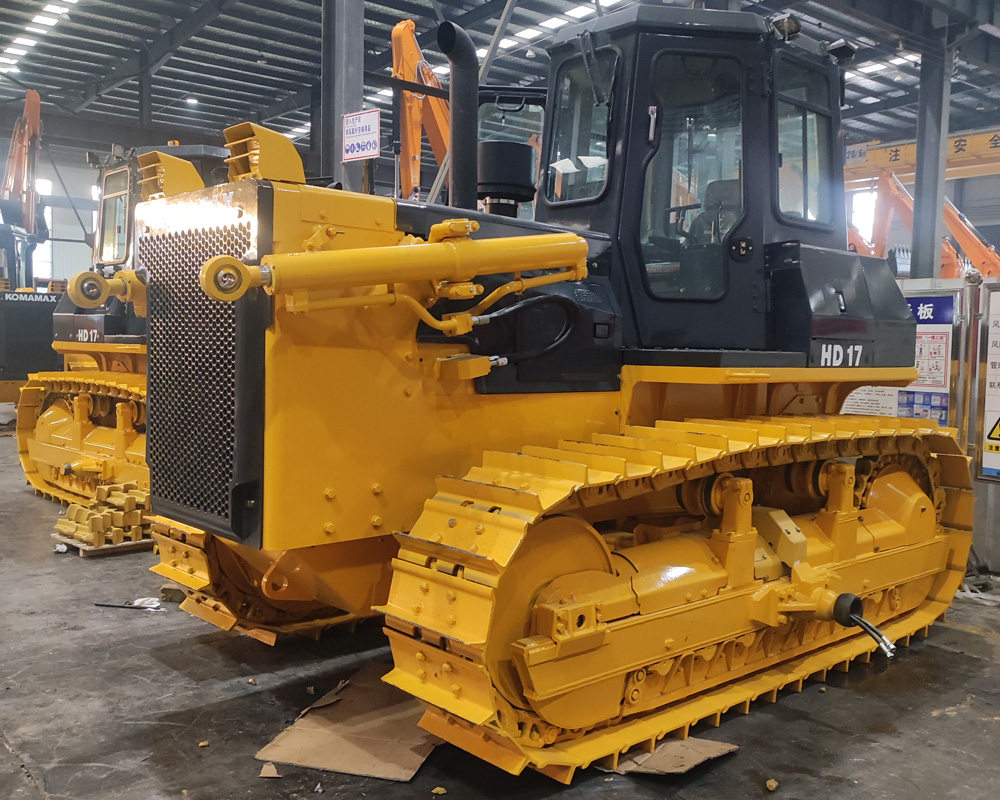
Taking the DH17-G as an example, the information gives a power configuration of Weichai WP7 China IV electronically controlled engine, rated power 152kW/1800rpm (178HP), with three power modes that can be selected according to actual load. The whole machine adopts a dual-circuit electric hydrostatic drive system with load-adaptive function, supporting load steering with stepless speed regulation and fixed steering. Taken together, these three pieces of information are the starting point for judging its performance in heavy-load dozing: whether there is power reserve, whether the hydraulic system adjusts with load, and whether steering remains controllable when resistance changes.
However, it should be clear that the information does not provide productivity data for this model under different soil types, haul distances and slopes, nor does it provide a traction force curve. Therefore, it cannot be inferred from this that it is necessarily superior to mechanical transmission models under a certain type of heavy-load condition; it can only be said that its transmission and control configuration provides adjustment means for operation under continuous load changes. Whether it can actually handle the job still needs to be combined with earthwork type, one-way dozing distance and shift organization, and targeted operation matching explanations should be requested from the supplier.
The Difference Between Standard and Super-Wetland Versions Lies in Ground Conditions
The same model is offered in multiple versions, among which the difference between the standard version and the super-wetland version best illustrates that "hydrostatic does not equal light load, nor does it equal universal." The key data listed in the information are as follows:
| Item | Standard version (XL) | Super-wetland version (LGP) |
|---|---|---|
| Operating weight | 17730kg (with ripper)/19290kg (with drawbar) | 19690kg |
| Ground pressure | 65kPa (with ripper)/77kPa (with drawbar) | 30.5kPa |
| Track shoe width | 510mm (standard)/560/610 | 1100mm (standard)/950 |
| Ground contact length | 2675mm | 2935mm |
| Blade type | Straight tilt blade/semi-U blade | Straight tilt blade |
This set of data shows that on the same power platform, the standard version has significantly higher ground pressure than the super-wetland version and is suitable for general earthwork, construction sites, road building and short-distance material transport; the super-wetland version reduces ground pressure to 30.5kPa by widening the tracks and is intended for swamps, wetlands, riverbanks and soft soil foundations. When selecting a model, if the site has poor bearing capacity, priority should be given to ground pressure and track width rather than first discussing transmission form. Conversely, if the work is mainly dozing hard soil, the wide tracks and lower ground pressure of the super-wetland version may not be an advantage, and its traction and blade matching need to be verified separately.
Control Value in Narrow Sites and Frequent Steering
The information gives a minimum turning radius of 3745mm for the standard version and 3895mm for the super-wetland version, and states that the whole machine supports load steering with stepless speed regulation and fixed steering. For operations such as material yard transfer and site leveling that require repeated edge work and slope trimming, this continuous adjustment of steering and speed can reduce operational jerkiness and allow the blade to maintain cutting depth more smoothly.
However, note that turning radius is a structural parameter and does not equal the operable space in actual work. Before the equipment enters the site, the width of site passages, obstacles in the turning area, locations of slopes and side ditches, and whether a ripper or winch is needed to change the overall length and center of gravity distribution should also be confirmed. In the information, the operating weight of the standard version differs between the version with ripper and the version with drawbar (17730kg and 19290kg), indicating that attachment configuration changes the state of the whole machine. During procurement, the attachment list and whole-machine configuration should be confirmed together, and the data of one configuration should not be used to summarize the entire series.
Items Recommended to Confirm One by One Before Purchase
- Working soil type and one-way dozing distance, including whether there are continuous heavy-load dozing sections;
- Site bearing conditions, on which basis to decide whether to choose the standard version or the super-wetland version;
- Blade form: straight tilt blade, semi-U blade, or special blades for coal and sanitation applications, confirmed according to material type;
- Whether rippers, winches and other working devices are needed, and their impact on operating weight and ground pressure;
- Whether the engine emission stage matches local fuel supply and after-treatment maintenance conditions;
- Maintenance requirements for key components such as the hydraulic system and final drive, subject to the accompanying manual;
- Whether the supplier can provide configuration explanations for the working conditions of this project, rather than only a general parameter table.
Boundary Reminders in Daily Use
The information mentions that this model has designs such as fault self-diagnosis, rear-view camera, external working valve and easy maintenance of track rollers, but these are convenience configurations and cannot replace daily inspection. The hydrostatic system is relatively sensitive to hydraulic oil cleanliness, oil level and pipeline sealing status. Oil, filters and leakage should be checked daily as required; for specific items and intervals, refer to the accompanying manual and do not set maintenance values on your own.
In addition, the low-speed control capability of hydrostatic transmission does not mean that it can operate for long periods under overload or over-slope conditions. During heavy-load dozing, gear selection, power mode switching and blade cutting depth should all be adjusted according to on-site soil conditions and equipment load feedback, avoiding interpreting "stepless speed regulation" as permission to arbitrarily increase dozing volume.
Concluding Judgment
Whether a hydrostatic drive dozer is suitable for a given project depends on the combination of power reserve, hydraulic system load-adaptive capability, undercarriage ground conditions and blade configuration, rather than being determined solely by transmission form. For the DH17-G, the 178HP power, dual-circuit hydrostatic drive and multi-version undercarriage configurations provide options for different working conditions such as general earthwork, soft foundations and coal transfer; however, regarding whether heavy-load dozing can meet output and continuity requirements, the information does not provide measured data. Before purchase, this should be confirmed with the supplier in light of soil type, haul distance and shift arrangements, and targeted configuration recommendations should be requested when necessary. Simply classifying hydrostatic as "dedicated to light loads," or conversely believing that it is suitable for all heavy-load scenarios, lacks a basis.