

















Grading work on narrow sites is often understood as "small machines for small jobs," but what truly challenges contractors is often not the earthwork volume, but whether the equipment can get in, turn around inside, and stand firm. Municipal sites within fencing, factory corners, and plot consolidation in farmland improvement all involve fragmented work areas and limited access. Choosing a compact crawler dozer is a common approach, but "compact" itself has boundaries, requiring a combined look at dimensions, ground pressure, blade capability, and transmission type.
First, clarify the three constraints of narrow-site grading
Before discussing equipment capability, the site constraints must be clarified. The following three are the most common criteria for such work:
- Access passage width: Whether the overall width of the machine including the blade can pass through the clear width limits of fence gates, temporary access roads, or existing roads determines whether it can be transported to the site normally.
- Work area accommodation capacity: Whether there is space within the work area for the machine to turn, reverse, and raise/lower the blade determines whether it can work continuously rather than repeatedly reversing to find an angle.
- Ground bearing conditions: The bearing capacity of undisturbed soil, backfill, or temporary roads varies, determining whether track ground pressure needs to be included in comparisons and whether site treatment is required beforehand.
If these three constraints are not addressed, looking only at engine power or blade capacity can easily lead to wrong conclusions. The value of small machines lies first in "getting in and standing firm"; pushing capability is secondary.
What needs do compact dimensions correspond to
Taking the information on the SD10 small bulldozer from this site as an example, the overall dimensions are 4400×2960×3030mm, with a blade width of 2960mm, consistent with the overall width. This width determines the lower limit of road clear width it can pass through, and also determines the lateral space it occupies during each movement within fencing.
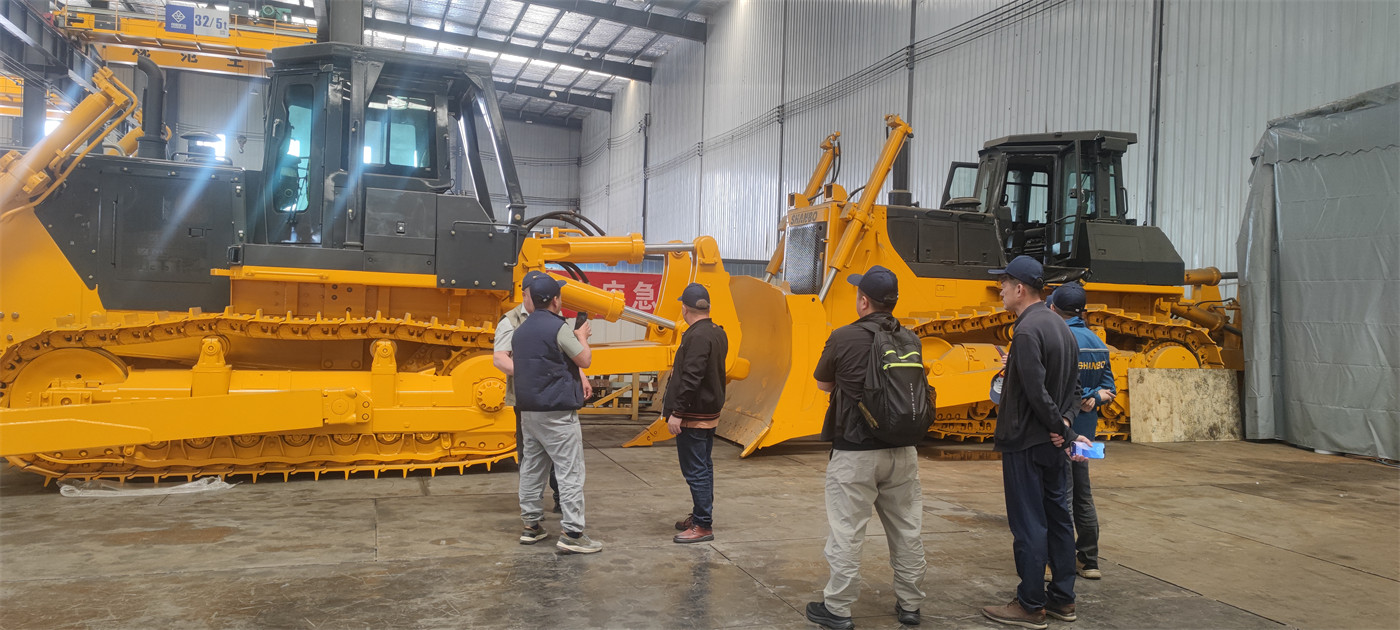
This size suits scenarios where the work area width is limited but there are still continuous grading sections, such as internal road repairs in factories, floor leveling inside fencing, and connection section improvement between farmland plots. Its shortcoming is that when the work area width is only a few meters and frequent edge-turning is required, the turning radius of a crawler dozer and the lateral occupancy of the blade still pose limitations; a more flexible skid-steer loader or mini excavator may be more handy. This is a boundary of the equipment category itself, not a problem of any particular machine.
The relationship between ground pressure and ground conditions
When a crawler dozer works on soft soil or newly backfilled sites, ground pressure directly determines whether it will sink. The SD10 information gives a ground pressure of 54.4kPa, track shoe width of 450mm, and total weight of 10000kg. These data indicate it is a small machine with a conventional crawler chassis, with ground pressure at a medium level, suitable for site leveling after simple treatment, farmland improvement, and similar scenarios.
It should be noted that the information does not list a wetland configuration for this model, nor does it provide optional information for pontoon tracks or widened track shoes. Therefore, if the site is soft ground with long-term standing water, thick silt layers, or very low bearing capacity, one cannot directly judge "usable" based on 54.4kPa; instead, first confirm whether a corresponding wetland chassis configuration exists, or perform site drainage and cushion treatment first. This is content that must be verified with the supplier before purchase and should not be inferred from parameter tables.
Matching blade size with grading work
The SD10 blade width×height is 2960×960mm, maximum lift height 830mm, and maximum digging depth 350mm. The information shows optional straight, curved, and coal blades, and the rear can be equipped with fixed towing equipment or a three-shank ripper.
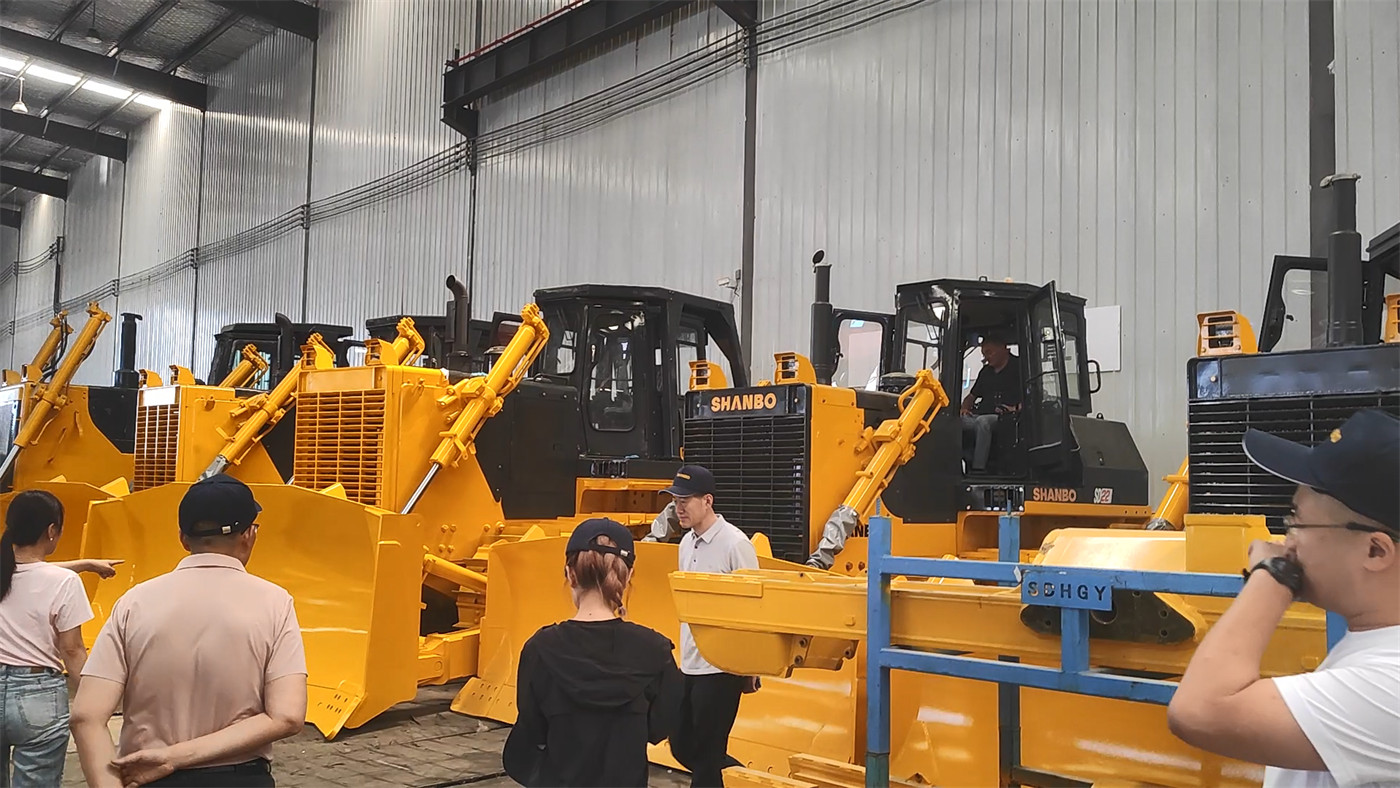
For narrow-site grading, the reference significance of these parameters is: the blade width is consistent with the overall width, meaning the blade does not extend significantly during edge work, reducing interference with existing structures; the 350mm digging depth is suitable for shallow leveling and removing surface loose soil, not for deep excavation or hard soil stripping as the main equipment; the 830mm lift height corresponds to small-drop pushing and short-distance stockpiling; earthwork transfer beyond this range requires consideration of other equipment or adjustment of work organization.
It should be noted that straight, curved, and coal blades are optional items, not standard. During procurement, the blade form should be confirmed according to the actual material (ordinary earthwork, loose materials, or coal-like lightweight materials), and optional items should be written into the configuration list to avoid deviations between quoting with standard blades and constructing with optional blades.
What power and transmission configuration can indicate
The SD10 uses a Cummins 4BT3.9-C125 diesel engine with rated power 81kW (125HP)/2300r/min and maximum torque 400N·m; transmission is a 4F+2R mechanical gearbox, forward speed 2.6–10.4km/h, reverse speed 3.7–6.7km/h; maximum traction force 95kN.
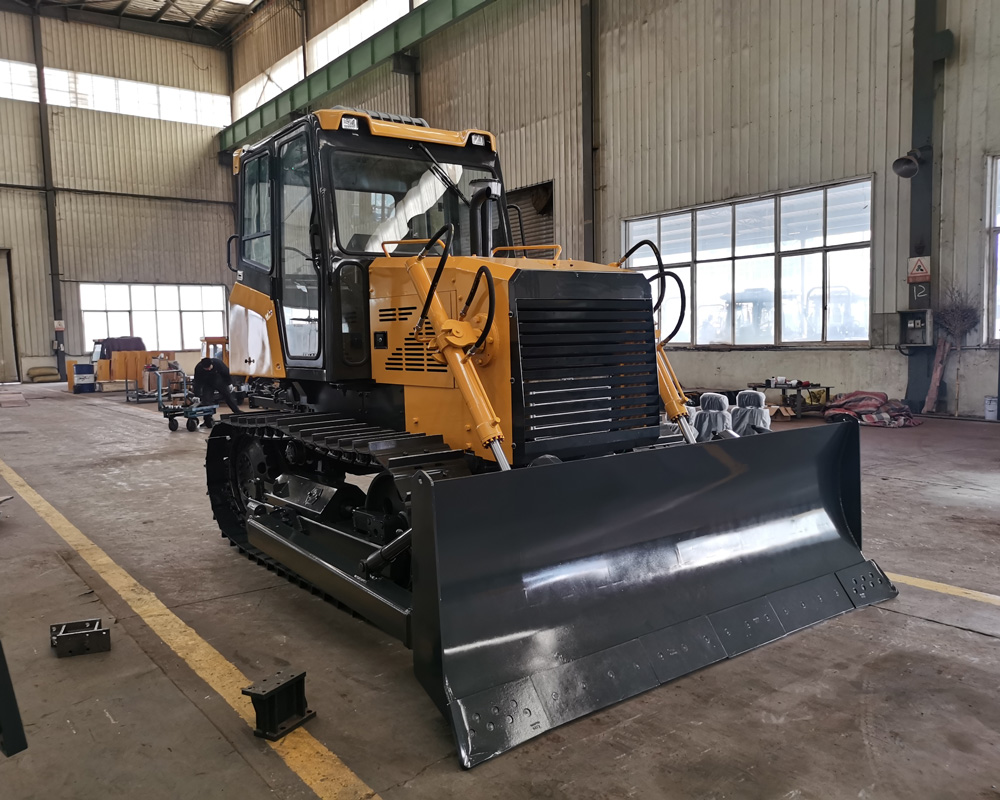
The operational characteristics corresponding to this configuration are: mechanical shifting with a limited number of gears, suitable for relatively stable-load operations such as grading and short-distance pushing; multiple forward speeds allow the operator to switch between pushing and empty return without using the same speed throughout. Compared with hydrostatic drive, there will be a gap in operational convenience under fine leveling and frequent direction changes; this is a difference in transmission form, not a quality issue. If site grading requires high flatness and repeated fine adjustments of the blade, the ability of mechanical transmission to meet operating habits should be actually evaluated before purchase, or consider models with other transmission forms.
Conditions to confirm before purchase
Based on the above information, for the goal of narrow-site grading, the following items are recommended to be confirmed one by one before inquiry and site entry:
- The relationship between the narrowest passage clear width in the work area and the overall machine width (including blade), and whether there is a safety margin;
- The bearing capacity of undisturbed soil or compaction of backfill on site, whether pretreatment is needed, and whether wetland chassis options exist;
- The specific optional configuration of blade form and its correspondence to quotation, and what materials straight, curved, and coal blades are respectively suitable for;
- Whether rear towing equipment or a three-shank ripper is necessary; if scarifying work is needed, the matching description between the ripper and the machine should be confirmed;
- Whether transport vehicles and loading/unloading methods can match the overall weight and dimensions, and whether the transfer route is restricted;
- Daily inspection items and maintenance intervals are subject to the onboard manual; before entry, implement routine inspection responsibilities for fuel, track tension, and blade connection parts.
After these conditions are clearly confirmed, judging whether a compact crawler dozer is suitable for the site is more reliable than looking at a single parameter. Once the equipment capability boundaries are clear, work organization and supporting arrangements can keep up.