

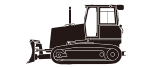
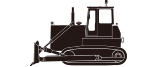
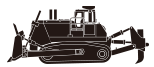














Landfill dozing may look like pushing material from the unloading point to the working face, but in practice it must simultaneously handle the pushing of loose waste, spreading, shaping before compaction and working-face maintenance. The material has low density, mixed composition and contains leachate, and both ground bearing capacity and traction are unstable. If equipment is selected only by looking at power and blade from an earthmoving perspective, it is easy to overlook the conditions that really determine whether it can be used: whether the blade form suits light, loose material, whether the undercarriage and travel system can adapt to soft ground, and whether protection and cleaning maintenance can keep up.
The following uses the sanitation version configuration of a 320-horsepower-class crawler bulldozer as the discussion subject to explain the applicable conditions and configuration limits of this type of working condition. The technical information involved comes from verified product data for this model; items not listed are not inferred.
Actual equipment requirements of landfill dozing operations
Breaking the operation down, a landfill bulldozer generally needs to meet four types of requirements:
- When pushing light, loose material, the blade must have sufficient capacity to reduce material spilling from both sides;
- It must maintain stable travel on soft, uneven working faces, and track ground contact and ground clearance must match;
- For long continuous operation, power and drivetrain must withstand load fluctuations;
- Dust, leachate and entangled materials in the waste environment place higher demands on air intake, wiring harnesses and daily inspection.
These four requirements are not all solved by engine power. Blade form, undercarriage ground-contact parameters, protection layout and convenience of daily inspection often more directly determine how usable the equipment is at a landfill.
Which landfill requirements the sanitation version configuration addresses
The model data explicitly lists multiple versions including standard, rock, desert, sanitation and coal, and states that it is widely used in mines, ports, deserts, landfills and other scenarios. The sanitation version is a configuration branch for such scenarios, but the data does not list all structural differences between the sanitation version and the standard version item by item, so judgment can only be made based on the available information:
- Working equipment options include straight blade, semi-U blade, U-blade, angle blade, coal blade, rock blade, sanitation blade, ripper, drawbar, etc. For landfills, the sanitation blade is an option that must be separately confirmed and cannot be assumed to be standard with the machine;
- The rated power of the whole machine is 257 kW/258 kW (depending on engine model), in the 320-horsepower class, which can cover the load range of continuous pushing and shaping at a landfill, but the data does not give actual productivity or fuel consumption under landfill conditions, so shift efficiency cannot be calculated from it;
- Track shoe width options are 560/610/660/710 mm, track gauge 2140 mm, ground contact length 3150 mm, ground clearance 500 mm. On soft working faces, track width and ground-contact parameters are adjustable variables, and which one to choose must be confirmed in combination with site bearing capacity and material condition;
- The data mentions that wiring harnesses for key structural parts are protected with corrugated tubes and arranged in tiers, and that lubrication and maintenance points are centrally arranged externally. This facilitates daily inspection and cleaning, but does not mean maintenance-free operation; the manual must still be followed.
What power and drivetrain configuration can and cannot show
This model is equipped with a WP12 or QSNT-C345 electronically controlled engine; the data states compliance with China Stage III emission standards, rated power 257 kW or 258 kW, speed 2000 rpm, and fuel tank capacity 640 L. For the drivetrain, the data states that the power transmission assembly matches the engine power curve and that the gearbox has undergone field testing; three forward gears cover 0–3.6, 0–6.6 and 0–11.5 km/h, and three reverse gears cover 0–4.4, 0–7.8 and 0–13.5 km/h.
This information shows that the machine has a speed range for medium- and low-speed, high-load pushing, suitable for the rhythm of short-distance repeated pushing at a landfill. However, the data does not give the gearbox type (such as hydrodynamic mechanical or hydrostatic), torque converter parameters, traction force values, or measured data under landfill conditions. If the drivetrain differences of different configurations are to be compared during procurement, the specific transmission form and matching description must be requested from the supplier and cannot be inferred from the number of gears.
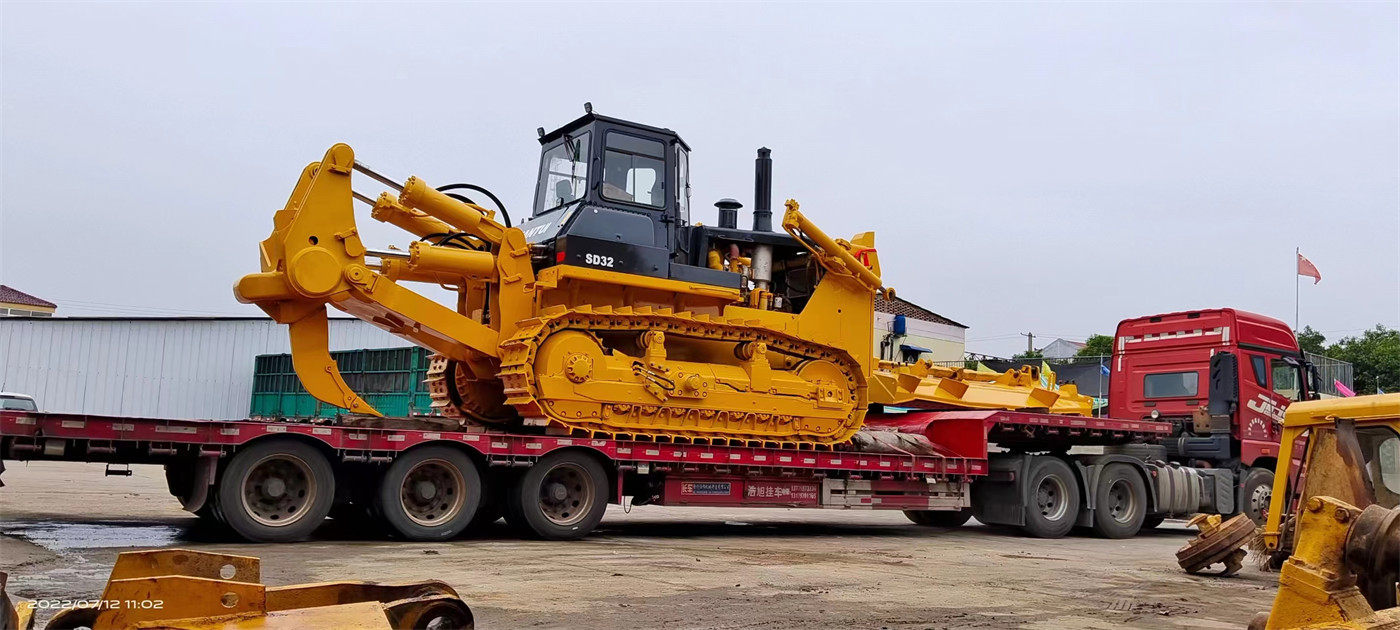
Configuration checklist to confirm item by item before purchase
During the inquiry and contract stages of a landfill project, it is recommended to specify the following matters clearly to avoid deviations at delivery such as "assumed standard but actually optional":
| Confirmation item | What needs to be clarified |
|---|---|
| Blade | Whether the sanitation blade is available, differences in width and height from the straight blade or U-blade, and whether overall dimensions are affected |
| Track shoes | Which of 560/610/660/710 mm to choose, and the corresponding relationship with site bearing capacity and material condition |
| Protection configuration | Whether FOPS&ROPS are optional, and whether the air intake filtration form targets high-dust environments |
| Ripper | Whether single-shank or three-shank is supplied with the machine, and whether it is needed at the landfill |
| Emissions and fluids | Fuel and urea (if applicable) requirements for the China Stage III engine, and local supply conditions |
| Documentation and training | Whether the manual, maintenance interval table, and operation and daily inspection training are provided with delivery |
Items not listed in the table, such as anti-corrosion treatment, materials of components in contact with leachate, and weighing or metering devices, are not described in the data and must be separately confirmed with the supplier; they cannot be assumed.
Applicable limits and restrictions to note
Based on the available data, the operating weight of this 320-horsepower-class bulldozer is between 40200 kg and 40900 kg (depending on version and configuration), with ground pressure of about 97.7 to 99.4 kPa. For equipment of this magnitude to enter a landfill, the bearing capacity of the working face and the conditions of the access road must first be confirmed to avoid sinking or travel difficulties on uncompacted waste piles. The data does not give applicable limits for landfill pile slope, settlement or leachate depth; these are site design conditions and should be judged by the project party in combination with the site.
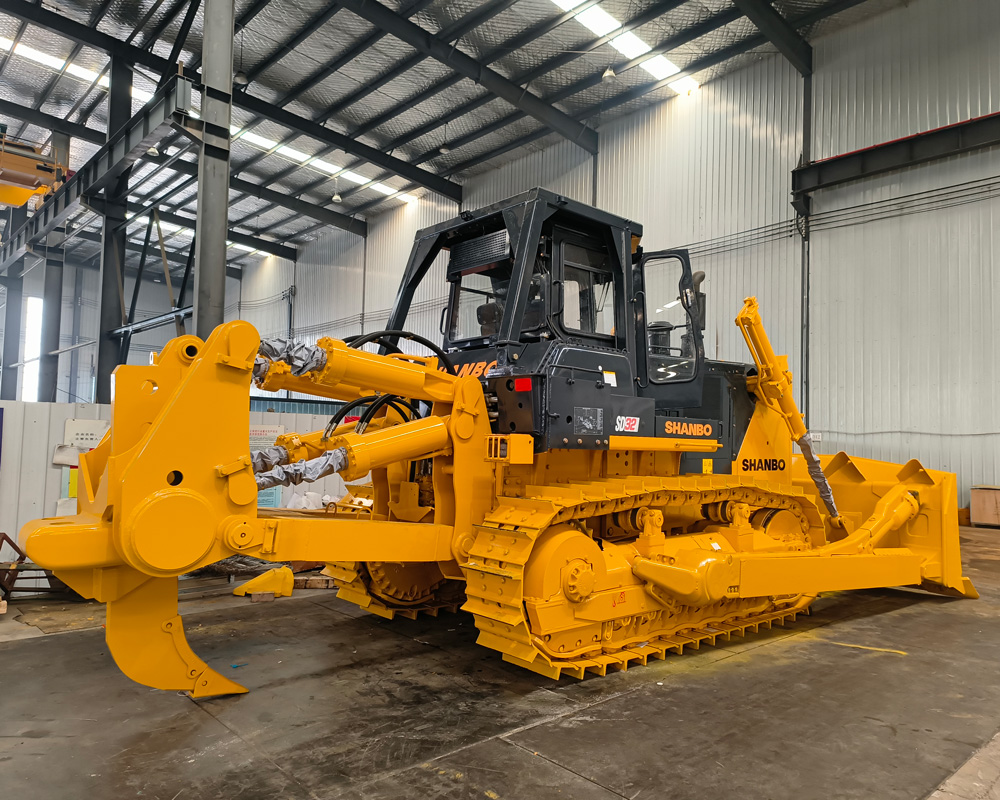
In addition, common landfill operations such as removal of entangled materials, blade adhesion and radiator cleaning are not specifically addressed in the data and can only be carried out according to general daily inspection and manual requirements. Inspection intervals and values involving the engine and hydraulic system should be based on the accompanying manual; this article does not provide unverified data.
Summary
Whether this equipment can be used for landfill dozing depends not on the horsepower figure but on three things: whether working equipment such as the sanitation blade is selected as needed and written into the contract, whether track and undercarriage parameters match site bearing capacity, and whether power, drivetrain and protection configuration have clear written descriptions. Confirming these conditions clearly is more reliable than looking only at the version name. Parts not covered by the data should be verified item by item with the supplier before purchase.