
















In the dozing phase of roadbed filling, the common problem is not an inability to push, but that when the haul distance changes or the material shifts from loose soil to compacted material or frozen clods, the same machine's work rhythm can no longer keep up. Spreading thickness, haul distance, fill moisture content and particle size, and interface with compaction equipment—these conditions determine the required level of tractive force, blade size, and whether a ripping device is needed. This article breaks down these work objectives item by item, then cross-references the published data of a mid-size bulldozer on this site to explain which configurations correspond to the requirements and which still need confirmation before purchase.
First, break down the work objectives: what is actually being pushed in fill dozing
Dozing in roadbed filling typically involves three types of actions: pushing and spreading dumped piles, short-distance hauling of fill to the fill surface, and loosening local hard material or frozen layers. The three actions impose different requirements on the equipment and cannot be judged solely by whether the bulldozer is large enough.
- Spreading and short-distance hauling: Focus on blade width, capacity, and overall tractive force, as well as smooth shifting, because dozing is often a cycle of forward, reverse, and forward again.
- Material condition: Loose soil-rock mixtures versus compacted clay, frozen soil, or gravel layers impose different requirements on blade edge and whether a ripper is fitted.
- Interface with compaction: The thickness and uniformity of dozer spreading affect subsequent compaction passes, but this depends on construction organization and cannot be inferred from equipment parameters alone.
Only by separating these three actions can one determine which configurations are essential and which are merely optional.
Traction and undercarriage: the foundation of the dozing cycle
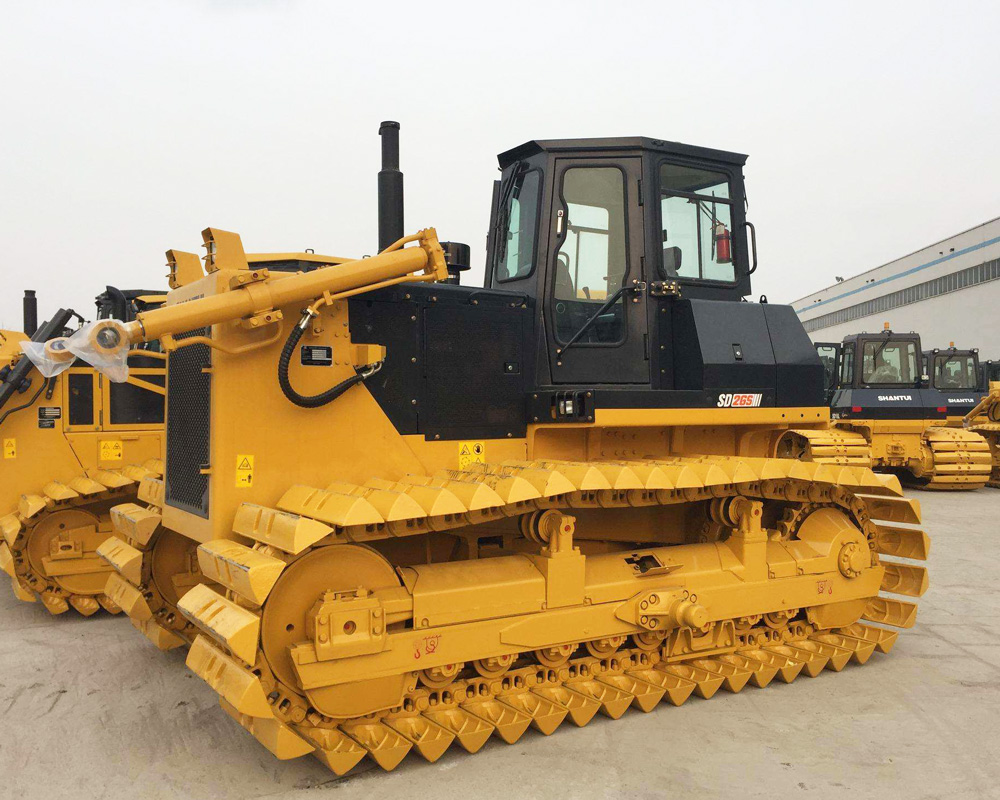
Fill dozing is a typical cyclic operation, and the machine must repeatedly start under load. Among the overall machine conditions listed in the SD26 data, those directly relevant to this requirement include:
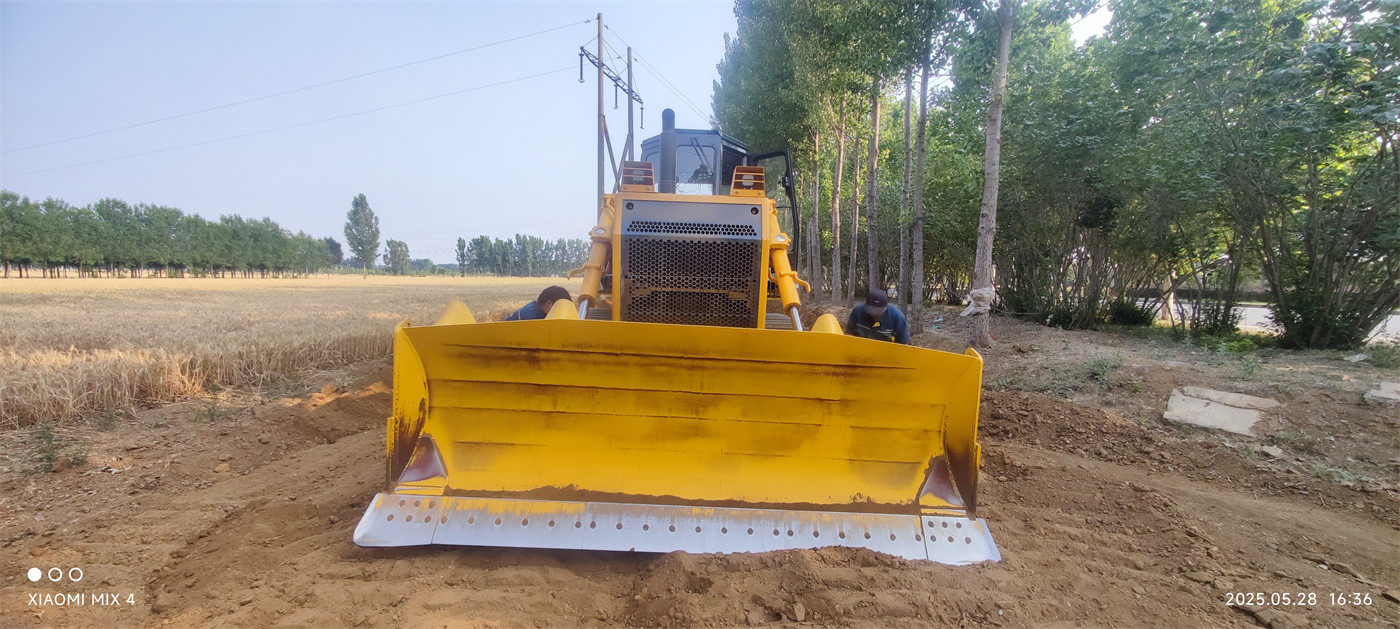
- Operating weight 23,450 kg, maximum theoretical tractive force 460 kN, ground pressure 66 kPa;
- Semi-rigid suspension undercarriage system, which the data states expands track ground contact area to improve tractive force;
- Ground contact length 2,872 mm, track shoe width options 560/610/660 mm;
- Three forward and three reverse speed gears, with F1/R1 at 3.8 km/h, F2/R2 at 6.9 km/h, and F3/R3 at 11.8 km/h.
What these data indicate: for short-distance dozing on the fill surface, the tractive output in low gears and track ground contact conditions determine the stability of starting and pushing; ground pressure data can be compared with site bearing conditions, but it is not a conclusion about suitability for a specific soil type. Conversely, the data do not provide productivity, fuel consumption, or gradeability for specific soil conditions, and these cannot be inferred from the parameter table.
Blade: spreading width and dozing capacity must be considered together
The SD26 comes standard with a straight tilt blade, capacity 4.6 m³, blade width 3,725 mm, blade height 1,315 mm, maximum lift height 1,210 mm, and maximum digging depth 540 mm. The data also note optional angle blades, U-blades, and semi-U blades.
For fill dozing, the straight tilt blade is suitable for conventional pushing and spreading; if the job requires diverting material to one side or shaping slopes, an angle blade addresses a different requirement, but it is optional and must be separately confirmed at purchase as to whether it is supplied with the machine. U-blades typically correspond to high-capacity material hauling scenarios; the data do not give the capacity and dimensions of optional blades, so 4.6 m³ cannot be taken as the figure for all blade types.
| Work requirement | Corresponding data item | To be confirmed |
|---|---|---|
| Conventional fill spreading and short-distance dozing | Standard straight tilt blade, 4.6 m³, width 3,725 mm | Whether spreading thickness and haul distance are within acceptable range for cyclic operation |
| Diverting to one side or slope shaping | Optional angle blade | Specifications, price, and availability of the optional blade type |
| High-capacity material hauling | Optional U-blade, semi-U blade | Machine matching and operating parameters after optional fitting; not listed in the data |
Hard material and frozen soil: the ripper is optional, not a default capability
When fill material contains clay clods, frozen soil, or gravel layers, cutting efficiency with the blade alone decreases, and only then should a ripping device be considered. The ripper information listed in the SD26 data includes: three-shank ripper weight 2,600 kg, maximum ripping depth 666 mm, maximum lift height 555 mm, ripper width 2,000 mm, and shank spacing 930 mm; the text also mentions adjustable-penetration-angle multi-shank rippers and large single-shank rippers, but does not give independent parameters for the single-shank model.
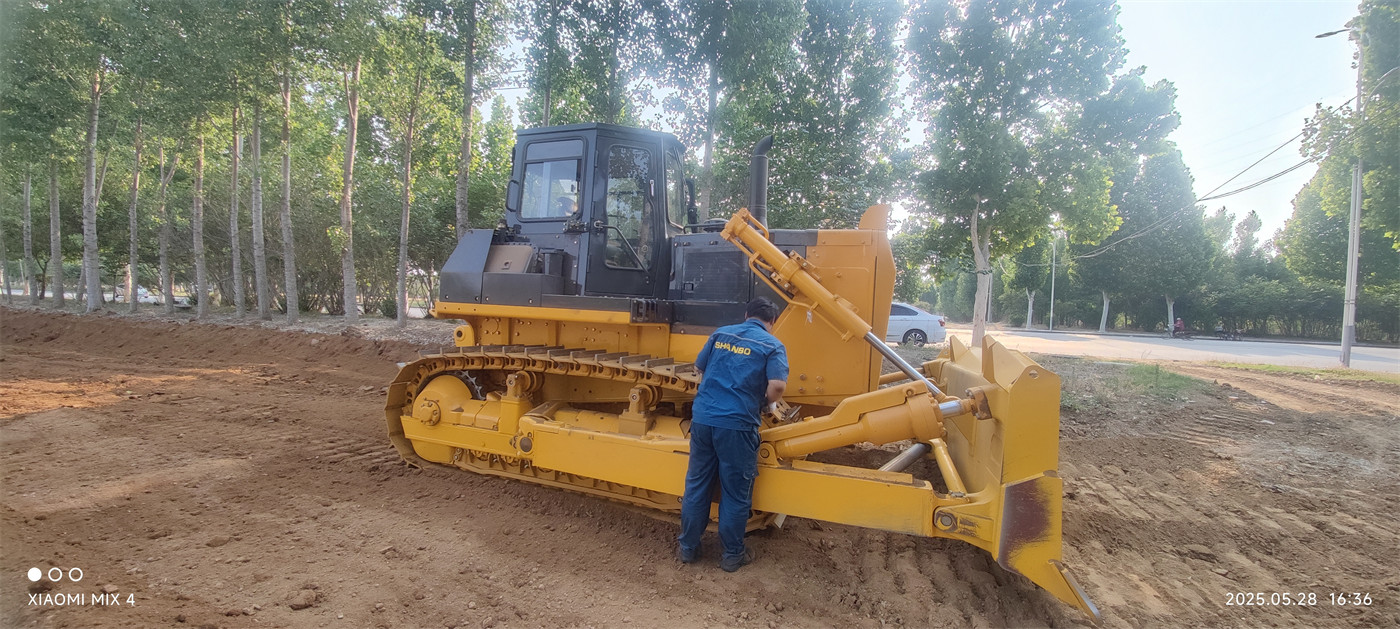
It is important to distinguish: the standard equipment list includes the straight tilt blade, while the ripper is a work equipment option. At purchase, confirm the selected ripper type, whether it is supplied together with the machine, and the operating method for the corresponding working conditions. The data do not provide ripping efficiency for different strata, so no crushing performance can be promised on that basis.
Power and transmission: meeting continuous cycling, not chasing paper figures
The SD26 is powered by a Weichai WP12G280E304 engine, China-III emissions, rated speed 1,900 r/min, gross power 206 kW (277 hp), net power 194 kW (260 hp), maximum torque 1,250 N·m @ 1,200–1,300 r/min; transmission is a power-shift gearbox, torque converter, and two-stage straight-tooth final drive. Fuel tank capacity 450 L.
This configuration addresses the requirement that fill dozing needs stable power output under load, and the power-shift structure facilitates switching between forward and reverse in the dozing cycle. The data state that the cooling system is matched for full load and high-temperature environments, but the specific maximum ambient temperature and continuous operating duration are not given, which are items to confirm with the supplier before purchase. Fuel consumption data only mention "fuel-efficient" without published values, and this article does not cite inferred figures.
Turning requirements into a pre-purchase confirmation checklist
If fill dozing is the main operation and the SD26 class is under consideration, it is recommended to check in the following order rather than looking at a single parameter first:
- Haul distance and cycle pattern: approximate one-way haul length and whether frequent reverse return trips are needed; judge against the three speed gears and shift control layout.
- Fill material condition: loose soil, clay, frozen soil, or gravel, which determines whether a ripper is needed and which type to select.
- Spreading requirements: fill layer thickness and width, which determine whether blade type and width match; request actual specifications for optional blade types.
- Site bearing capacity: compare ground pressure of 66 kPa and track shoe width options to confirm fill surface conditions.
- Configuration list: clarify that the standard equipment is the straight tilt blade, while angle blade, U-blade, ripper, ROPS, etc. are all optional items, and write each into the contract annex.
- Items not covered by the data: fuel consumption, productivity, slope operation capability, special environment adaptability—require the supplier to provide these in writing or arrange working-condition verification.
For daily inspection, the data mention clear maintenance reminder markings, maintenance-free batteries, and a large opening engine hood for easy inspection and oil changes. Specific inspection intervals and oil specifications should be based on the onboard manual; this article does not give unverified maintenance values.
In summary, configuration decisions for fill dozing should revolve around whether the dozing cycle is smooth, whether the blade matches the spreading method, and whether hard material requires a ripping device; the SD26's overall weight, tractive force, standard straight tilt blade, and optional work equipment form a basis for comparison, but the optional range, actual productivity, and adaptability to special working conditions still need to be confirmed item by item during procurement.