





















When equipment procurement reaches the price comparison stage, the common problem is not the lack of documentation but misreading it: the same product page lists standard, coal, rock, forest, wetland, and other versions; the blade section mentions straight, angle, U, and semi-U blades; rippers are divided into single-shank and three-shank; and track shoe width is given as three values. If all these entries are treated as "this machine has them all," quotations and acceptance are prone to deviation. Below, using the public information of a 235HP mid-size dozer on this site as an example, we explain the order in which such pages should be read, which fields need cross-checking, and which conclusions cannot be directly inferred from the literature.
First distinguish "one model" from "one series"
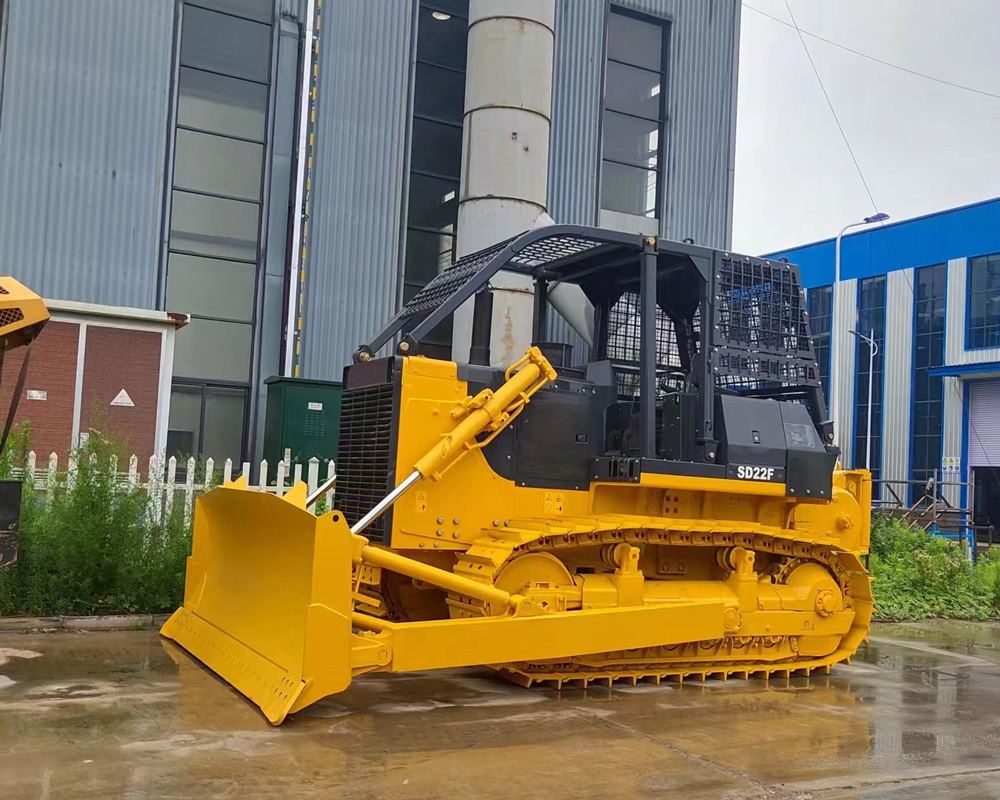
The beginning of this document states: "The full series of SD22 235HP bulldozers, including standard, coal, rock, forest, desert, extended, sanitation, and wetland types." Immediately afterward, however, the main text is divided into subsections for the standard, coal, rock, and forest versions, each with its own operating weight, blade form, and specification table. This indicates that the page covers a series, not a single machine with a fixed configuration.
The first action when reading is to anchor the procurement requirement to a specific version. The standard version's operating weight is 23450 kg, the coal version is 24000 kg, and the rock version is 23600 kg; their blade types and widths also differ. If an inquiry only says "I want a 235-horsepower bulldozer," there is room for interpretation as to which version the supplier quotes. Conversely, if the work object is defined first—general earthwork and rock, coal yard bulk material, or crushed stone site—and then mapped to a version, subsequent specification checks have a baseline.
Cross-check text descriptions against specification tables item by item
The text portion and the specification table on a product page are not simple duplicates. Some configurations mentioned in the text have no corresponding fields in the specification table; and the values in the specification table may not apply to all versions on the page. Taking the standard version as an example, the checks can be performed in the following order.
Power and undercarriage: first confirm whether they are shared across the series
The standard version lists engine models WP12 or QSNT-C235, rated power 175 kW/1800 rpm, i.e., 235 HP; the coal version likewise lists WP12/QSNT-C235 and 175 kW/1800 rpm; the rock version only states QSNT-C235. The engine power values in the three specification tables are consistent, but the model designations differ. In such cases, it is advisable to require the supplier to specify in writing the engine model for the batch before ordering, rather than inferring from the letters.
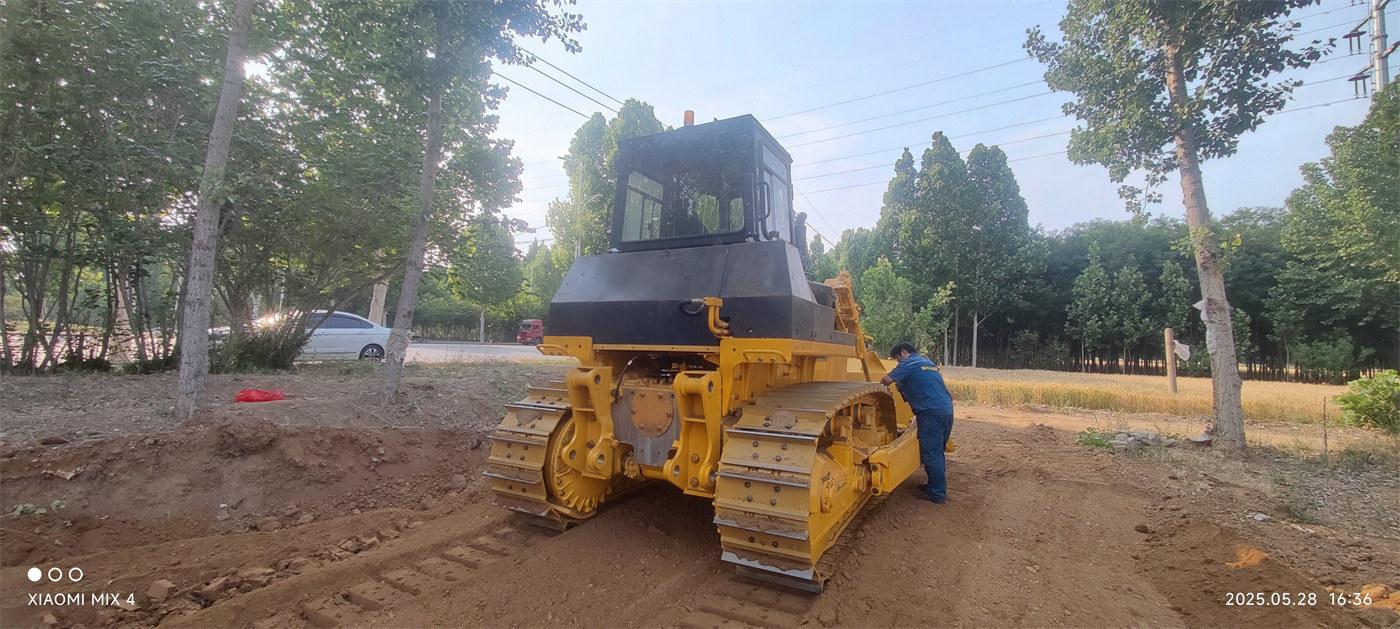
For the undercarriage, the standard version gives a track gauge of 2000 mm, ground contact length of 2730 mm, track shoe width of 560/610/660 mm, and ground pressure of 66 kPa; the coal version has a track shoe width of 660 mm and ground pressure of 57.5 kPa; the rock version also lists three values for track shoe width and a ground pressure of 66 kPa. Writing track shoe width as three numbers means it is an optional range, not that three sets of tracks are installed simultaneously. During procurement, the specific width must be selected, and whether the effect of that choice on ground pressure is reflected in the quotation must be clarified.
Work equipment: blades and rippers are where configuration differences are most concentrated
The standard version text says "optional straight blade, U-blade, angle blade, coal blade, rock blade, sanitation blade, ripper, drawbar, etc.," while the specification table gives the width and height of four blade types—straight, angle, U, and semi-U—as well as the ripping depth and lift height of single-shank/three-shank rippers. Two layers of information need to be distinguished here: the text lists the range of attachments that can be matched, while the specification table lists specific dimensions for some of those blades. Blade types not appearing in the specification table cannot be assumed to have dimensions identical to any item in the table.
The coal version's specification table lists only the coal blade, width 4200 mm, height 1350 mm; the rock version lists rock straight blade, rock angle blade, rock U-blade, and rock semi-U blade. It can be seen that within the same series, the blade names and dimensions corresponding to different versions are given separately. If the requirement is coal handling, the coal version's blade entries should be cited directly; using the standard version's straight blade dimensions to check the coal version would be cross-version application.
Cab and protection: note the word "optional"
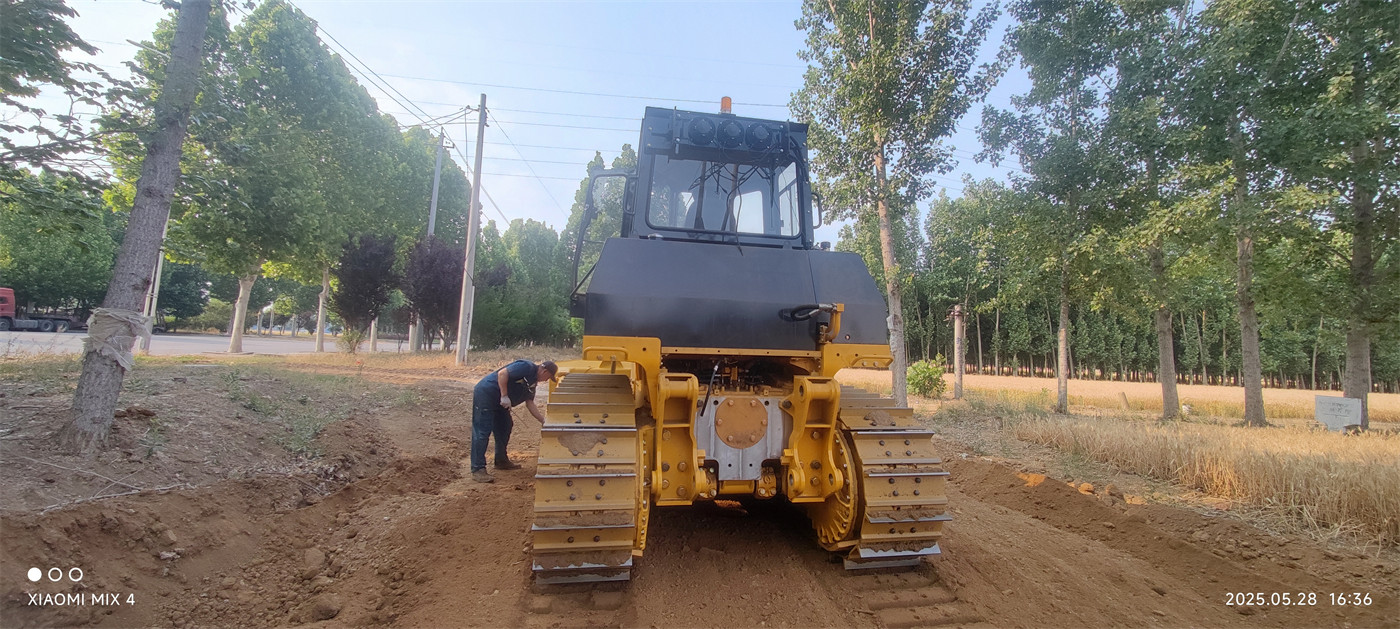
The standard version text mentions "optional FOPS/ROPS protective structure," while also stating that LED work lights, a hexahedral cab, heating and air conditioning, and an intelligent control display are standard. Optional and standard appear side by side in this sentence, so "standard" and "optional" should be recorded separately when reading. Configurations involving safety protective structures are better listed separately in the contract, confirming whether the selected version includes them and in what form, rather than assuming all versions are identical.
Turn the literature into a procurement checklist
After organizing the above fields, a checklist for inquiry and acceptance can be obtained. It is not a conclusion about product performance; it merely converts the entries already in the literature into confirmable questions.
| Check item | Status in the literature | To be confirmed during procurement |
|---|---|---|
| Version | The series includes standard, coal, rock, forest, wetland, and other versions | Which version this procurement corresponds to, and which specification table the quotation is based on |
| Engine model | Standard version says WP12/QSNT-C235; rock version says QSNT-C235 | The model actually installed in this batch and the corresponding power rating |
| Track shoe width | Standard and rock versions list three values: 560/610/660 mm | Selected width and corresponding ground pressure |
| Blade | Text lists multiple matchable blades; specification table lists dimensions for only some | Whether the selected blade type has corresponding dimension data |
| Ripper | Single-shank/three-shank, with ripping depth and lift height given | Whether to install, and whether single-shank or three-shank |
| Protective structure | Text says "optional FOPS/ROPS" | Whether included in the quotation |
The purpose of this table is to expose places in the literature where "something is written but not fully written." For example, in the blade column, the specification table covers four blades, while the text lists more than seven; this does not mean the literature is wrong, but that some attachments have only names and no dimension entries. In such cases, the correct approach is to request supplementary information from the supplier for the selected attachment, rather than substituting values from adjacent entries.
Which conclusions cannot be drawn from this literature
The product page provides configuration and structural parameters, not conclusions about work capability. From this literature alone, it is impossible to judge the actual dozing efficiency of a version under specific soil conditions, fuel consumption per unit of earthwork, gradeability, adaptability to a certain type of stratum, nor to infer price, delivery time, certification status, and return on investment. Expressions such as "suitable for various harsh construction conditions" and "high work efficiency" appearing in the literature are product descriptions and cannot be used as quantifiable selection criteria.
In addition, the page covers multiple versions, but the complete parameters of each version are not all expanded: the forest version only describes application scenarios and some configuration directions; the desert, extended, sanitation, and wetland types appear only in the opening list without independent specification tables. If the work requirement points to these versions, the existing literature is insufficient to support item-by-item comparison, and the corresponding version's literature must be obtained separately before judging.
Confirmation sequence before ordering
- First determine the work object and site conditions, and based on these lock in the specific version within the series; do not use the series name in place of the version name.
- Then check the three items of engine model, rated power, and speed to confirm they match the selected version's specification table.
- Next, confirm the work equipment item by item: blade type, width, height; ripper shank count and mounting form; and clarify which are standard and which are optional.
- For the undercarriage, confirm track shoe width, ground contact length, and ground pressure; when track shoe width has multiple values, require the selected value to be stated in writing.
- Record items such as cab protection, work lights, and air conditioning separately as "standard/optional," and list safety-related configurations separately in the contract.
- For attachments without dimension or parameter entries in the literature, request supplementary information; do not substitute data from other versions.
- Routine inspection and maintenance shall follow the onboard manual; the literature only mentions that lubrication and maintenance points are external and that side guards facilitate inspection, without giving specific maintenance intervals and values—these must be based on the manual.
The end point of reading the literature is not how many numbers are memorized, but the formation of a configuration list that can be aligned item by item with the supplier. Every line on the list should be traceable to the literature; those that cannot be traced should remain as items to be confirmed—this is more reliable than judging by impression during the price comparison stage.