



















The difficulty of continuous reverse dozing on narrow sites is not whether the machine can push, but the repeated reversing, direction changes, and steering corrections within a shift, which place high mental and physical demands on the operator. When the site is constrained on all sides and there is insufficient space to turn around, the return trip often has to be completed in reverse; even slight inconvenience in steering and visibility can multiply operator effort. Below, the issue is broken down in the order of “problem—solution approach—configuration correspondence,” and it is explained which information on the DH17-G supports judgment and which still needs confirmation before purchase.
First, clarify the constraints of reverse dozing on narrow sites
These working conditions usually share several common points: limited width of the working area, no conditions for large-radius turning; short dozing distance but many round trips; edge and trench areas require work close to boundaries; the operator needs to frequently observe the rear and sides. When these constraints combine, operator effort comes not only from dozing resistance but more from the frequency of direction changes and steering corrections.
- High frequency of direction changes: forward dozing and reverse return alternate, and each trip requires deceleration, direction change, and re-acceleration.
- Many steering corrections: irregular site boundaries or uneven material distribution require continuous small corrections.
- High visibility pressure: when reversing, observation of rear equipment, personnel, and boundary obstacles is more demanding.
- Long continuous operation: single shifts are long, and cab comfort directly affects operating stability.
Operator effort can be reduced from three directions
The first is the transmission and steering method. Hydrostatic drive supports continuously variable speed control, and direction changes and steering do not need to be completed through clutch and mechanical gear shifting, so operating actions are relatively simplified. The second is control layout. If travel and work equipment are concentrated on a few joysticks, hand switching among multiple levers can be reduced. The third is visibility and auxiliary observation conditions. Whether rearward observation means are sufficient when reversing directly affects the operator’s distance judgment and correction frequency.
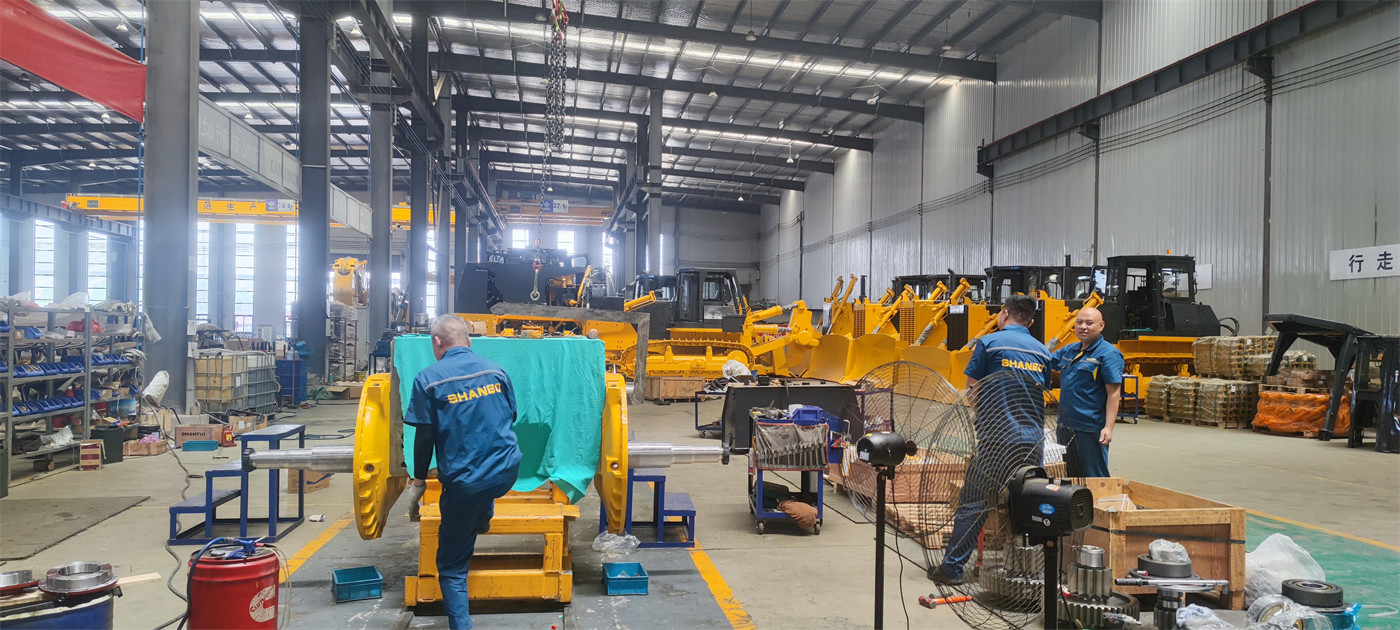
These three directions do not work independently. Hydrostatic drive addresses direction-change smoothness, control layout addresses action complexity, and visibility conditions address judgment cost; they need to be considered within the same solution.
Configurations related to reverse dozing in DH17-G information
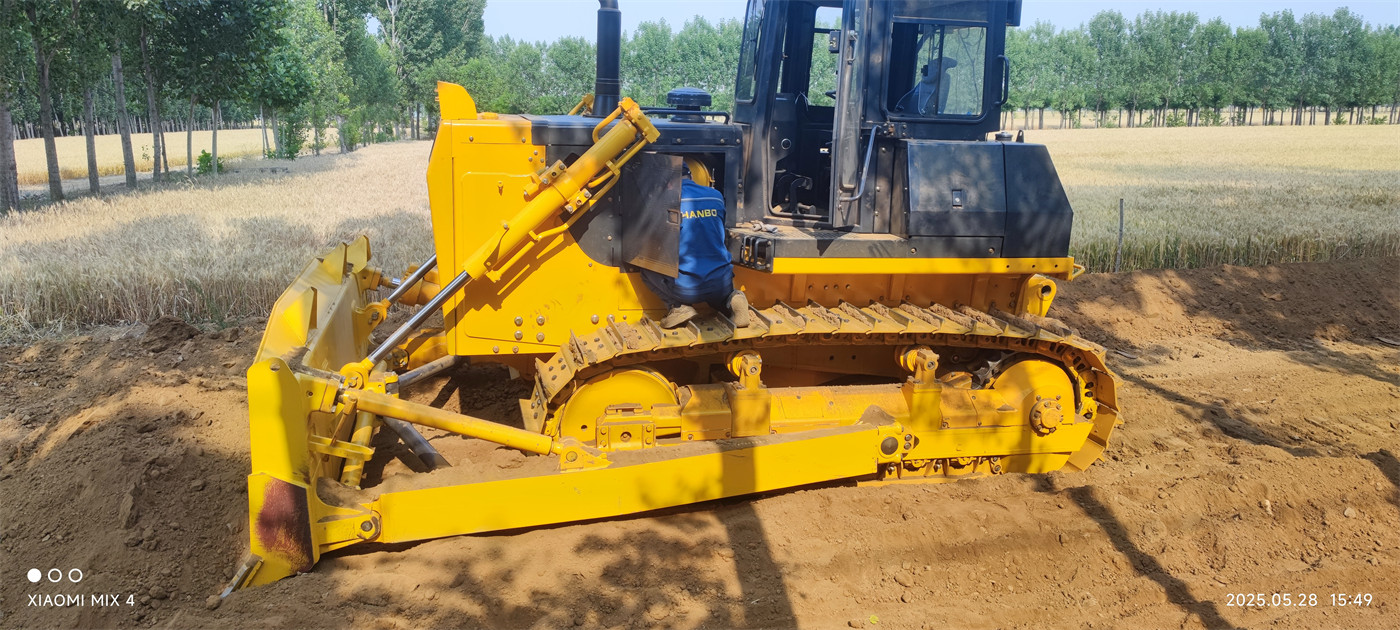
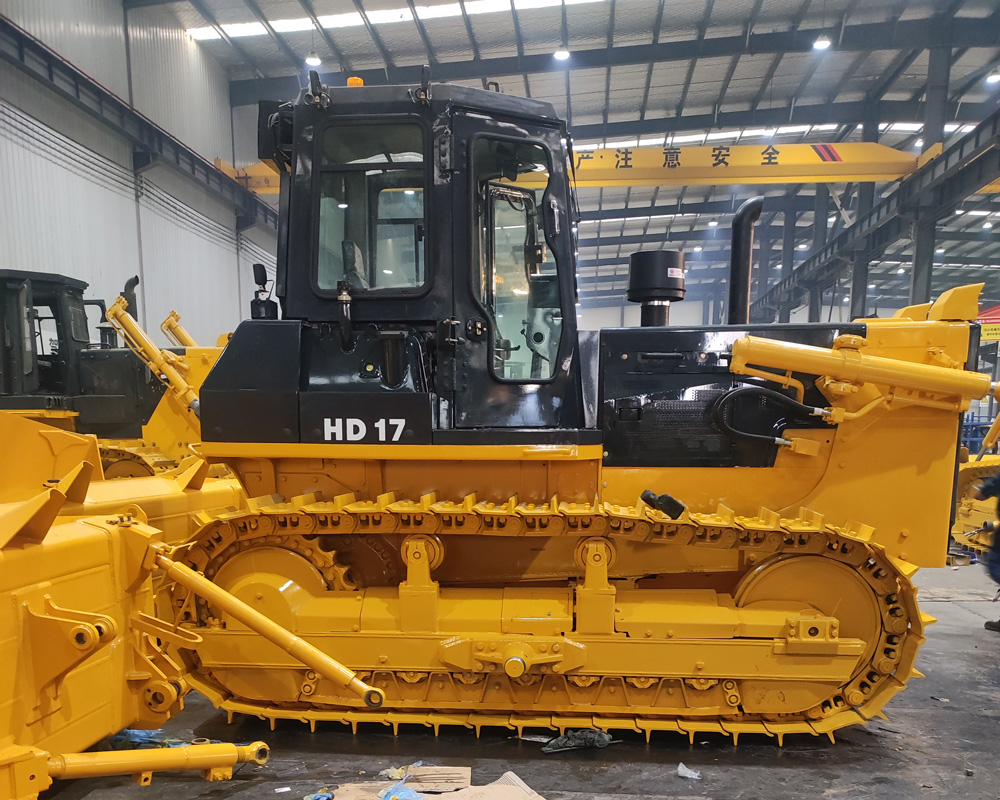
The DH17-G-G 178HP hydrostatic bulldozer adopts a dual-circuit electric hydrostatic drive system. The information states that it has load-adaptive function and supports load steering and fixed steering with continuously variable speed; travel and work equipment are controlled by a single joystick. The control system information lists slip ratio control, economy mode, driving response control, reverse start mode, automatic idle, and other functions, and a rearview camera is standard. The cab is a six-sided integrated structure with 4-point MDS suspension; the information states that noise at the operator’s ear can be reduced to 78 dB, and the sealed cab maintains 45 Pa positive pressure.
Mapping these configurations to the three directions above:
| Operating constraint | Corresponding configuration | Explanatory role |
|---|---|---|
| High frequency of direction changes | Dual-circuit electric hydrostatic drive, continuously variable steering | Direction changes and steering do not rely on mechanical gear shifting, shortening the action chain |
| Many steering corrections | Single joystick controls travel and work equipment | Reduces lever switching and facilitates small corrections |
| Rear visibility pressure | Standard rearview camera | Provides rear observation assistance |
| Long continuous operation | Suspended cab, positive-pressure sealing, noise-reduction design | Improves operating environment and reduces fatigue accumulation |
It should be noted that this information indicates the existence of configurations and their design orientation, not that operator effort will necessarily be reduced to a certain level on a specific site. Actual results also depend on site dimensions, material conditions, operator proficiency, and shift arrangements.
Trade-offs between standard and super-wetland versions on narrow sites
The DH17-G is available in standard and super-wetland versions, with obvious differences in undercarriage. The standard version has an operating weight of 17,730 kg (with ripper) / 19,290 kg (with drawbar), track shoe width of 510 mm (standard) / 560 / 610, ground contact length of 2,675 mm, and ground pressure of 65 kPa (with ripper) / 77 kPa (with drawbar). The super-wetland version has an operating weight of 19,690 kg, track shoe width of 1,100 mm (standard) / 950, ground contact length of 2,935 mm, ground pressure of 30.5 kPa, and overall width of 4,230 mm.
If the narrow site is hardened or generally soil-based, the standard version has a relatively smaller overall width, making steering and working close to edges easier; if it is soft ground, wetland, or muddy, the super-wetland version has lower ground pressure and better trafficability, but the machine is wider and longer, placing higher demands on passage width and turning space. This is not a question of which is more advanced, but of whether site bearing conditions or space conditions are tighter. Before purchase, the minimum working width, passage width, and foundation bearing conditions should be confirmed together.
What other conditions need to be confirmed for a reverse dozing plan
- Minimum working width and turning space: determines whether continuous reverse dozing will dominate or partial turning is possible.
- Foundation bearing and moisture conditions: under soft ground, prioritize evaluating the trafficability of the wetland version rather than only looking at overall dimensions.
- Dozed material and blade configuration: the standard version can be equipped with a straight tilt blade or semi-U blade, with blade widths of 3,452/3,415 mm; material type affects dozing resistance and return frequency.
- Whether a ripper is optional: in the standard version information, the ripper has three teeth and a tearing depth of 475 mm; it is a work equipment option and must be clearly specified at purchase.
- Rear visibility and lighting conditions: the rearview camera is standard, but auxiliary observation means at night or in dusty environments still need to be confirmed with the site.
- Operator training and shift arrangements: configurations can reduce action complexity, but continuous operating duration still needs to be controlled through scheduling management.
Daily inspection and operating boundaries
For equipment with high-frequency reverse dozing, daily checks should focus on track tension, blade and cutting edge wear, rearview camera cleanliness and display operation, and cab sealing and air conditioning operation. Specific inspection items and intervals are subject to the accompanying manual; this article does not provide maintenance values or disassembly steps. The hydrostatic drive system has requirements for hydraulic oil cleanliness, and oil filling and filter replacement should be carried out as specified.
If the site is extremely narrow and frequent in-place turning is required, configuration optimization alone may not be sufficient; it should also be assessed whether to adjust the work organization, for example by segmented dozing, changing entry and exit directions, or coordinating with other equipment for transport. These are judgments at the construction organization level and need to be determined based on on-site measurements.