





When arranging bulldozer work on soft ground, swamp edges, or backfill areas after the rainy season, equipment managers often first encounter not whether the machine can push, but whether it can stand. Track sinking, machine tilting, and sharply increased travel resistance can all interrupt the planned push-and-carry cycle. Ground pressure is repeatedly mentioned because it directly corresponds to these problems: the greater the whole-machine weight borne per unit of ground contact area, the more obvious the degree of ground compaction and the tendency to sink.
However, comparing ground pressure as a single number easily leads to one-sided conclusions. It varies with the whole-machine weight, track shoe width, and ground contact length, and is also related to the moisture state of the ground and the distribution of bearing capacity. Below, starting from the concept and combining the data of different versions of a medium bulldozer on this site, we explain how to use this value in selection and where it cannot make decisions for you.
What ground pressure actually describes
Ground pressure is generally understood as the pressure of the whole-machine operating weight distributed over the track ground contact area, measured in kilopascals (kPa) in engineering. Its intuitive meaning is: when the machine contacts the ground through its tracks, how much vertical load must the ground bear per unit area. The lower the value, the more the same weight is spread over a larger contact area, and the relatively smaller the disturbance to weak ground.
This indicator is valued in soft ground conditions because soft soil, muddy soil, and loose backfill have limited bearing capacity. When ground pressure exceeds the range that the ground can stably support, the tracks will sink. After sinking, the contact configuration changes, and both travel resistance and steering resistance increase, causing push-and-carry efficiency to decline. Conversely, low ground pressure does not automatically mean the machine can pass over any ground; it only controls the risk of sinking at a relatively lower level. Whether work can actually be performed still depends on ground conditions.
What factors change this value
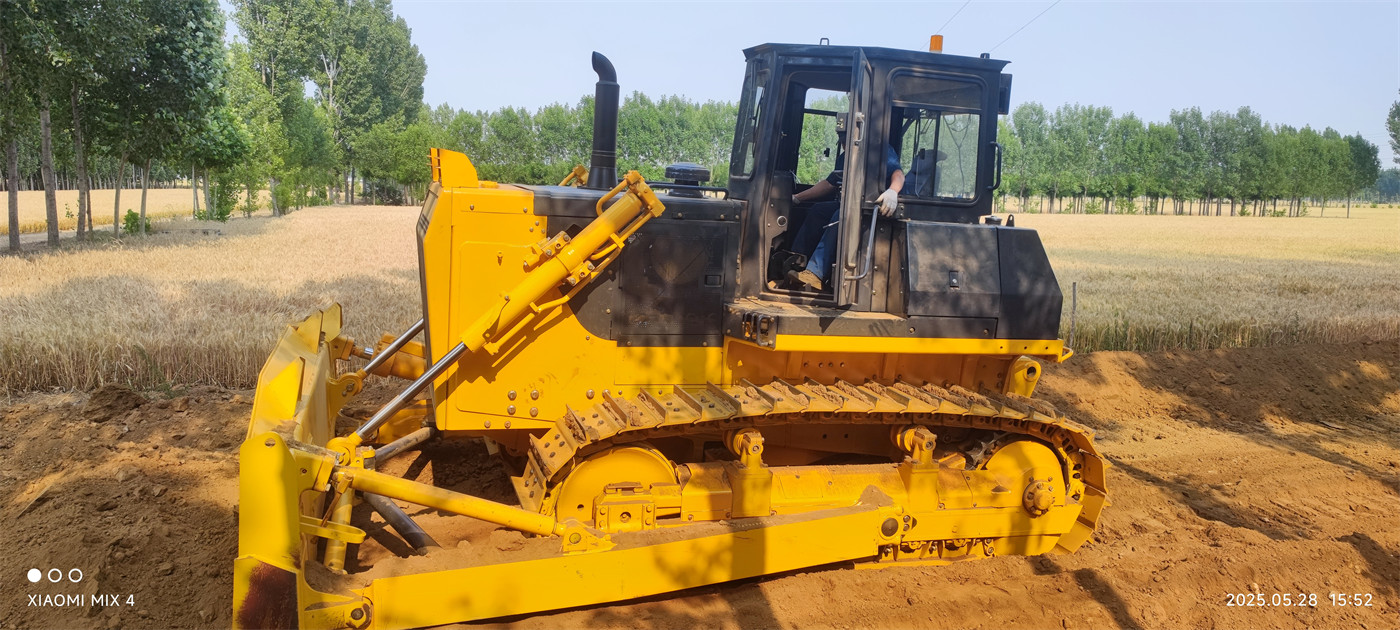
From the calculation relationship, ground pressure is mainly affected by two directions: whole-machine weight and track ground contact area. Whole-machine weight includes the main machine, blade, ripper, and other working devices; different configurations mean different weights. Ground contact area is determined jointly by track shoe width and ground contact length.
- Wider track shoes: with ground contact length unchanged, the wider the shoe, the larger the contact area and the lower the ground pressure.
- Increased whole-machine weight: adding a ripper or replacing with a larger blade increases the total weight beyond the denominator, and ground pressure changes accordingly.
- Ground contact length: track ground contact length affects longitudinal load distribution and also the longitudinal stability of the machine.
This also explains a common phenomenon: the same base model can derive different versions with clearly different ground pressures by changing the undercarriage and track configuration. If you only remember the number for one version during selection and apply it to another version, errors will occur.
Ground pressure data for different SD16 series versions
The SD16 on this site is a 178-horsepower crawler bulldozer equipped with a WP10 engine, rated power 131 kW, and available in standard, coal, extended, super-wetland, and other versions. The ground pressure values given in the data for each version are not the same, which can precisely illustrate the correspondence between configuration and ground pressure.
| Version | Operating weight (kg) | Track shoe width (mm) | Ground pressure (kPa) |
|---|---|---|---|
| SD16 Standard | 17000 | 510 | 58 |
| SD16C Coal | 17500 | 510 | 55 |
| SD16L Super-wetland | 16900 | 960 | 22 |
As can be seen from the table, the track shoe width of the super-wetland version increases from 510 mm to 960 mm, and ground pressure drops from 58 kPa for the standard version to 22 kPa. The direction of this change is consistent with the calculation relationship above: track shoes are significantly widened, ground contact area increases, and load per unit area decreases. The data also states that the super-wetland version adopts an ultra-low ground pressure undercarriage system and boat-shaped ribbed wide track shoes, intended for swamp and soft wetland conditions.
The coal version has a ground pressure of 55 kPa and an operating weight of 17500 kg, slightly higher than the standard version, but the value is slightly lower instead, indicating that its undercarriage or track configuration differs from the standard version. The coal version is described as equipped with standard-width tracks and an extra-large-capacity coal blade. The complete correspondence of specific undercarriage configurations should be based on the technical data for that version provided by the supplier; it is not advisable to infer all configurations from a single value.
How to use this value under soft ground conditions
If the work surface is a swamp edge, wetland improvement area, river regulation section, or soft soil area with long-term standing water, ground pressure is the first condition for screening equipment versions. The reason is direct: such ground has low bearing capacity, and after the machine sinks, not only is pushing difficult, but extrication and relocation also become complicated. The super-wetland version reduces ground pressure to 22 kPa, which is exactly a configuration trade-off made for this constraint.
But boundaries must be noted. Low ground pressure solves the problem of vertical load pressure on the ground; it does not mean the machine will not slip or get stuck on soft foundations, nor does it mean it can enter ground with any moisture content. Whether work can actually be performed also depends on the thickness of the surface hard crust, moisture state, groundwater level, and access routes. These conditions are not in the equipment data and need to be judged on site by the construction party before entry, or confirmed with the supplier after explaining the working conditions.
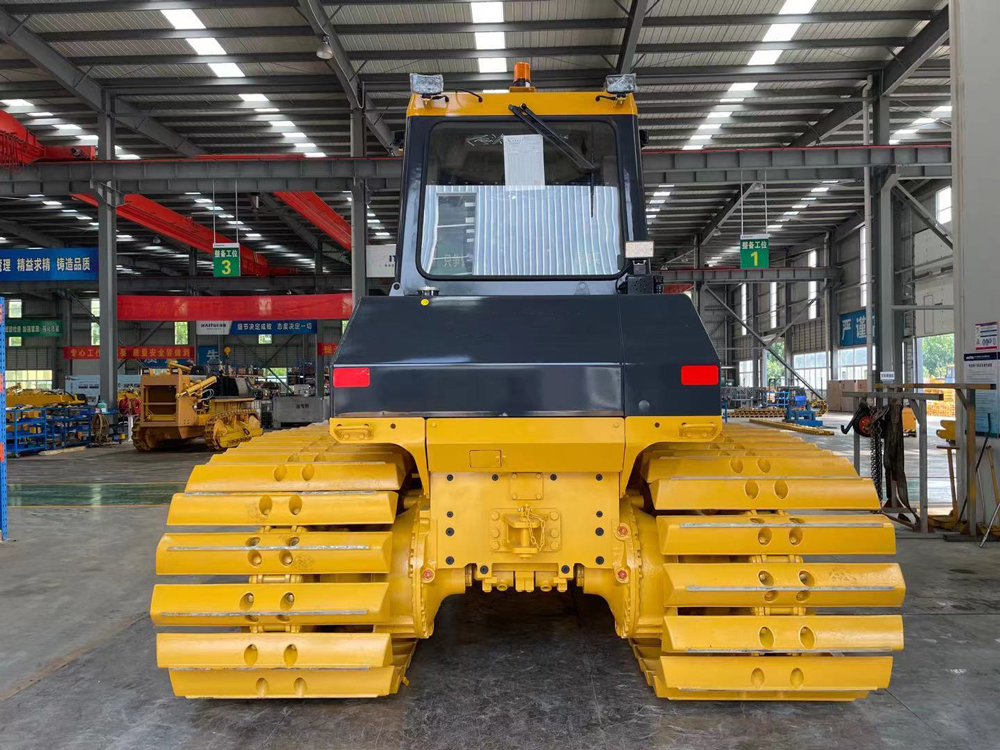
Conversely, if the work surface is a site with good bearing conditions such as conventional earthwork, highway or railway subgrade filling, or mine stripping, the standard version's 58 kPa ground pressure corresponds to 510 mm track shoes and 17000 kg operating weight, and its configuration is more oriented toward conventional pushing and cutting. At this time, if you simply pursue low ground pressure and choose the super-wetland version, wide tracks will bring other trade-offs on hard ground. Whether it is suitable needs to be judged in light of the specific work content; the data does not provide such comparative conclusions and should be confirmed separately.
Conditions easily missed if only looking at ground pressure
Ground pressure is an entry point for selection, not the whole story. Around soft ground and wetland conditions, at least the following types of information need to be confirmed before purchase:
- Actual bearing capacity and moisture state of the work surface: no matter how low the ground pressure, it must be based on on-site ground conditions; it is recommended to judge in combination with geological data or on-site survey.
- Blade and ripper configuration: different working devices change the whole-machine weight and force mode. Whether the configuration is standard or optional should be based on the supplier's list.
- Specific form of undercarriage and tracks: even for the same wide tracks, track shoe type and ground contact length may differ; comparison should not be based only on shoe width.
- Relocation and transport conditions: the overall dimensions and track width of the super-wetland version differ from the standard version, and the transport plan needs to be arranged according to actual dimensions.
- Daily inspection requirements: inspection items such as track tension, travel mechanism, and lubrication points should be carried out according to the accompanying manual; this article does not provide specific values.
The real meaning of ground pressure explanation is to put the relationship between whole-machine weight and ground contact area on the table, so that selectors can first judge whether the equipment matches the ground, and then look at power, transmission, and working devices. For soft ground conditions, this value is worth looking at first; for conventional earthwork conditions, it is only basic information and cannot replace overall consideration of the blade, ripper, and work organization.