




















From selecting a model to actually putting a heavy bulldozer into operation, there is a series of preparation items that are easy to skip. Can the work area accommodate the machine's full range of motion? Are transport routes viable? Where will fuel and maintenance materials be supplied? Do the configurations written in the contract match what actually arrives? If these issues are left until after the machine is on site, they often incur extra time and scheduling costs. This article takes a 40-tonne-class heavy bulldozer as its subject, organizes the site and documentation items to confirm before arrival in preparation order, and explains the basis for judgment using verified product information.
Confirm the work objective first, then work backward to equipment conditions
The starting point of preparation is not the equipment but what the machine must accomplish on site. Is it aggregate pushing after rock stripping in a mine, material pushing and leveling in a coal or bulk stockyard, or site preparation for desert or sanitation landfill operations? Different objectives impose different requirements on blade type, track shoe width and ripper configuration. And different site conditions in turn affect transport method, access route and the scale of fuel reserves.
Therefore, before arrival, at least the following should be clearly documented: working medium (earth, rock, coal, refuse, etc.), single-shift operating duration, approximate range of work area dimensions and slope, whether the machine needs to relocate itself, and whether the site has space for maintenance and spare parts storage. This information does not directly equal a selection conclusion, but it determines the scope of the subsequent confirmation checklist.
Site conditions: work area, access routes and support capability
Work area and turning space
A bulldozer needs space for steering, turning around and blade lateral swing within the work area. In the product data, the SD32 has a minimum turning radius of 3800 mm and overall dimensions of 8650×4130×3760 mm (standard version). These figures help judge whether work area width matches the machine's turning envelope, but they cannot replace on-site measurement. If the work area has side slopes, edges or narrow passages, safety distances must be included in the preparation items, with specific values determined by site survey and safety plans.
Transport routes and access roads
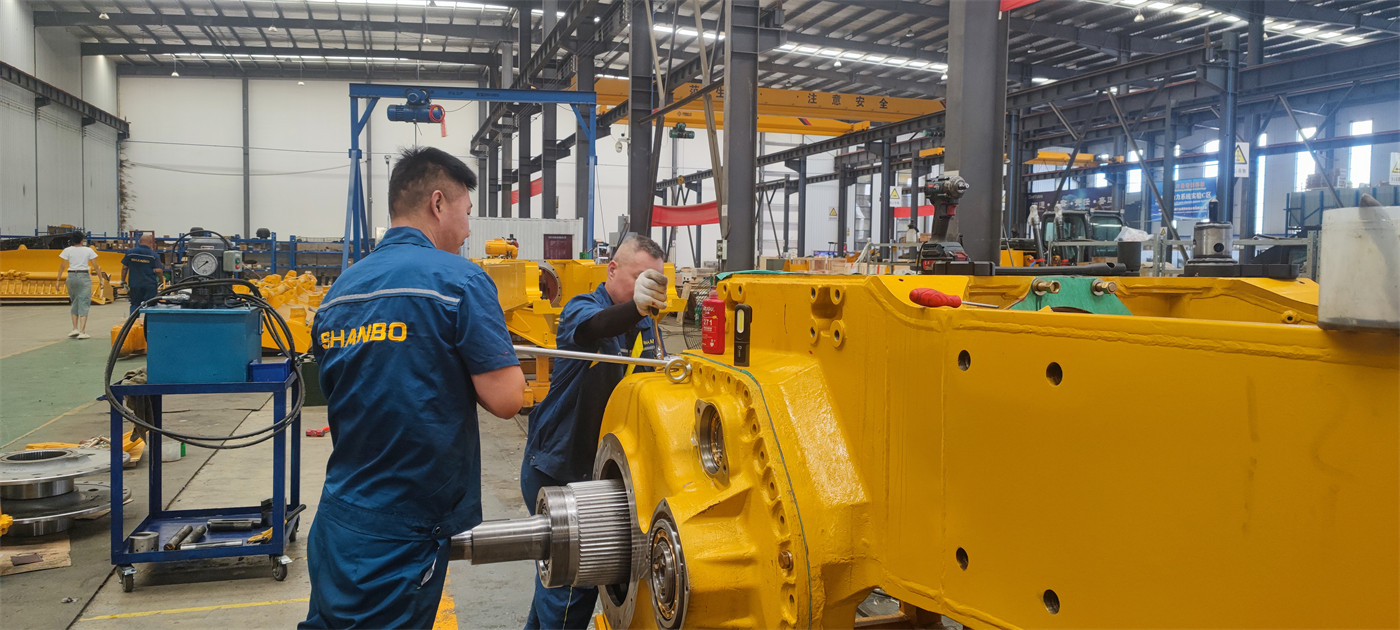
Heavy equipment arrival usually involves flatbed transport or short-distance self-relocation. The operating weight is in the 40-tonne class (SD32 standard version 40200 kg, rock version 40900 kg), which imposes corresponding requirements on transport vehicle load capacity, ground bearing capacity at loading and unloading sites, and clearance of bridges, culverts and overhead lines along the route. The data does not provide transport dimensions or transport weight; these should be confirmed with the supplier based on actual configuration, whether attachments are transported with the machine, and whether the blade needs to be removed for transport.
Fuel and maintenance materials
The SD32 fuel tank capacity is 640 L and the hydraulic tank is 97 L; this capacity determines the basic direction for refueling frequency and on-site fuel storage arrangements. Before arrival, confirm: whether the site has a fuel source meeting China Stage III emission requirements, whether the refueling location and machine parking point are accessible to tanker trucks, and whether there is a centralized collection point for used oil, filters and other maintenance waste. The data does not provide fuel consumption figures, so single-shift fuel consumption or cost should not be estimated from it.
Documentation preparation: write the configuration into the confirmation sheet
The SD32 series is divided by application into standard, coal, rock, desert, sanitation and other versions, and the work equipment and some parameters differ between versions. If procurement and arrival documents only state "one SD32," the delivered machine may not match on-site expectations. The preparation checklist should at minimum specify the following fields:
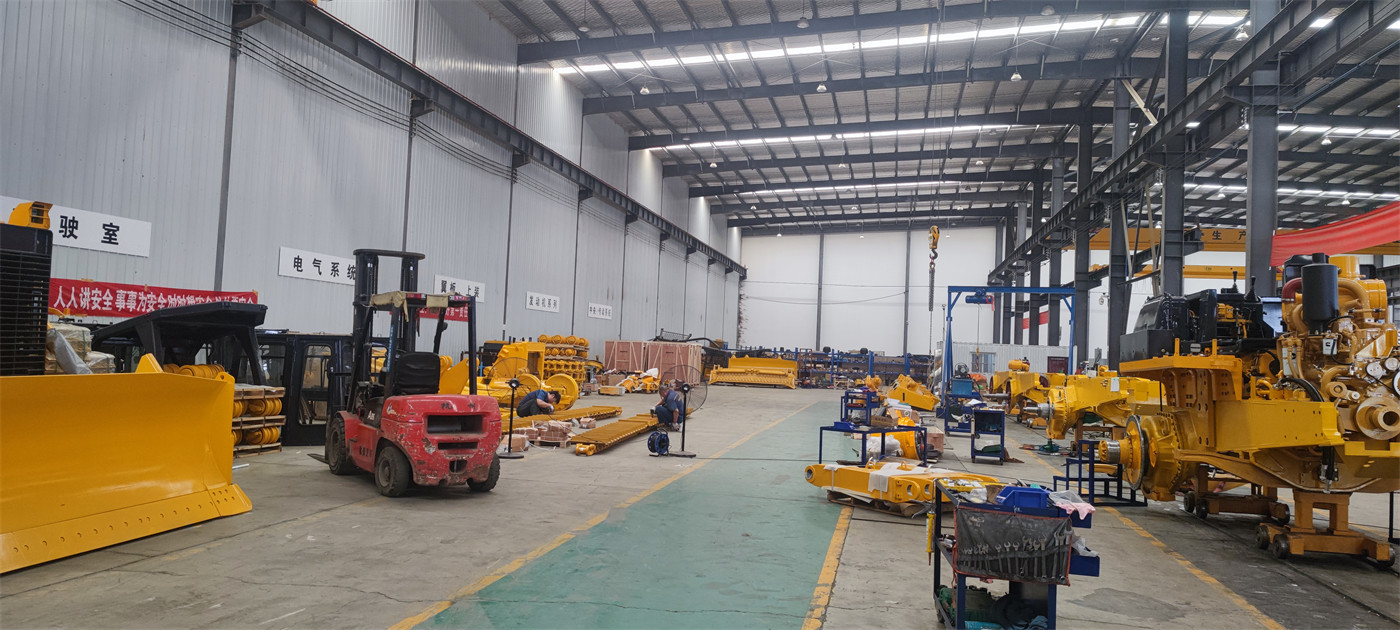
- Version: standard, rock, coal, desert or sanitation, corresponding to different blade and protection configurations.
- Blade type: straight, angle, semi-U, U-blade, coal blade, rock blade, etc.; these fall within the optional range and must be stated in the contract.
- Ripper: single-shank or three-shank, and whether a drawbar is fitted.
- Track shoe width: the data lists multiple specifications of 560/610/660/710 mm; the actual configuration must follow the order.
- Cab protection: FOPS&ROPS is an optional configuration and must not be assumed as standard.
For any item marked "optional" in the data, it cannot be treated as standard during incoming inspection. Acceptance should be based on the contract, packing list and accompanying technical documents.
Using configuration data to explain preparation priorities
Power and transmission: confirm operating conditions rather than estimate productivity
The SD32 is equipped with a WP12/QSNT-C345 electronically controlled engine with rated power of 257/258 kW (at 2000 rpm), meeting China Stage III emission standards. The data also states that its transmission assembly is independently developed and matched to the engine power curve. For on-site preparation, the value of this information is that fuel and after-treatment-related conditions must be arranged according to Stage III engine requirements, and that the transmission and engine are a matched set, so operation and maintenance after arrival should follow the manual rather than experience from other models.
Undercarriage and mobility: which data can be used to judge site adaptability
The SD32 has a track gauge of 2140 mm, track ground contact length of 3150 mm and ground clearance of 500 mm. The data states that the long track ground contact length and high ground clearance contribute to stable travel and off-road mobility. These figures can be used to check whether potholes, slope transitions and work area softness on the access road are within acceptable ranges, but they cannot be used to infer the machine's mobility under specific geological conditions. For soft ground, swamps or high-moisture sites, separately confirm whether a wetland version or other specialized configuration is needed; this article's data does not cover wetland version parameters.
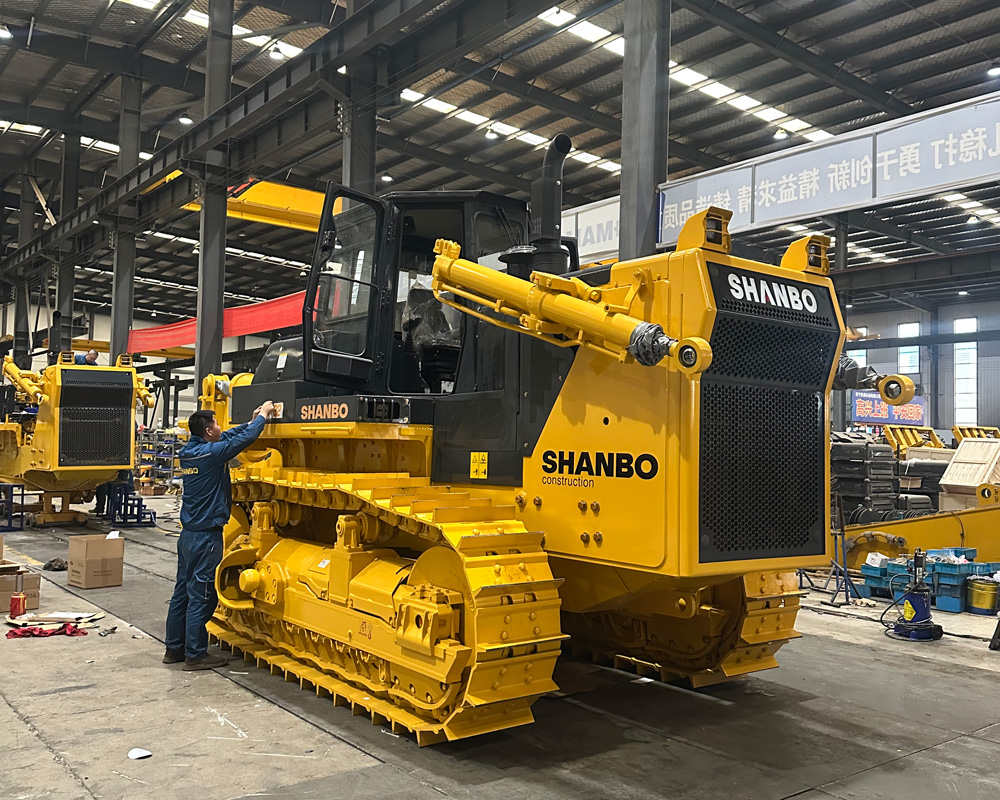
Work equipment: version differences determine on-site task allocation
The rock version is equipped with a thickened, high-wear-resistant rock blade and reinforced push arm assembly for rock conditions; the coal version uses a semi-U or U-shaped coal blade with a different blade width from the standard version. If both rock and bulk material operations exist on site, the preparation stage should clarify which type of task the machine will primarily handle, avoiding configuring one version to cover all conditions. The width, height and lift height corresponding to different blades are listed separately in the data; verification should reference the parameters of the selected version rather than mixing them.
Pre-arrival checklist
| Check item | What to confirm | Source of basis |
|---|---|---|
| Working medium | Earth, rock, coal or landfill material | Site survey and construction plan |
| Version and blade | Standard/rock/coal version and blade type | Contract and order configuration |
| Ripper and drawbar | Single-shank or three-shank, with or without drawbar | Contract and order configuration |
| Track shoe width | Actual specification among 560/610/660/710 mm | Order and accompanying documents |
| Transport conditions | Transport weight, dimensions, loading/unloading site | Confirm with supplier |
| Fuel and maintenance | Stage III fuel source, storage location, waste collection | On-site support plan |
| Operation and maintenance documents | Manual, lubrication point locations, daily inspection items | Accompanying technical documents |
Daily inspection and items to be confirmed
The data mentions that the SD32's lubrication and maintenance points are centrally arranged on the exterior, with large open side panels providing inspection space, which facilitates daily inspection after arrival. Daily inspection should follow the items listed in the accompanying manual, including fluid levels, track tension, blade and ripper connections, lights and instrument displays; specific inspection intervals and values are subject to the manual. This article does not provide maintenance procedures or torque, clearance and other values.
Items still requiring confirmation before purchase include: whether the actual supply configuration of the selected version matches the parameter table, the transport plan and loading/unloading conditions, whether on-site fuel quality meets Stage III engine requirements, whether operators hold qualifications for heavy tracked equipment, and the coverage of spare parts and after-sales service. These conditions are not fully covered by the data and should not be inferred from the model.