


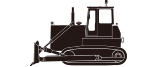
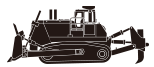
















When dozing soil on soft ground, riverbanks, swamp edges and backfill areas, a common judgment is: as long as a wetland-type bulldozer is used, sinking and slipping can be solved. This understanding is incomplete. What the wetland type changes is the ground pressure and the track support method; it does not change the bearing capacity of the soil itself, nor does it mean continuous operation is possible on ground with any moisture content. If "wetland type" is treated as a universal pass before purchase, it is easy to discover only after entering the site that the working window, dozing distance and soil moisture content do not match.
First distinguish which problem the wetland type solves
The main contradiction for tracked bulldozers on soft ground is that the pressure transmitted from the machine weight through the tracks to the ground exceeds the limit the soil can bear at that time. The approach of the wetland type is usually to reduce ground pressure by widening track shoes and increasing the ground contact area, so that the same machine obtains a greater support margin on the same soil. What it improves is the "load per unit area," not turning soft soil into hard soil.
Therefore, three things need to be judged: whether the soil bearing capacity remains relatively stable during the operation period, whether the machine needs to travel repeatedly in the same area, and whether the dozing process will create new disturbance. If the soil moisture content continues to rise or there is a deep weak layer, widening the tracks can only delay sinking and cannot replace foundation treatment or adjustments to the operating method.
Conditions explicitly stated in the SD26 series wetland type materials
The SD26 series includes standard, forestry, wetland, desert, sanitation, rock and other versions, equipped with the Weichai WP12G280E304 engine. The materials state a net power of 194 kW (260 hp), an operating weight of 23,450 kg, and a ground pressure of 66 kPa. The standard type offers track shoe widths of 560, 610 and 660 mm. The materials also state that the semi-rigid suspension undercarriage expands the track ground contact area to improve traction.
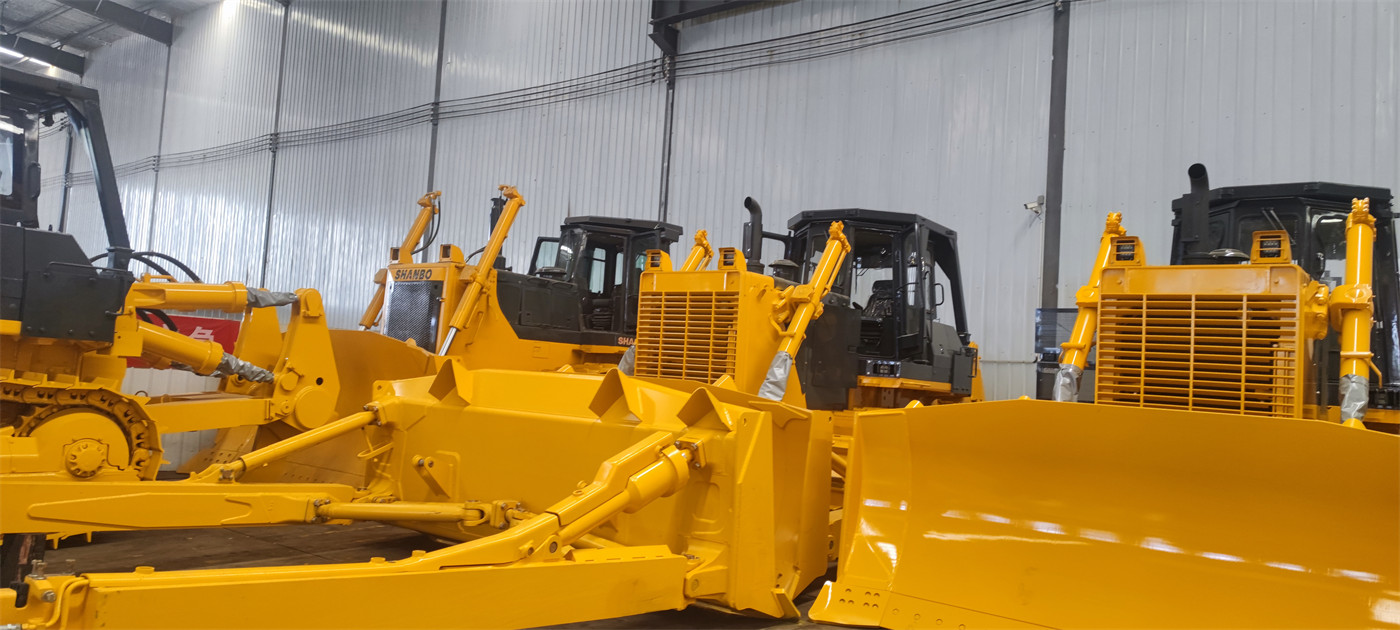
- Engine and transmission: Weichai WP12G280E304, China III emissions; power-shift transmission, torque converter and two-stage straight-tooth final drive.
- Undercarriage and ground contact: ground contact length 2,872 mm, track shoe to track shoe width 2,560 mm, gauge 2,000 mm.
- Working equipment: standard straight tilt blade, capacity 4.6 m³; optional angle blade, U-blade, semi-U blade; optional three-shank ripper, maximum ripping depth 666 mm.
- Operating speed: three forward and three reverse gears, F1/R1 3.8 km/h, F2/R2 6.9 km/h, F3/R3 11.8 km/h.
It should be noted that the above parameters come from SD26 series materials. Whether the specific track shoe width, complete machine weight and ground pressure of the wetland type are consistent with the standard type is not listed one by one in the materials. At purchase, the parameter table for the corresponding version should be used as the basis. The standard type's 66 kPa ground pressure cannot be directly applied to the wetland type, nor can the soil conditions it can pass be inferred merely from the words "wetland type."
Scenarios where the wetland type is worth prioritizing
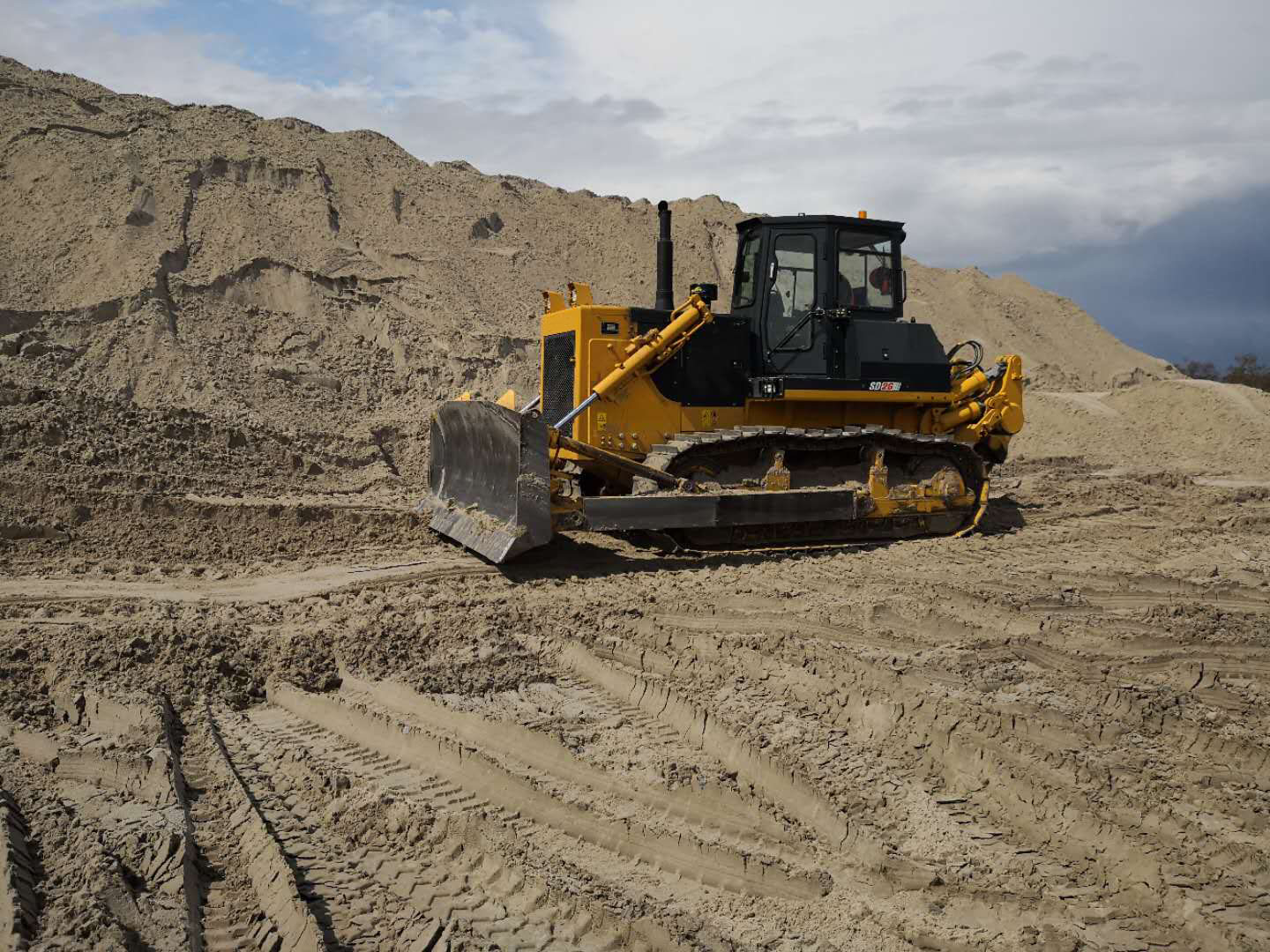
In scenarios where the surface bearing capacity of the soil is low but the underlying layer is relatively stable, and the working face requires the equipment to make multiple trips, reducing ground pressure has practical significance. Examples include soil extraction on riverbanks, site leveling after fish pond dredging, dozing and leveling in backfill areas with high moisture content, and soft-ground sections requiring short-distance dozing along a fixed route. The common feature of such working conditions is: limited working depth, controllable soil disturbance, and the machine not needing to stay on the same weak point for a long time.
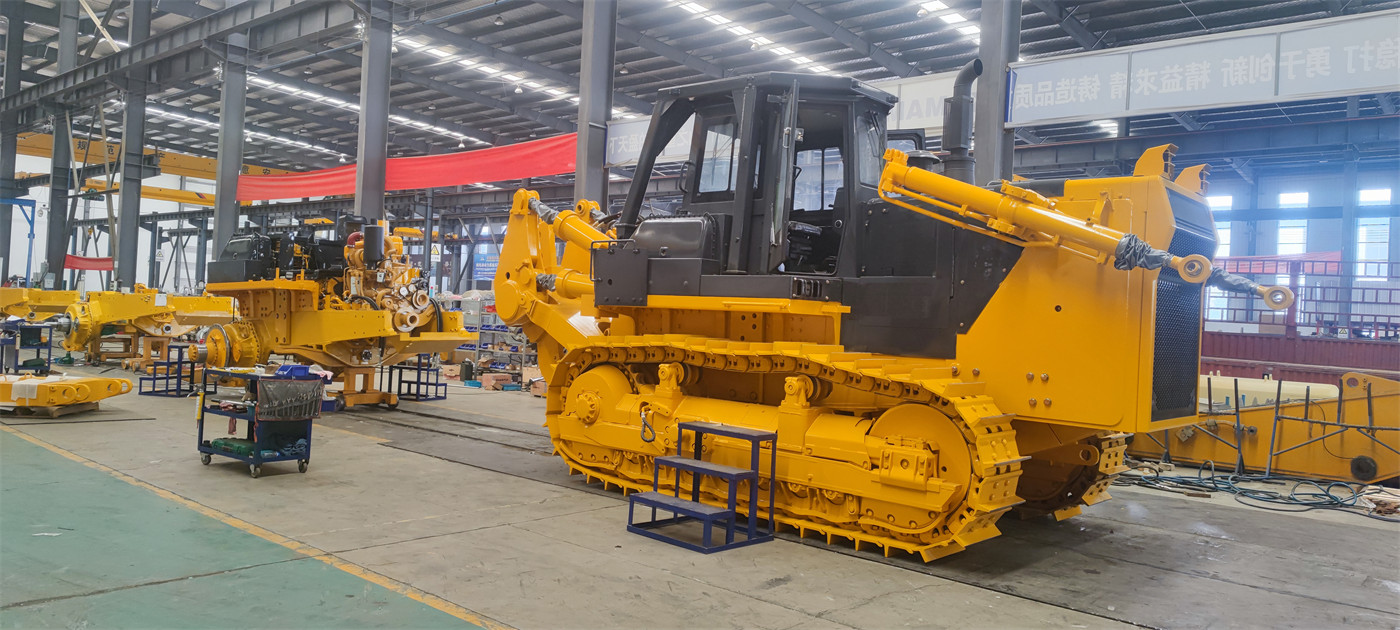
At this time, the value of the wetland type lies in turning "whether it can enter" into "whether it can walk and steer stably after entering." The combination of the semi-rigid suspension undercarriage structure and widened track shoes in the SD26 series materials is precisely centered on this need; however, whether it can meet a specific project still depends on soil moisture content, bearing layer thickness and dozing distance, and cannot be judged only by machine model.
Three situations that are often overestimated
Treating the wetland type as a solution for deep soft foundations
If the weak layer is thick, widening the tracks only distributes the load over a larger area, and the soil below may still continue to deform. What is needed at this time is foundation treatment, road plates or changing the operation sequence, not relying solely on bulldozer configuration. Before purchase, the depth of the weak layer and changes in groundwater level during the operation period should be confirmed. The materials do not contain this part, so conclusions cannot be drawn for the project.
Ignoring the impact of dozing distance and repeated steering
The wetland type still disturbs the soil when steering on soft ground. Long-distance dozing and frequent turning will form ruts and water accumulation under the tracks, and the advantage of ground pressure will be gradually offset. The SD26 series materials give three forward and reverse speeds. The low-speed gear of 3.8 km/h is suitable for heavy-load dozing, but it does not mean continuous operation on soft ground for long periods. Actual arrangements should control the single dozing distance and number of turns, which need to be determined in combination with on-site tests.
Treating optional equipment as standard capability
The SD26 series has a standard straight tilt blade, while the angle blade, U-blade, semi-U blade and three-shank ripper are optional configurations. If ripping or clearing is required in soft-ground operations, whether to equip a ripper, and whether single-shank or three-shank, must be separately confirmed at purchase. The materials list the three-shank ripper with a maximum ripping depth of 666 mm and a width of 2,000 mm, but this does not mean all wetland-type versions come with this device by default.
Pre-purchase confirmation checklist
- The complete machine operating weight, track shoe width and ground pressure of the corresponding wetland-type version; standard-type parameters cannot be substituted.
- Soil moisture content in the working area, weak layer thickness and water level changes during the operation period, to judge whether the reduction in ground pressure is sufficient.
- Single dozing distance, steering frequency and whether continuous multi-shift operation is required, to assess the accumulation of soil disturbance.
- Whether the blade and ripper are optional, the impact on complete machine weight after selection, and whether they are clearly stated in the quotation and contract.
- Transport and transfer conditions: whether the complete machine width after track widening meets the existing transport method. The materials do not give transport dimensions, so this must be separately verified.
- Daily inspections should be carried out according to the manual, focusing on track tension, undercarriage components and the condition of the cooling system in muddy water environments; do not set maintenance values on your own.
How to choose between standard and wetland types
If the soil bearing capacity of the working face is acceptable and there are only local depressions or short-term dampness, the standard type combined with a reasonable operation sequence may be more economical, because the standard type is not affected by widened tracks in hard-soil dozing and steering efficiency. If the working face remains in a low-bearing state for a long time and the dozing distance is controllable, the ground pressure advantage of the wetland type is easier to reflect. The SD26 series offers both standard and wetland types, indicating that this choice needs to be determined according to working conditions at the time of ordering, rather than buying one machine to cover all soft-ground scenarios.
Whichever version is chosen, "wetland type" should be understood as a configuration targeting ground pressure, not as a guarantee of soil conditions. Putting the working window, soil investigation and dozing organization first can reduce the risk of sinking and rework more than looking only at the model name. Passability, productivity and fuel consumption performance not covered by the materials should be judged after verification of on-site conditions and technical confirmation with the supplier.