

















When purchasing a medium dozer, the blade is often the most simplified item: some assume the standard configuration is sufficient, while others directly choose the widest blade. However, blade shape determines how material is cut, how it is pushed, and whether it can be side-cast; once the wrong choice is made, there is limited room to compensate through operating habits. Taking SD22 as an example, this article breaks down blade selection thinking according to job objectives and explains what the documentation can support and what still needs to be confirmed with the supplier.
First distinguish job objectives, not blade width
Blade selection should be subordinate to the role the dozer plays in the process. Even for the same medium dozer, the core actions differ across processes:
- Pushing earth and rock from the excavation face to the loading point or fill surface—concerned with single-pass pushing volume and the ability to retain material in front of the blade;
- Side casting within roadbed or site, slope trimming—concerned with whether the blade edge can be angled and whether material can be discharged to one side;
- Stockpiling coal and bulk materials—concerned with capacity in front of the blade and preventing material from spilling from both ends;
- Quarries, weathered rock, mixed stone sites—concerned with the blade edge and body's ability to withstand impact and wear.
These objectives correspond to different blade types. Writing down the main actions the equipment will perform in the process and then comparing with the blade types listed in the documentation is more effective than comparing blade widths first.
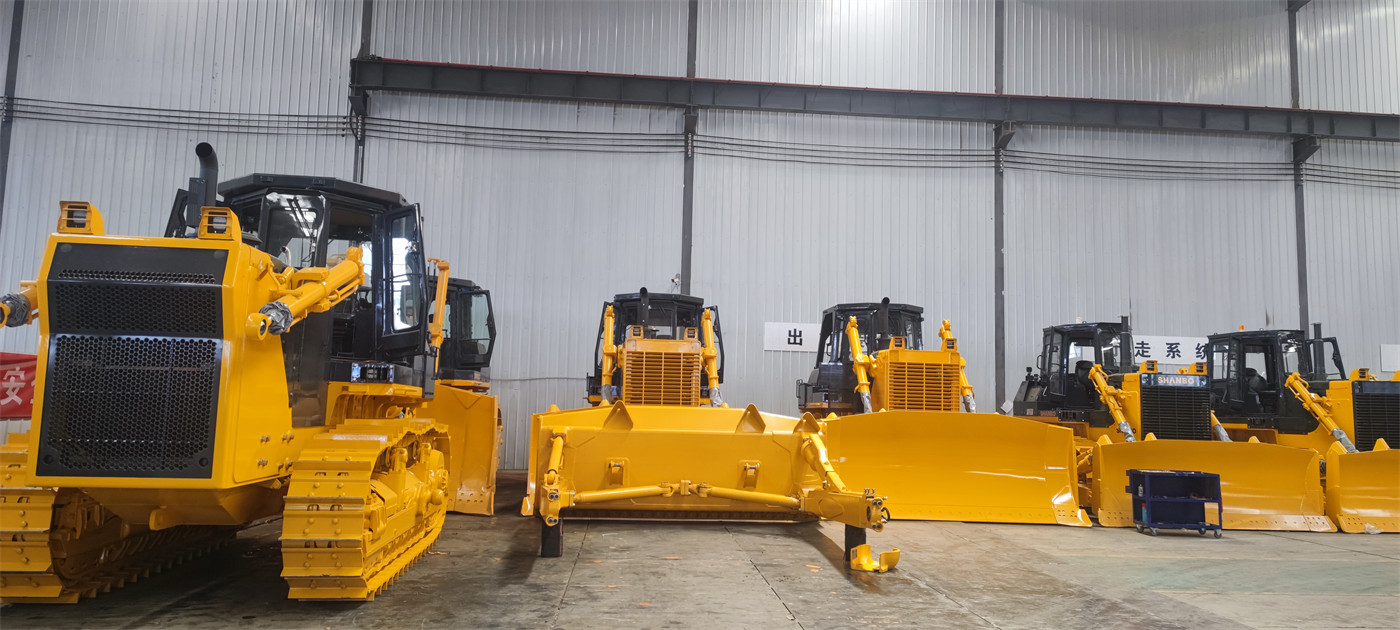
What needs do the four blade types listed in SD22 documentation correspond to?
The SD22 product documentation lists blade types as straight, angle, U, and semi-U, and provides corresponding widths and heights: straight 3725 mm×1315 mm, angle 4635 mm×1055 mm, U 3800 mm×1343 mm, semi-U 3725 mm×1374 mm. These figures help judge the blade cross-section and lateral coverage, but cannot be directly converted into productivity or fuel consumption.
| Blade Type | Width×Height (mm) | Closer Job Requirements |
|---|---|---|
| Straight | 3725×1315 | Conventional earth and rock pushing, site leveling |
| Angle | 4635×1055 | Processes requiring side casting, slope trimming, or trench excavation |
| U | 3800×1343 | Loose material stockpiling, relatively larger capacity in front of blade |
| Semi-U | 3725×1374 | Pushing needs between straight and U blades |
The angle blade has the largest width, but is not suitable for all conditions: its height is lower, leaning more toward side discharge and shaping; if the main job is long-distance forward pushing of large volumes of earth, straight or U-type blades are closer to the need. U and semi-U blades are taller than straight blades, suitable for loose material scenarios where material easily spills from both ends, but the documentation does not provide capacity values for each blade type, so self-calculation is not advisable during procurement.
Walk through the decision path
Step 1: Determine the main material
Ordinary earth and rock, loose coal, weathered rock, and mixed stone differ in wear and impact on the blade edge. SD22 documentation separately lists optional items such as coal blades and rock blades, indicating configurations beyond standard blade types for specific materials. If the material is mainly crushed stone or weathered rock, rock-type blades and corresponding push arm reinforcement should be raised as inquiry conditions, rather than assuming the standard straight blade is sufficient.
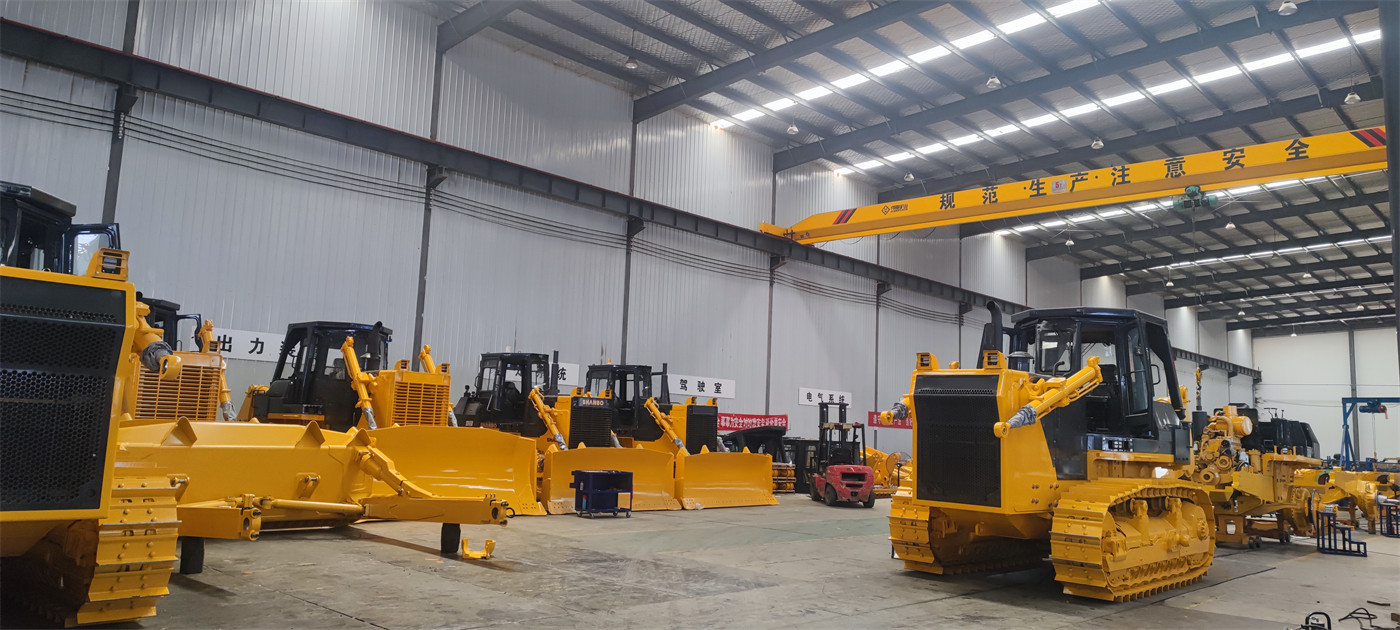
Step 2: Determine whether the main action is forward pushing or side discharge
If the process is mainly forward pushing and layered spreading, straight, U, and semi-U blades are the priority comparison objects; if a slope, trench, or side casting needs to be formed on one side, only then does the angle blade enter the comparison scope. The documentation only lists blade types and dimensions, without giving applicable slope or side discharge angle for each blade type; this part needs to be confirmed with the supplier in conjunction with construction organization.
Step 3: Verify matching conditions with the whole machine
Different blade types correspond to different equipment weights; the documentation does not list the changes in overall operating weight under each blade configuration. The SD22 standard version documentation gives an operating weight of 23450 kg and ground pressure of 66 kPa; these data correspond to its standard configuration and cannot be directly applied to the state after changing to other blades. During procurement, the supplier should be required to clarify the whole machine parameters and transport dimensions under the selected blade type.
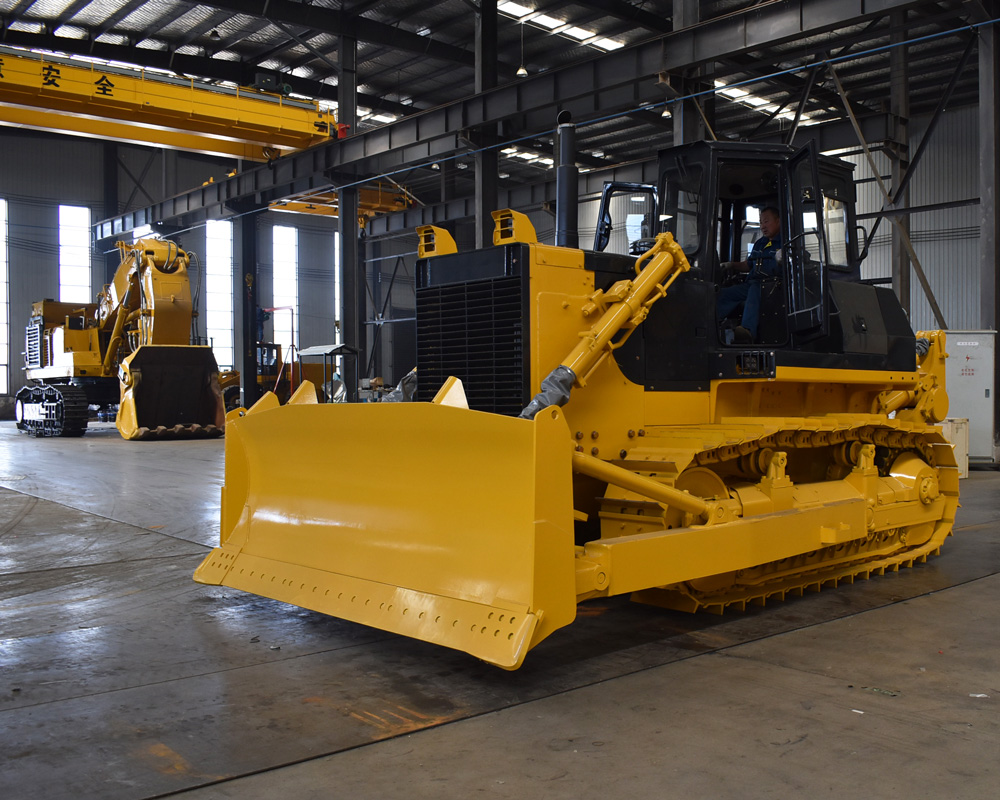
Step 4: Confirm whether rippers and other attachments are also needed
SD22 documentation lists single-shank and three-shank rippers, with single-shank ripping depth of 695 mm and three-shank of 666 mm, and ripper lift heights of 515 mm and 555 mm respectively. If the job includes hard layers that need pre-ripping, the combination of ripper and blade will affect the overall machine length and job organization; this should be confirmed in the same configuration list to avoid misunderstanding optional items as standard.
Easily overlooked boundaries
- The documentation does not provide operating efficiency, unit fuel consumption, or productivity data for each blade type; shift output cannot be inferred from blade width.
- The correspondence that the angle blade width of 4635 mm is greater than the standard version's overall width of 3725 mm does not directly hold—the overall dimensions in the documentation correspond to the standard configuration, and the overall machine width after installing the angle blade needs separate confirmation.
- The coal version SD22C is listed separately in the documentation, equipped with a 4200 mm×1350 mm coal blade and ground pressure of 57.5 kPa; it is not the same configuration state as the standard version, and coal version data cannot be taken as the result of changing blades on the standard version.
- The documentation does not state the supply cycle, price, or optional track shoe width combinations for each blade type; these are items that must be confirmed one by one before procurement.
Checklist to confirm before procurement
- Main material categories and proportions, whether hard layers or large stones requiring pre-ripping are included;
- Whether the dozer mainly performs forward pushing, side casting, or stockpiling in the process, and whether multiple actions are mixed;
- Overall operating weight, overall dimensions, and transport state under the selected blade type;
- Whether the blade can be configured simultaneously with rippers, drawbars, and other attachments; these are all listed as optional in the documentation;
- Supply of wear parts and daily inspection requirements; specific items are subject to the accompanying manual.
Blade selection is essentially translating process actions into blade type conditions. SD22 documentation provides four blade types and dimensions, sufficient to support preliminary comparison but not to replace configuration confirmation for a specific site. Matching the blade types in the table above with one's own process item by item, and listing parts not covered by the documentation as items to be confirmed, is closer to actual needs than vaguely choosing the "standard configuration."