





















Daily dozer inspection often falls into two extremes: either just walking around to glance at the tracks and blade before starting work, or ticking off every item in the manual, which is impossible to finish before the shift. What truly needs attention are the parts that, if they fail, directly affect the day's operation and can be detected early by sight and touch. Using the SD16 public configuration as a reference, this article explains the order of daily checks, which structural designs make inspection easier, and how to handle areas not covered by public materials.
First, distinguish three types of checks; do not mix them
Daily checks can generally be divided into three stages by timing: pre-shift checks, in-operation inspections, and post-shift checks. Each stage has different priorities; mixing them easily leads to missed items and rushing through items that require shutdown confirmation.
- Pre-shift checks: Focus on fluid levels, filter status, track tension, blade and ripper appearance, and signs of leakage, to confirm the machine can start work safely.
- In-operation inspections: Focus on gauges and alarms, abnormal vibration or noise, and changes in exhaust and oil temperature, to detect running anomalies early.
- Post-shift checks: Focus on cleaning, fastener recheck, lubrication point greasing, and recording the day's anomalies, to leave issues for the shutdown period.
The specific items, judgment criteria, and intervals for these three stages should be based on the accompanying manual and the maintenance plan provided by the supplier. Different versions and configurations of dozers do not have identical check items.
Pre-shift walk-around: first look for leaks, then wear, finally looseness
The walk-around sequence can be fixed; once it becomes a habit, it will be much faster. It is recommended to follow the order: ground—undercarriage—work equipment—engine hood.
- Ground: Check for oil or water traces under the parking position. Fuel, hydraulic oil, and coolant leaks often leave traces on the ground first.
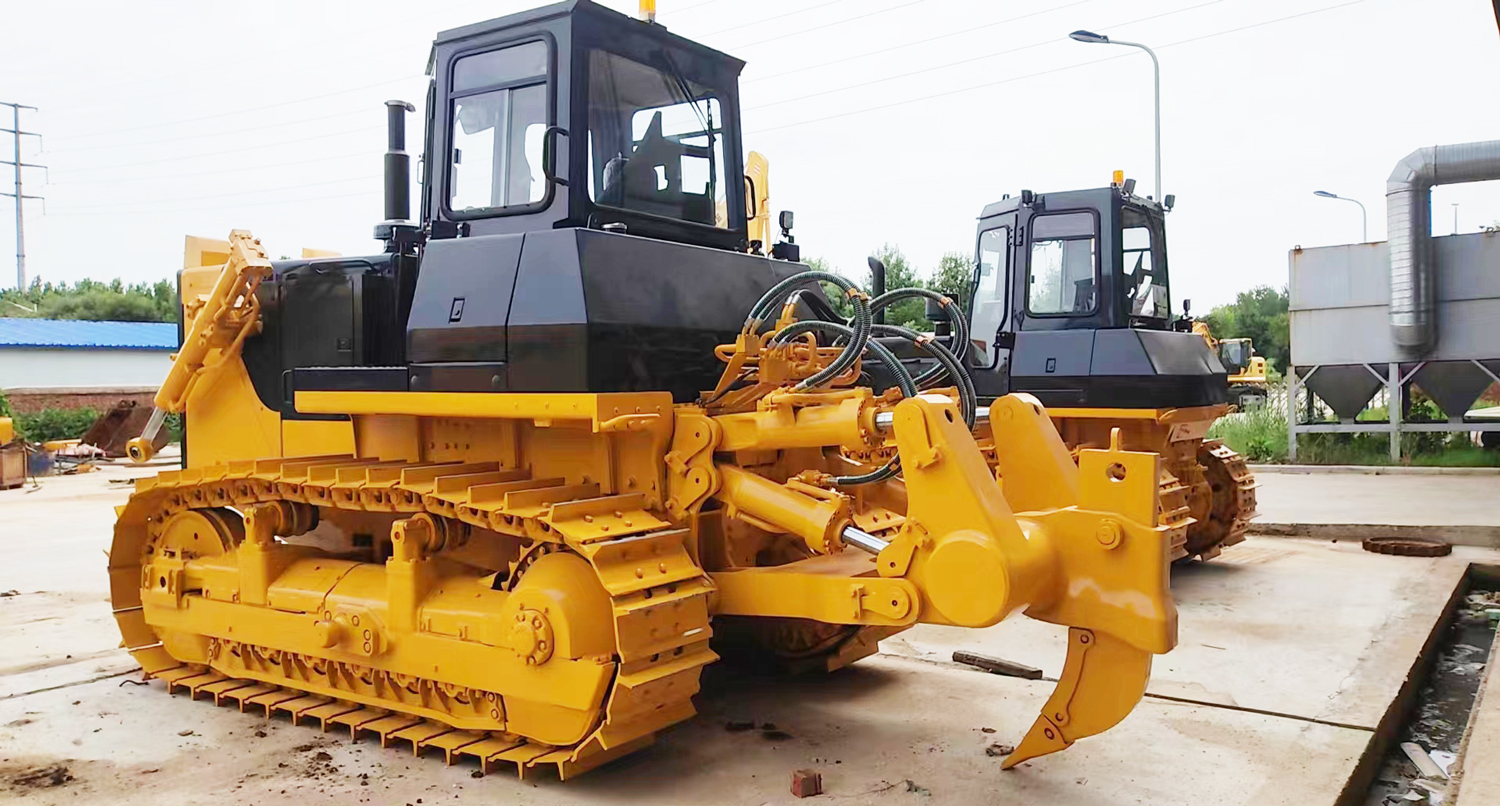
- Undercarriage: Check track shoes for cracks or missing parts, obvious abnormal track tension, and oil seepage or debris entanglement near track rollers and carrier rollers.
- Work equipment: Check blade cutting edge wear, blade and push arm connection pins, ripper teeth and connection points. Blade and ripper are optional combinations; the actual installed configuration must match the contract and nameplate.
- Engine hood and cab: Check hood locking, lights, mirrors, cab glass, and door locks to ensure no loose parts can be drawn in or thrown out.
SD16 public materials mention standard LED work lights, which support visibility for night work; the wiring harness is protected by corrugated tubing with divider lines. Such structures reduce the impact of dust and moisture on the harness, but daily checks should still look for damaged harnesses and loose connectors; do not skip visual inspection just because protection is present.
Fluids and filters: convenient location does not mean less checking
SD16 materials explicitly state: the fuel filter and air filter are designed on the same side, and a large openable side cover facilitates daily inspection and maintenance; lubrication points for core components such as the fan shaft and equalizer beam are exposed. The practical significance of these structures for daily checks is that inspection actions are more concentrated, without repeatedly walking around the machine or removing many covers.
However, convenience only solves "how easy it is to check," not "what to check." Daily attention should include:
- Whether engine oil, coolant, and hydraulic oil levels are within the range specified in the manual;
- Whether fuel tank level meets the day's work schedule; the SD16 standard version has a 315 L tank capacity. Actual fuel consumption depends on working conditions, load, and operating habits; the materials do not provide fuel consumption figures;
- Air filter indicator or element status; in dusty sites, shorten the inspection interval;
- Signs of water accumulation or clogging in the fuel filter and water separator;
- Leakage near oil pipe joints and hydraulic cylinder piston rods.
Fluid level standards and replacement intervals must be checked in the manual; do not top up or extend use based on experience. Pay attention to cleanliness when adding fluids; avoid open filling in dusty environments.
Lubrication points: exposed design saves time, but do not miss any
There are multiple lubrication points on the dozer's work equipment and undercarriage; blade pins, push arm hinges, ripper hinges, fan shaft, and equalizer beam are usually within daily or periodic lubrication scope. SD16 materials mention that lubrication points for core components such as the fan shaft and equalizer beam are exposed, making daily lubrication maintenance more time-efficient. This means lubrication point inspection can be included as a fixed post-shift action, rather than waiting for abnormal noise.
It should be noted that the grease grade, fill quantity, and interval for each lubrication point are not listed in the materials and should be based on the manual. Dust, moisture, and load vary greatly under different working conditions; whether to adjust intervals should also be confirmed with the supplier.
During operation: gauges and sounds indicate problems earlier than appearance
In-operation checks mainly rely on the operator's observation. The SD16 is equipped with an intelligent display control terminal for viewing real-time machine status; electronically controlled hand and foot throttles are used for operation. Develop the habit of glancing at gauges to check whether water temperature, oil temperature, oil pressure, voltage, and other indicators are within normal ranges and whether there are alarms.
Also pay attention to changes in sound and vibration: regular abnormal noise from tracks or undercarriage, slower blade movement, abnormal steering response, or obvious changes in exhaust color should prompt a shutdown inspection; do not continue operating with a fault. For specific alarm meanings and handling methods, refer to the manual and supplier guidance; this article does not provide diagnostic values.
After work: clean, tighten, record
Post-shift checks focus on retaining the day's information to prevent small problems from accumulating.
- Clean mud and debris from tracks, blade, and cooling areas, especially in dusty sites;
- Recheck key fasteners and connection pins for looseness or missing parts;
- Grease lubrication points as required by the manual;
- Record abnormal phenomena, alarm information, and handling actions of the day for later troubleshooting and shift handover.
Whether more in-depth checks are needed after work depends on working condition intensity and machine usage time. For high-frequency heavy-load, dusty, water-crossing, or soft-ground operations, inspection frequency usually needs adjustment; specific arrangements should be determined based on the manual and site management requirements.
Different versions mean checklists cannot be copied directly
The SD16 is available in multiple versions: standard, coal, extended, super-wetland, sanitation, desert, and forestry logging. Different versions have different blade, track, and work equipment configurations. For example, the standard version is equipped with a straight blade, angle blade, or U-blade; the super-wetland version uses 960 mm wide track shoes with a ground pressure of 22 kPa; the coal version is equipped with a coal blade. Different work equipment and undercarriage mean daily check focus also changes: the wetland version should focus on tracks and seals, the coal version on coal blade wear, and machines with rippers should check ripper teeth and hinges.
Therefore, the daily checklist should be prepared based on the actual delivered configuration; a checklist for one version cannot be applied to all machines. Before purchase, ask the supplier to clarify the accompanying configuration list and maintenance documentation scope.
Items not covered by materials: clarify before purchase
Daily inspection is only part of equipment management. The following information is not provided in the public materials this article is based on and should be confirmed with the supplier before purchase or site entry:
- Specific fluid grades, fill quantities, and replacement intervals;
- Grease specifications and intervals for each lubrication point;
- Filter models and replacement criteria;
- Alarm code meanings and fault handling procedures;
- Recommendations for adjusting inspection frequency under different working conditions;
- List of accompanying tools, spare parts, and maintenance documentation.
Clarifying these items at the procurement stage provides a basis for compiling the on-site checklist and ensures operators and maintenance personnel know whom to contact and what procedure to follow when anomalies occur.
Frequently asked questions
How long does a daily inspection take?
The materials do not provide time data. Actual duration depends on the scope of check items, machine cleanliness, and personnel proficiency. It is recommended to first compile a checklist based on the manual's items, then adjust to the site rhythm; do not omit key items to save time.
What is different about the first inspection after a new machine arrives?
New or long-stored equipment requires more confirmation items before entry, including transport securing, fluid status, battery, and track tension. These should be based on the supplier's delivery inspection and the manual; this article does not elaborate.
Can I rely only on gauge alarms and skip the walk-around?
No. Gauges reflect operating parameters; issues such as track cracks, blade wear, line leakage, and loose fasteners often require visual detection. The two are complementary and cannot replace each other.