
















Site leveling looks like the most routine job for a bulldozer, but before assigning it to a small machine, one question must be answered first: do the site size, soil conditions and haul distance fall within the range where a small bulldozer can perform reliably? If the boundaries are unclear, the equipment may arrive and then be unable to push, turn or avoid repeated rehandling. Using the published SD10 information as an example, this article explains the applicable conditions, capability boundaries and pre-purchase items to confirm for small bulldozers in site leveling.
Start with the four constraints of the site to be leveled
Site leveling is not a single action; it usually includes surface clearing, local cutting of high spots, backfilling of low areas, rough grading and leveling before compaction. Which stage a small bulldozer is suitable for depends on the following conditions:
- Site scale: whether the working area allows the machine to complete the full cycle of pushing, turning and exiting, and whether buildings, trenches or barriers restrict movement around the perimeter.
- Haul distance: the longer the push distance, the higher the share of non-productive travel in each cycle and the worse the economics of a small machine; short-distance pushing and on-site spreading are a better match.
- Soil type and moisture state: soft ground with high moisture content amplifies the effect of ground pressure, and it is necessary to judge whether the tracks can remain stable.
- Process sequencing: whether leveling is immediately followed by compaction, survey verification or subsequent structural work determines whether the bulldozer needs to achieve rough grading or finer leveling.
Until these four items are confirmed, power or blade width alone cannot determine whether a small bulldozer is sufficient.
Where the capability of a small bulldozer comes from
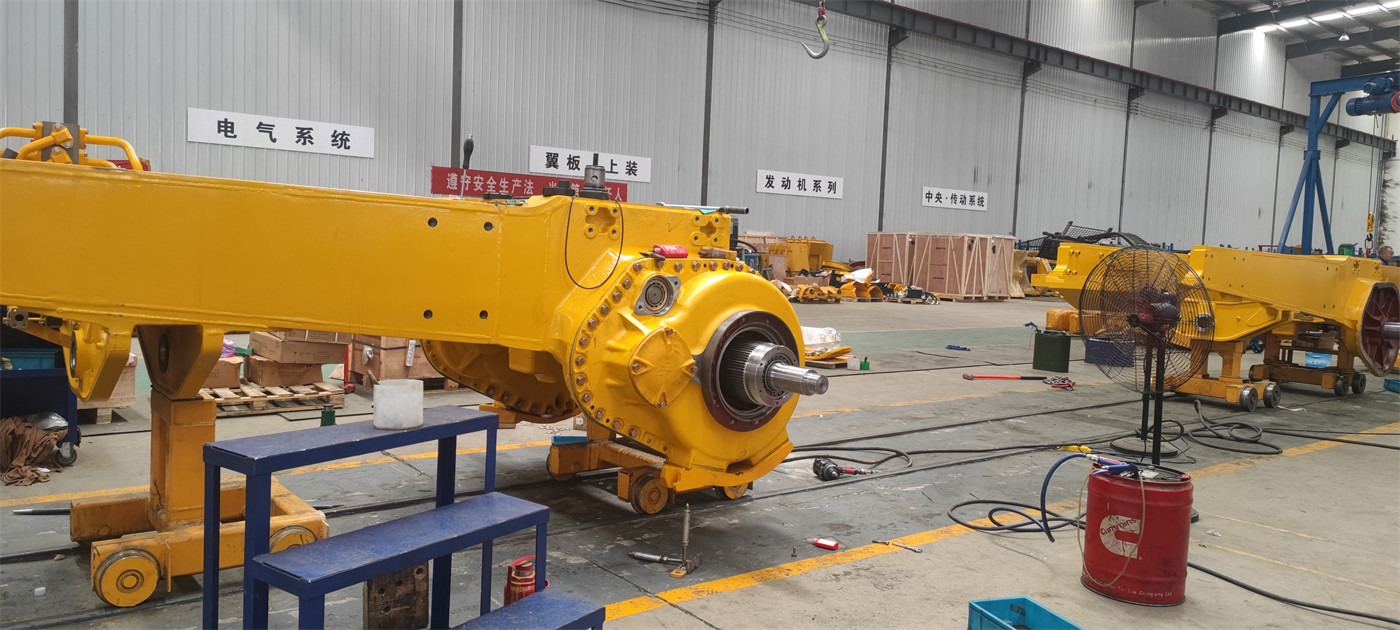
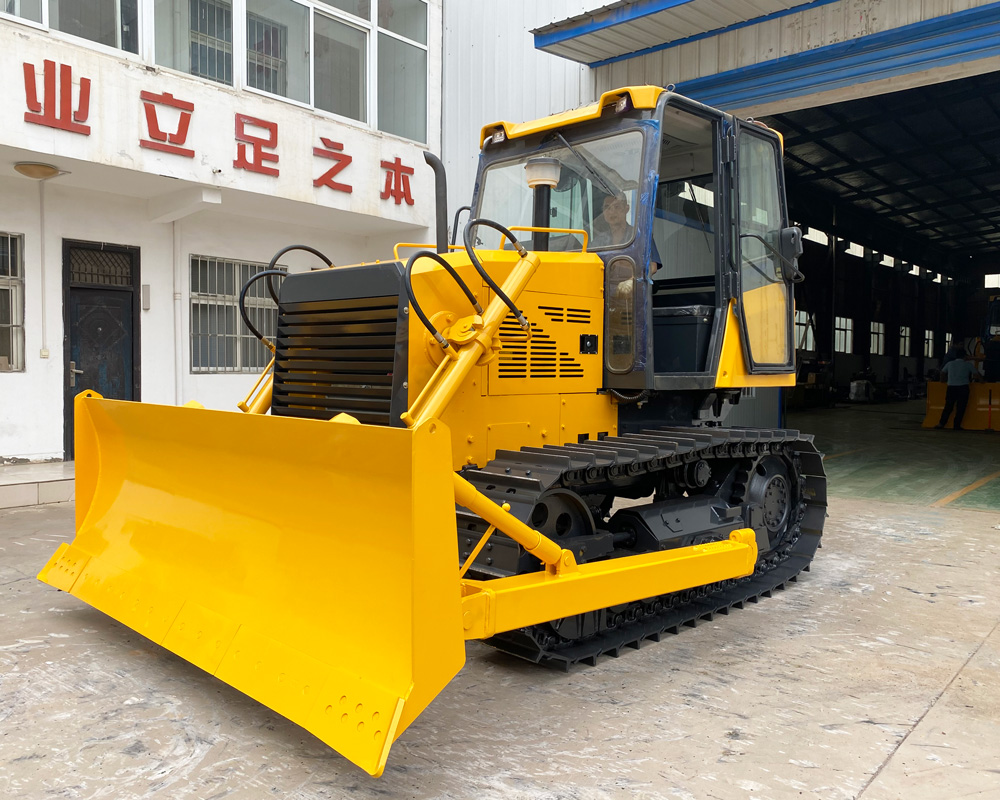
According to the published SD10 information, its operating weight is 10000kg, maximum tractive force is 95kN, the engine is a Cummins 4BT3.9-C125 with rated power of 81kW (125HP)/2300r/min and maximum torque of 400N·m. Overall dimensions are 4400×2960×3030mm, with a 4F+2R mechanical transmission, forward speeds of 2.6–10.4km/h and reverse speeds of 3.7–6.7km/h. These data correspond to tasks such as small-to-medium earthmoving and site leveling, not large-scale cut-and-fill or long-distance pushing.
For the undercarriage, the track shoe width is 450mm and ground pressure is 54.4kPa; the information also states that the undercarriage has been strengthened and the travel mechanism optimized. The ground pressure value must be judged together with the actual bearing conditions of the site: on ordinary compacted ground or relatively dry, hard soil, it is an input condition that needs to be checked; on soft, muddy or high-moisture ground, this item alone cannot lead to a "pass" conclusion, and on-site confirmation should also consider soil type, moisture content and track sinkage.
Blade configuration determines how the leveling process is arranged
The SD10 blade dimensions are 2960×960mm, with a maximum lift height of 830mm and maximum digging depth of 350mm. The information clearly states that straight, semi-U and coal blades are optional, and that a fixed towing device or three-shank ripper can be selected at the rear. Note the phrase "optional": optional items are not the same as standard configuration, and the delivered configuration and option list should be confirmed item by item at purchase.
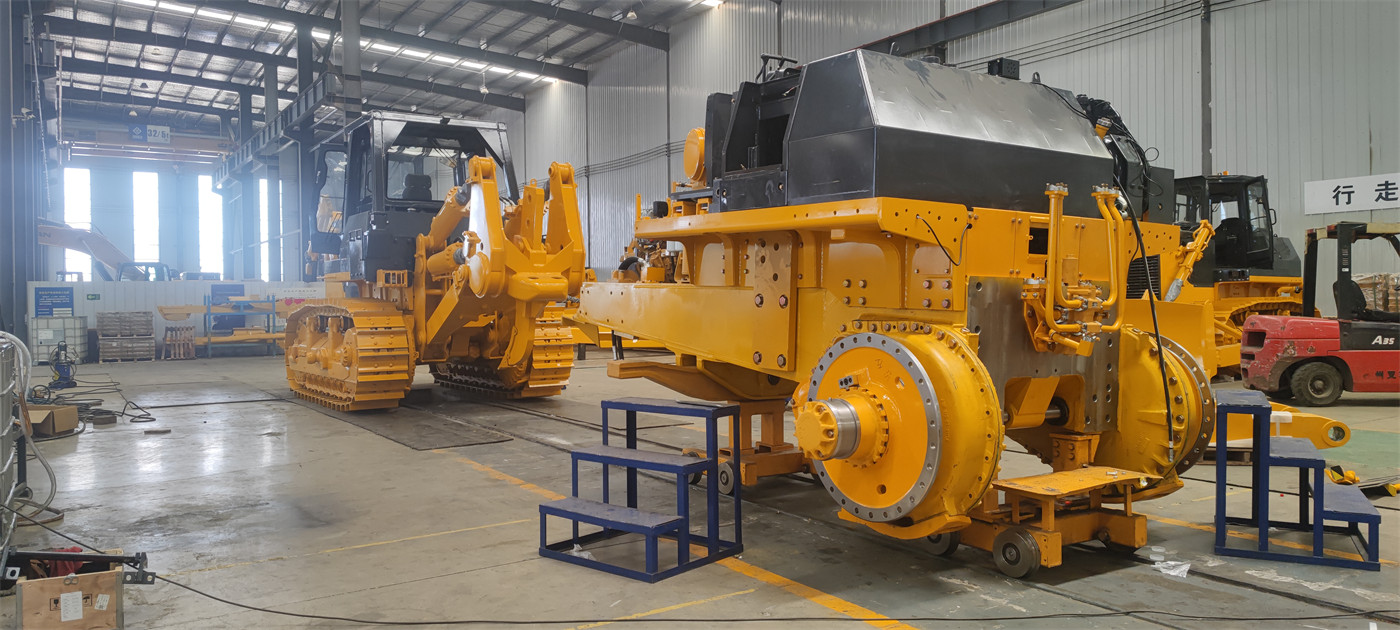
Applied to site leveling: a straight blade is suitable for more conventional pushing and spreading; a semi-U blade usually performs differently in material rolling and pushing, but specific applicability should be based on the configuration description provided by the supplier; a coal blade is intended for coal-type material handling and should not be assumed suitable for general earthwork leveling. If the site has hard soil, compacted layers or requires loosening of the surface, a three-shank ripper can serve as a matching solution for pre-ripping, but it is optional and must be separately confirmed as to whether it is supplied with the machine.
Matching judgment for different leveling tasks
| Task characteristics | Judgment direction | Items to confirm |
|---|---|---|
| Small area, short-distance cut and fill | A small machine can be included in the plan | Whether the site allows turning and exiting |
| Large-area rough grading with longer haul distance | Cycle efficiency must be evaluated; may exceed the economic range of a small machine | Push distance and single-shift earthwork organization |
| Soft or high-moisture ground | Trafficability requires special confirmation | Soil conditions and risk of track sinkage |
| Leveling immediately before compaction | Leveling accuracy requirements must be clarified | Flatness requirements of subsequent processes |
Typical conditions suitable for consideration
Based on the above information, conditions under which a small bulldozer is more suitable for site leveling include: a modest site area, short push distances, mainly cutting high spots and filling low areas plus spreading, some turning space around the perimeter, and soil conditions that are not obviously soft foundation. The SD10's overall dimensions and required turning space are relatively compact, and the application directions mentioned in the information, such as municipal engineering, farmland improvement and site leveling, are consistent with these conditions.
Conversely, if the site is large, push distances are long, earthwork volume is high and continuous high-intensity operation is required, the single-machine capability of a small bulldozer will become a bottleneck. In that case, equipment specifications or process organization should be re-evaluated rather than relying on extended working hours.
Items to confirm before purchase
- The blade type actually delivered: whether straight, semi-U or coal blade matches the working material, and whether optional items are written into the contract configuration list.
- Whether rear attachments include a fixed towing device or three-shank ripper, and whether they are standard or optional.
- The difference between the test conditions corresponding to the 54.4kPa ground pressure and the actual soil conditions on site; ask the supplier for further explanation if necessary.
- Whether the mechanical transmission gear speeds match the on-site haul distance and process rhythm.
- Emission-related statements, accompanying documentation, spare parts and after-sales scope are all subject to the supplier's written information.
- Daily inspection items should follow the manual, with focus on track tension, oil and filter condition; do not set unverified maintenance values on your own.
The value of a small bulldozer in site leveling is not to replace large equipment, but to handle work of the right scale stably and with easy access and exit. Confirming site conditions, haul distance, soil type and the configuration list first, and then judging whether the machine falls within the applicable boundaries, is more reliable than looking at any single parameter.