




















Opening the product page of a medium bulldozer, you will often see standard, rock, coal, desert, and other versions listed side by side, each with its own parameter table. If buyers read line by line starting from rated power, they can easily mix up configurations from different versions and mistake optional items for factory-standard equipment. Using the listed SD32 series materials as an example, this article explains the reading order and the boundaries to watch for.
Confirm the version first, then read the parameters
The SD32 materials explicitly list standard, rock, desert, sanitation, and coal versions, and provide partial descriptions of the SD32 standard version, SD32C coal version, SD32W rock version, and SD32D desert version respectively. The work equipment, applicable scenarios, and parameter tables of different versions are not entirely consistent, so the first step is not to compare power, but to match the version names in the materials with your own work object.
For example, the materials describe the rock version as intended for mining and stone conditions, equipped with thickened high-wear-resistant rock pushing blades and reinforced push rod assemblies; the coal version is stated to be used in power plants, ports, and bulk material yards, with standard 610mm wide wear-resistant tracks and a coal pushing blade. These descriptions point to different work objects, so when reading you should first determine which category your main pushed material belongs to, then go to the parameter table of the corresponding version.
Distinguish standard, optional, and version-specific work equipment
The SD32 standard version materials state "optional straight blade, semi-U blade, U-shaped blade, angle blade, coal pushing blade, rock blade, sanitation blade, ripper, drawbar, etc." Here "optional" means not all blades come factory-installed with the standard version. The parameter table lists straight, angle, and semi-U blades for the standard version, with widths of 4130mm, 5000mm, and 4130mm and heights of 1590mm, 1140mm, and 1710mm respectively, indicating that these three have corresponding data in the standard version parameters, while other blade types need to be confirmed as options.
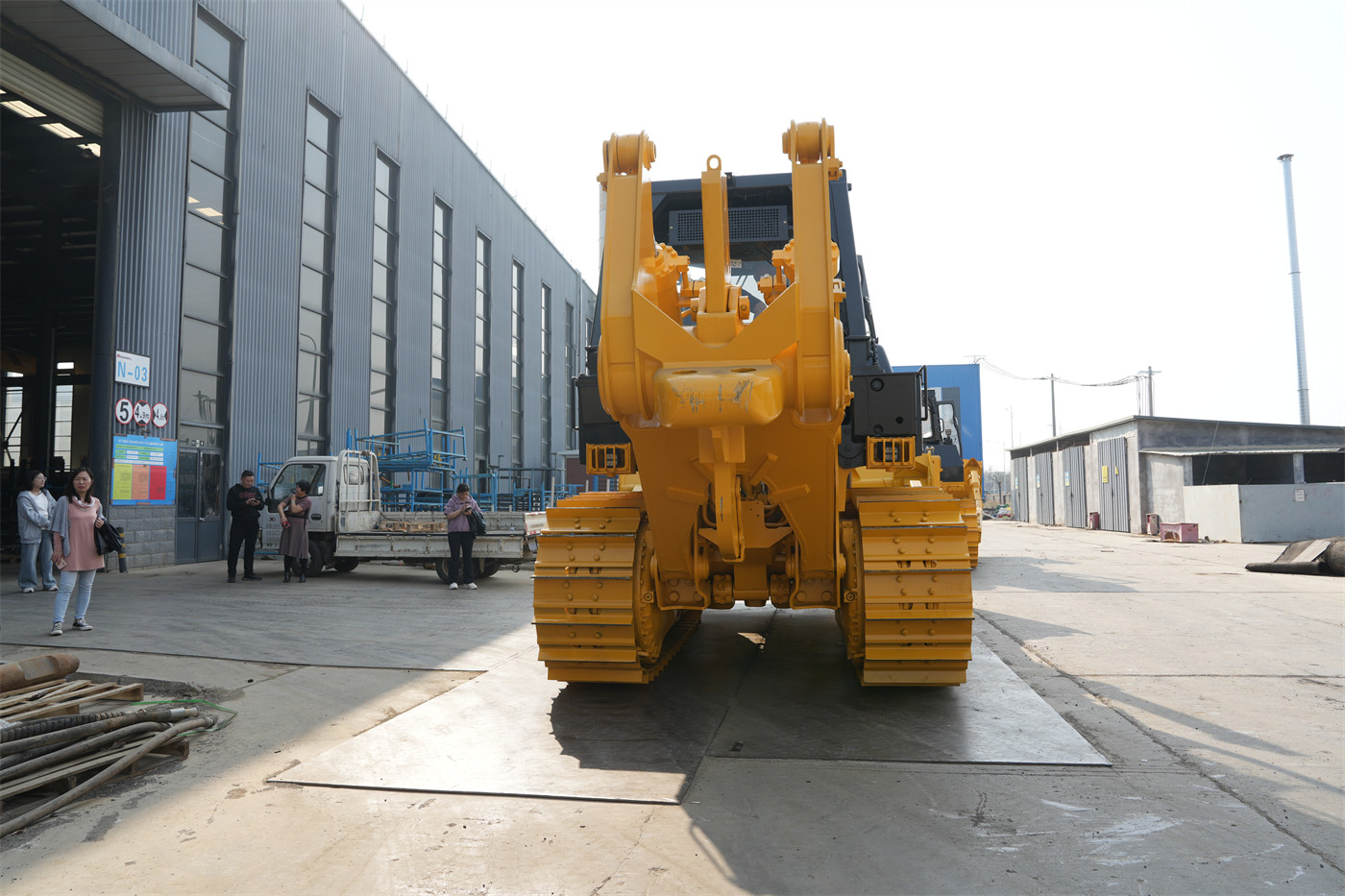
The rock version lists rock straight, rock angle, and rock semi-U types; the coal version lists semi-U coal mining blades and U-shaped coal mining blades; the desert version materials mention 710mm wide shock-absorbing tracks. These differences are version-level configurations and should not be applied to one another. When reading, you can use a simple comparison table to record:
| Reading item | Content to confirm |
|---|---|
| Version name | Whether standard, rock, coal, desert, and other versions correspond to the work object |
| Blade type | Whether the blade types listed in the materials are standard configuration or optional |
| Ripper | Single-shank or three-shank, and whether the materials provide corresponding depth data |
| Track shoe width | The standard version lists 560/610/660/710mm; the specific configuration needs confirmation |
The same applies to the ripper. The standard version parameters state the ripper type as single-shank/three-shank, with maximum ripping depth of 1250mm for single-shank and 842mm for three-shank; the coal and rock versions also list single-shank/three-shank and similar depth data. However, the materials also note that the standard version's operating weight of 40200kg is a value "with single-shank ripper and ROPS," indicating that this weight corresponds to a specific configuration and cannot be directly taken as the factory weight for all configurations.
Look at the applicable scope of undercarriage and travel parameters, not just the numbers
The standard version materials give a track gauge of 2140mm, track shoe widths of 560/610/660/710mm, track link ground contact length of 3150mm, 41 track shoes per side, track pitch of 228.6mm, and ground clearance of 500mm, and state that the long track ground contact length and high ground clearance are for stable travel and off-road passability. These data can help judge the direction of the equipment's adaptability to site conditions, but the materials do not give ground pressure values corresponding to different track shoe widths; the standard version lists only one ground pressure value of 97.7kPa, so you cannot calculate the ground pressure after changing to narrow or wide shoes on your own.
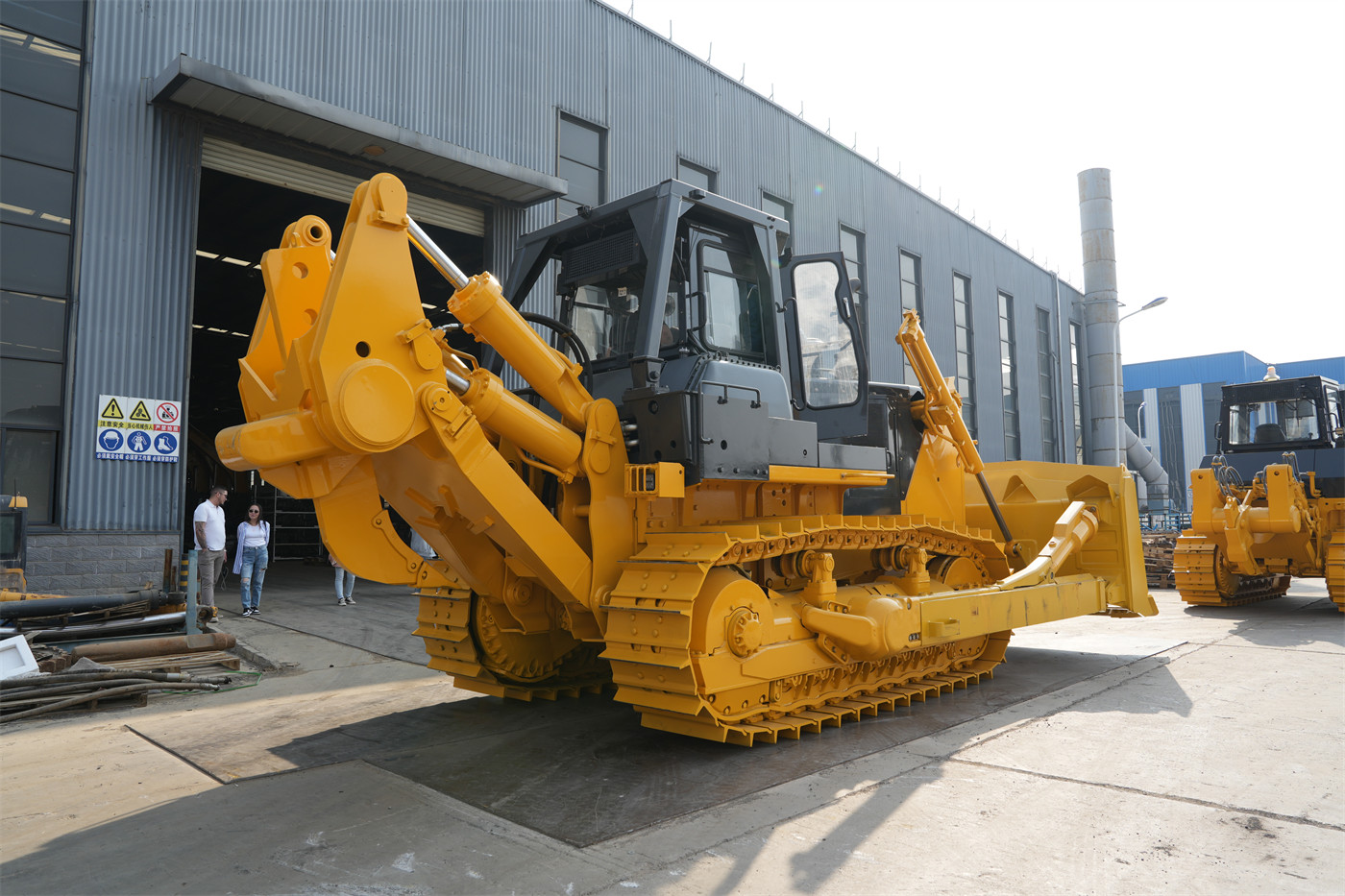
Regarding speed parameters, the standard version forward speeds are F1 0–3.6km/h, F2 0–6.6km/h, F3 0–11.5km/h, and reverse R1 0–4.4km/h, R2 0–7.8km/h, R3 0–13.5km/h. These are gear speed ranges, not actual work cycle times; the materials also do not give productivity data, so they should not be used to estimate shift output.
What engine and transmission materials can answer
The SD32 standard version lists the WP12/QSNT-C345 engine with rated power of 258/2000 or 257/2000kW/rpm; the coal version lists QSNT-C345 at 257/2000kW/rpm. The materials also state China III emissions, electronically controlled engine, large torque reserve, and that the transmission assembly has undergone field testing. This content shows that the power and transmission assemblies have clear models and power ratings, but the materials do not give fuel consumption rates, fuel consumption under different working conditions, or transmission efficiency values, so buyers cannot convert descriptions such as "excellent energy-saving performance" into specific costs.
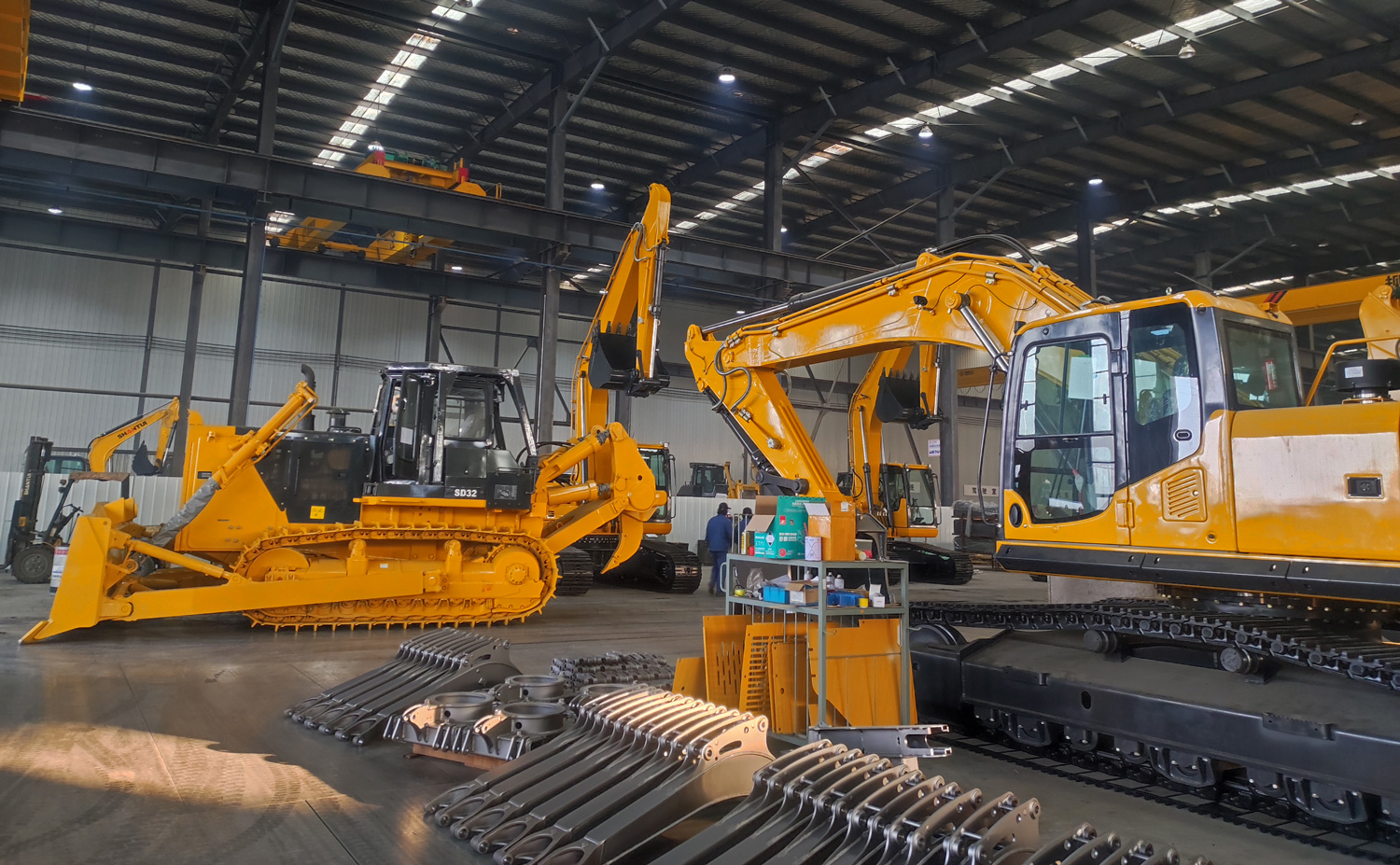
The materials mention a six-sided enclosed cab, optional FOPS&ROPS safety protection structure, electronic hand-foot integrated throttle, and intelligent digital display control panel. The safety protection structure is described as "optional" and cannot be taken as factory-standard on the standard version. Cab configuration is related to operating comfort, but the materials do not give specific measured values for noise, vibration, or visibility, so reading should stay at the level of whether the configuration is present.
Easily overlooked maintenance and supporting information
The SD32 materials mention centrally and externally arranged lubrication and maintenance points, large open side guards, and corrugated tube-protected wiring harnesses, which are descriptions of daily inspection and maintenance convenience. The materials do not give specific lubrication intervals, oil specifications, or maintenance intervals; actual implementation should follow the accompanying manual. The fuel tank capacity of 640L and hydraulic tank of 97L are explicit values in the materials and can serve as a reference for fuel organization before entering the site, but they cannot be used to calculate endurance time.
Regarding transport and relocation, the standard version dimensions are 8650×4130×3760mm and operating weight is 40200kg. These data indicate that whole-machine transport requires matching vehicles and road conditions, but the materials do not give transport width limits, disassembly requirements, or lifting point information. Before purchase, confirm the transport plan and on-site road load-bearing conditions with the supplier.
Items recommended to confirm before purchase
- Whether the target version corresponds to the main pushed material, and whether the version name is consistent with the contract.
- Whether the required blades and ripper are standard configuration or optional, and whether weight and dimensions change after options are added.
- Which track shoe width is specifically selected, and whether there is data for ground pressure under the corresponding configuration.
- Whether safety structures such as FOPS&ROPS are part of the selected configuration.
- Whether transport dimensions and weight match the on-site roads and unloading site.
- Daily inspection items and maintenance requirements in the accompanying manual.
The purpose of the above order is to first read the version and work equipment clearly, then look at the power and undercarriage numbers. Fuel consumption, capacity, slope adaptability, and price not listed in the materials should not be inferred from the model or parameter table and need to be confirmed separately during procurement communication.