
















When the construction site is not a conventional earthwork site but forest, wetland or the edge of a desert, the question for a mid-size bulldozer is often not whether it has enough power, but whether it is the right version. Within the same horsepower class, versions such as standard, forest, wetland and desert differ in track width, cab protection and work equipment, and these differences directly determine whether the machine can enter the site and work reliably. This article focuses on these three site types and explains the decision order for version selection and the information that needs to be verified.
First, distinguish the different constraints of the three site types
The pressure points the three working conditions place on a bulldozer are not the same, so the most prominent site limitation should be identified before selection.
- Forest work: collision risks from trees, branches and fallen timber, plus the need to drag logs; cab protection and auxiliary towing equipment are the focus.
- Wetland and soft ground: low ground bearing capacity and high risk of sinking and slipping; track ground contact area and ground pressure are the key indicators.
- Desert conditions: the effect of windblown sand on cooling and air intake, plus trafficability on soft surfaces, requiring attention to protective configuration and the cooling system.
Looking at these three constraints together easily leads to the mistaken conclusion that "the more horsepower, the safer." What actually determines whether the machine can enter the site is often the track specification and safety protection.
SD26 series version breakdown and corresponding conditions
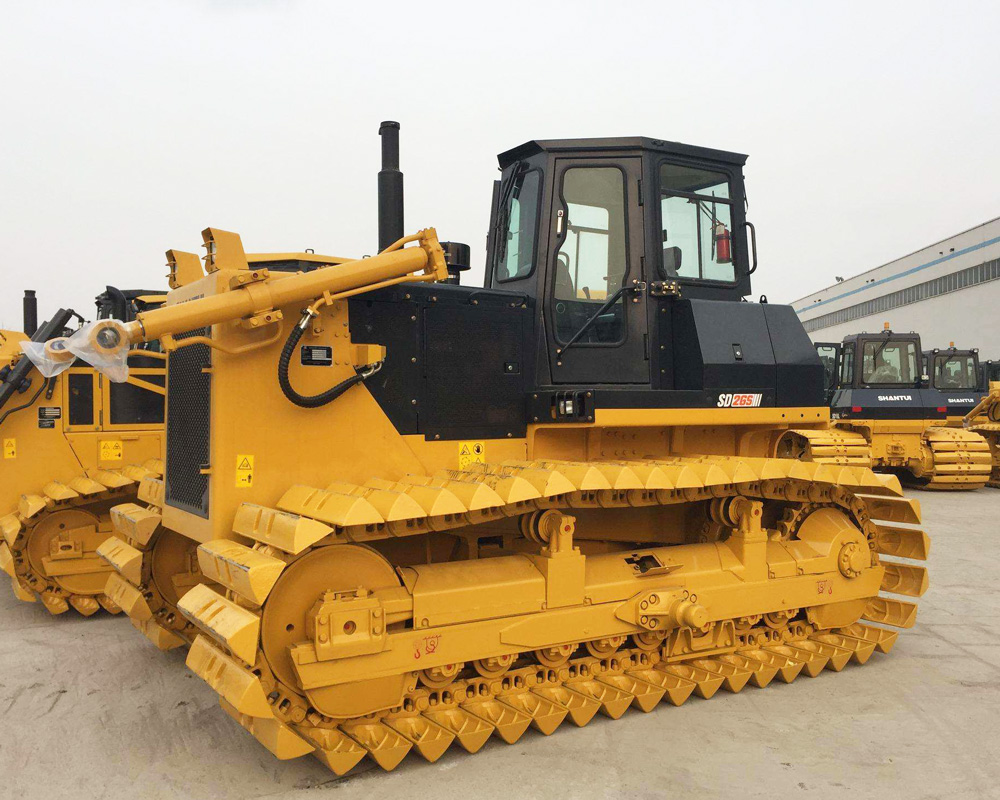
Materials on this site show that the SD26 series is a 260 hp mid-size bulldozer available in standard, forest, wetland, desert, sanitation and rock versions, powered by a Weichai WP12G280E304 engine, with an operating weight of 23,450 kg. The base model comes standard with a straight tilt blade with a 4.6 m³ capacity and offers an optional three-shank ripper. The following explains the correspondence by working condition.
Forest version: protection and self-recovery come first
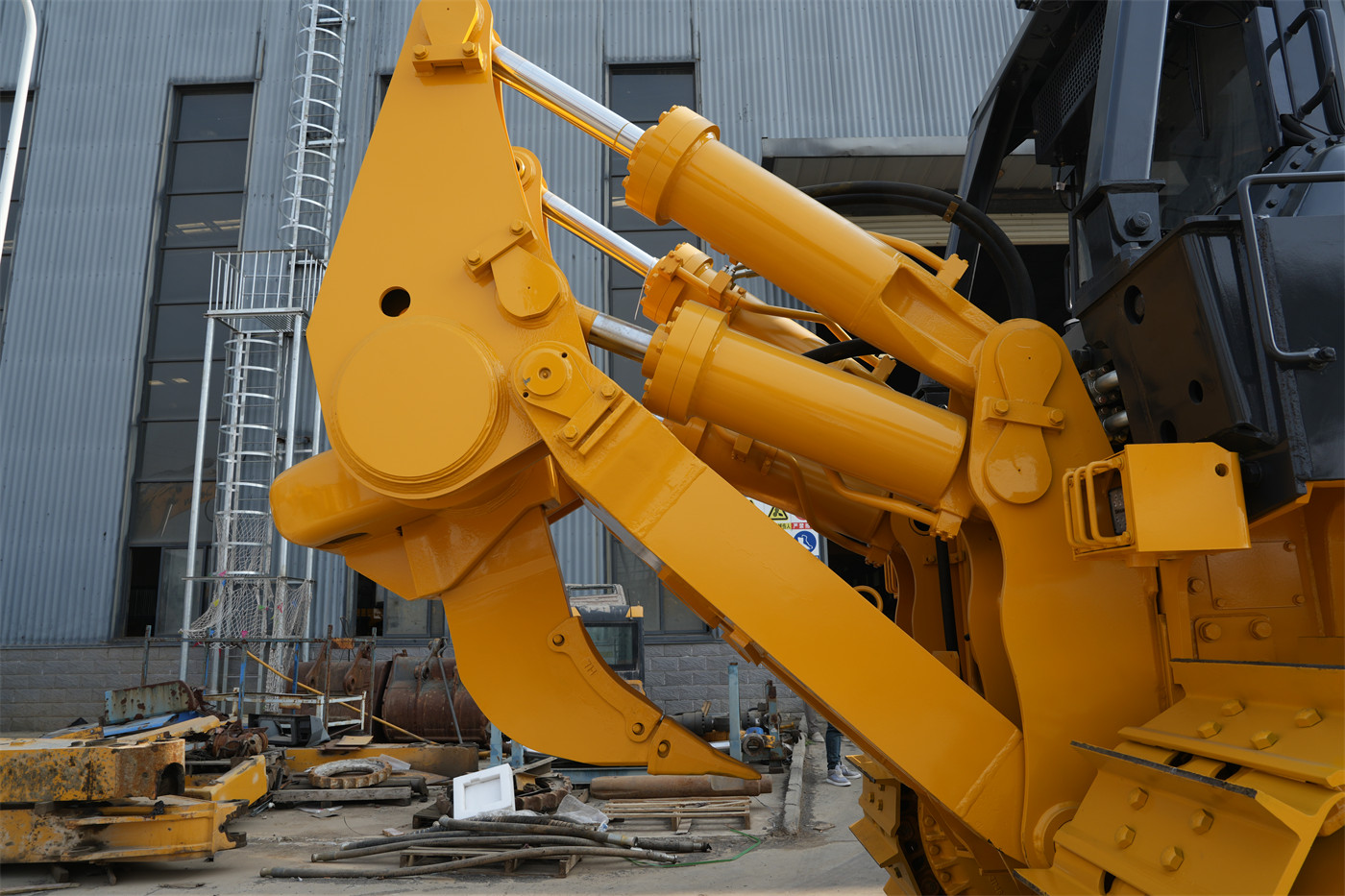
The SD26F forest harvesting version is explicitly described in the materials as customized for forest work scenarios, equipped with a dedicated logging ROPS cab, rainproof and sunshade structure, 610 mm widened tracks, and an optional mechanical winch. Operating weight is 24,700 kg and ground pressure is 64 kPa. For needs such as rainforest logging, agroforestry development, log collection and dragging, and forest road improvement, these configurations correspond precisely to the three requirements of cab protection, trafficability on soft ground and self-recovery in the field.
Note that the winch is an optional item; whether it is supplied with the machine should be confirmed separately at purchase and should not be assumed to be standard.
Wetland version: ground pressure must be calculated for the actual configuration
The materials list the wetland version as one of the SD26 series versions but do not separately provide complete parameters for it. The base model has a ground pressure of 66 kPa, and track shoe widths are available in three specifications: 560, 610 and 660 mm. Wider tracks provide a larger ground contact area, which is more favorable on soft ground, but which track shoe width the wetland version uses and how the machine weight and ground pressure change are not specified in the materials; an independent parameter sheet for the wetland version should be obtained from the supplier before making a judgment.
If the site is permanently waterlogged or muddy, whether widened tracks alone are sufficient also needs to be assessed against the ground bearing conditions; applicability should not be inferred from the name "wetland version" alone.
Desert, sanitation and rock versions: distinguished by work content
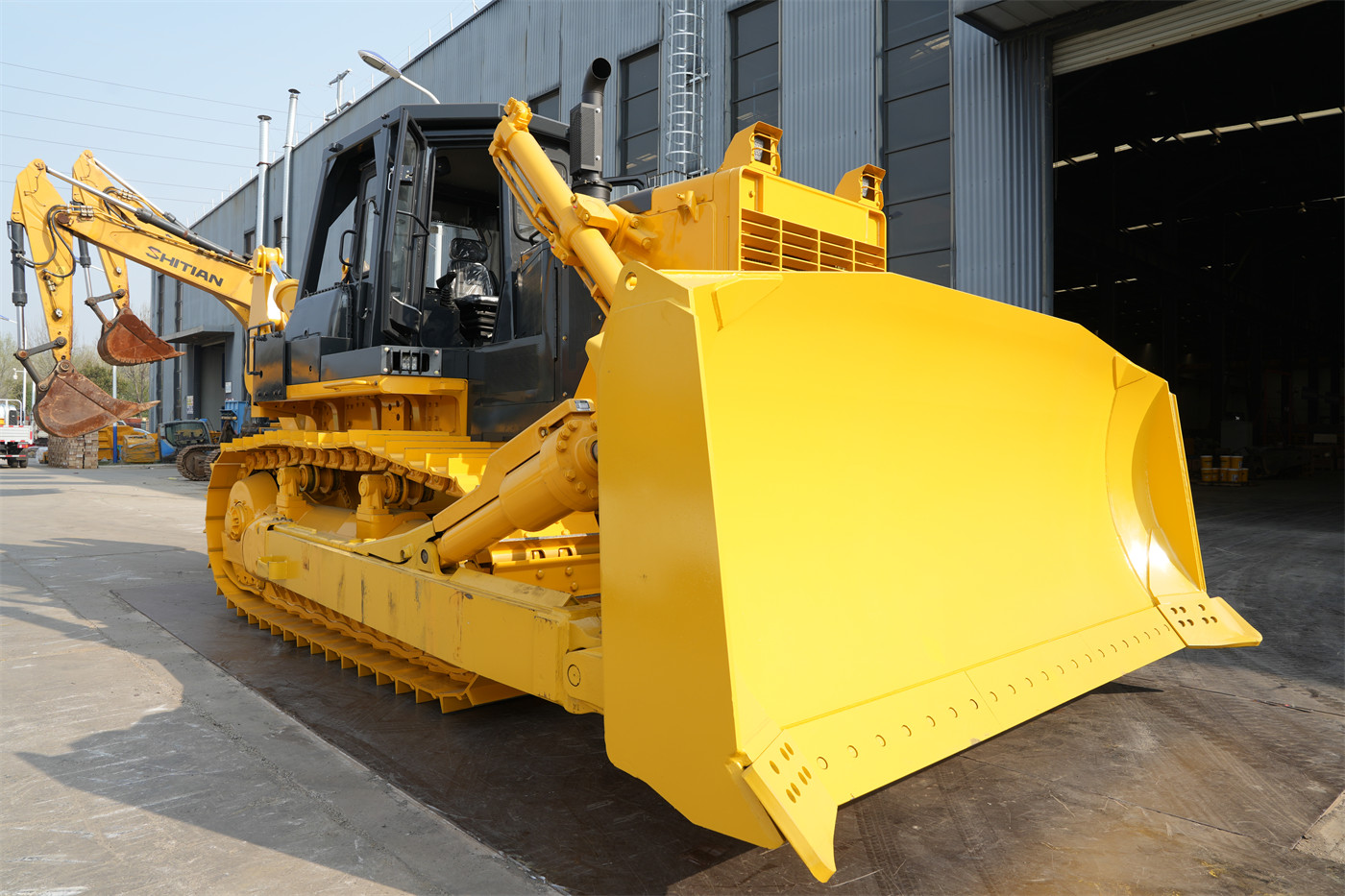
The materials list the desert, sanitation and rock versions as series versions but do not give the dedicated configuration details for each. For desert conditions, the windblown sand environment places higher demands on the cooling system and external protection; the base materials mention that external side guards can prevent the engine and radiator from being blocked by debris, and that high-efficiency antifreeze is standard. These are the basis for judgment, but whether the desert version has additional intake or cooling treatment is not sufficiently covered in the materials, so the supplier should be asked to provide the configuration list for that version before purchase.
The sanitation and rock versions target different work such as landfill and rock stripping, which are not the same issue as the forest, wetland and desert site types, so they are not discussed here, to avoid conflating the uses of different versions.
Configurations to verify item by item during selection
Based on the above materials, the following order can be used for verification before purchase rather than looking at horsepower first.
| Verification item | Basis in the materials | Question to confirm |
|---|---|---|
| Track shoe width | 560/610/660 mm available; forest version is 610 mm | Which width the target version is actually fitted with, and the corresponding ground pressure |
| Cab protection | Forest version has a logging ROPS cab; base model offers an optional ROPS frame | Whether the selected version already includes the required protection, and whether the ROPS frame is standard or optional |
| Work equipment | Standard straight tilt blade 4.6 m³; optional angle blade, U-blade, semi-U blade | Which blade is better suited to the site work, and whether the option affects delivery |
| Ripper | Three-shank ripper, maximum ripping depth 666 mm, optional item | Whether frozen soil, clay or gravel layers need to be broken, and whether it is supplied with the machine |
| Auxiliary equipment | Forest version offers an optional mechanical winch | Whether the winch is included in the quoted configuration |
The value of this table is that it grounds the "version" in specific components. Within the same series, version differences are often reflected in how tracks, cab and attachments are combined, and these are precisely the parts that can be checked item by item in the materials.
Power and drivetrain: a prerequisite for version selection, not the conclusion
The WP12G280E304 engine in the SD26 series has a gross power of 206 kW (277 hp), net power of 194 kW (260 hp), rated speed of 1,900 rpm and maximum torque of 1,250 N·m. The drivetrain uses a power-shift transmission, torque converter and two-stage straight-tooth final drive. The semi-rigid suspension undercarriage expands the track ground contact area, which the materials link to improved traction.
This information shows that the series has the power foundation for mid-size heavy-duty work, but it cannot answer "which version to choose for forest, wetland or desert." Power parameters are common within the same series, while version differences are reflected in the undercarriage, protection and work equipment. During selection, power should be treated as an entry condition and version configuration as the deciding condition.
Items still to be confirmed with the supplier
- Independent parameter sheets and configuration lists for the wetland, desert, sanitation and rock versions; the current materials list only the names and do not give complete data for each version.
- Measured ground pressure values for each version, especially the change after widened tracks.
- Whether options (winch, ripper, angle blade, ROPS frame) affect machine weight and delivery lead time.
- The correspondence between the emission registration requirements of the target work region and the China-III emission stage stated in the materials.
- Routine inspection items for special environments such as forest and desert should be based on the accompanying manual; the materials do not list dedicated maintenance values.
Version selection is not about pushing horsepower higher, but about mapping each site constraint to tracks, cab protection and work equipment. The judgment that the materials can support ends here; the remaining part requires the supplier's version parameters and an on-site ground assessment before a decision is made.