

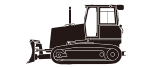
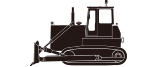
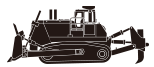












When discussing the power of a medium crawler dozer, it is easy to focus on rated power alone. But for push-dozing work, what really determines the working rhythm is whether the entire path—from the engine through the drivetrain to the tracks, and then through the blade to the material—is properly matched. Power figures alone cannot tell you whether pushing is smooth in a given gear, nor whether the machine is "unable to put its strength to use" when the blade cuts in.
The question this article addresses is: when assessing whether a medium crawler dozer can handle a push-dozing task, how should the power and drivetrain information in public materials be read, what judgments can it support, and what conditions must still be confirmed on site. The following uses the SD22 Standard product data as an example and discusses only what is listed for that model.
The transmission path from power to pushing force
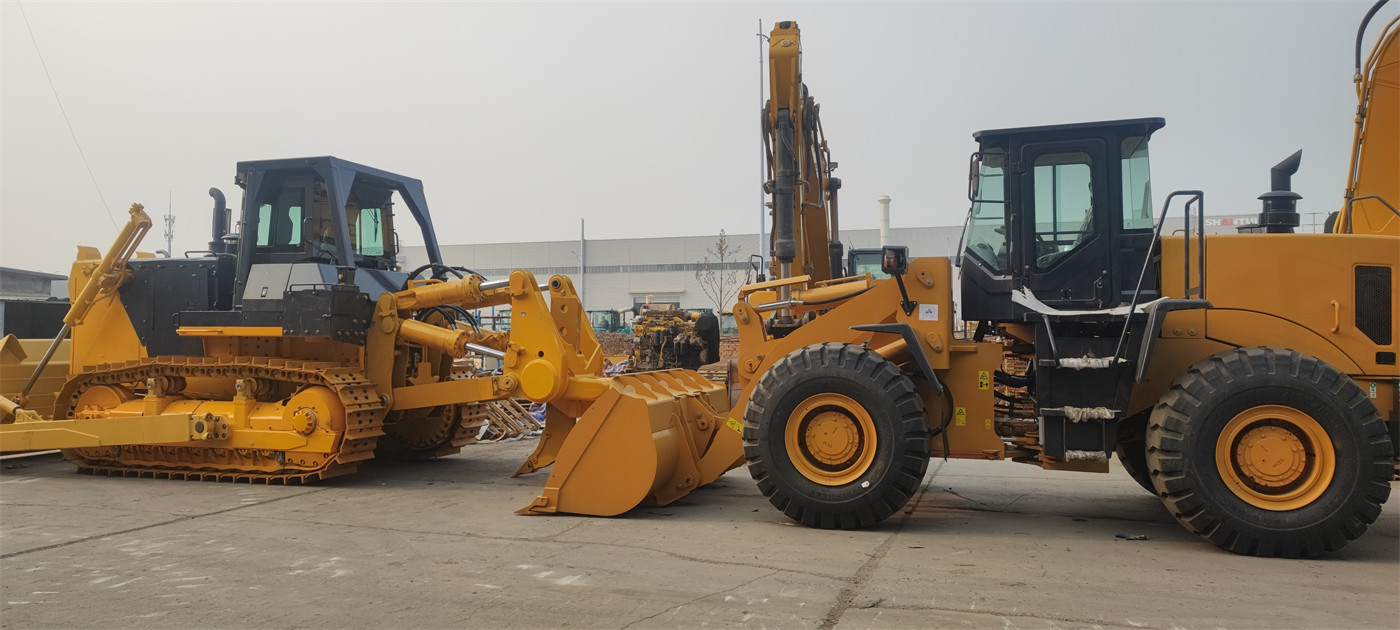
The basic process of push-dozing is: the engine outputs power, which is transmitted through the drivetrain to the tracks; the tracks generate traction with the ground; the machine moves forward at a certain speed; and the blade cuts the material and pushes it forward. If any link in this path is mismatched, the power figure loses its meaning.
- Engine determines available power and torque reserve;
- Drivetrain assembly determines the gear ratio and efficiency with which power reaches the tracks;
- Undercarriage and tracks determine whether traction can be converted into effective drawbar pull;
- Blade determines the resistance characteristics of cutting, loading and pushing material.
Therefore, "how power output reaches push-dozing work" essentially asks whether these links are designed for the same type of working condition. The data contains no measured values for whole-machine drawbar pull, push-dozing productivity or fuel consumption, and this article draws no conclusions on those indicators.
Power and drivetrain information in the SD22 Standard data
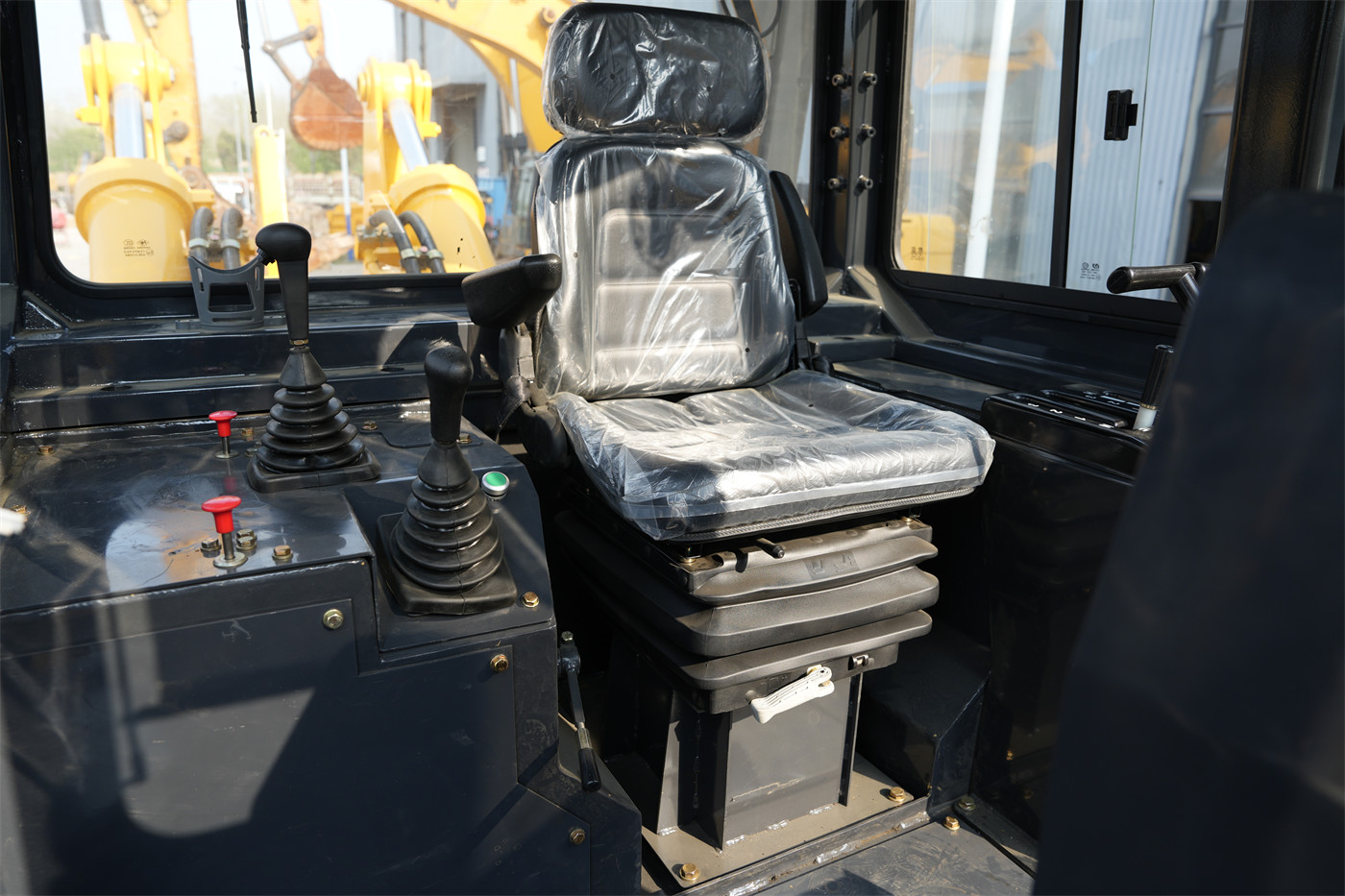
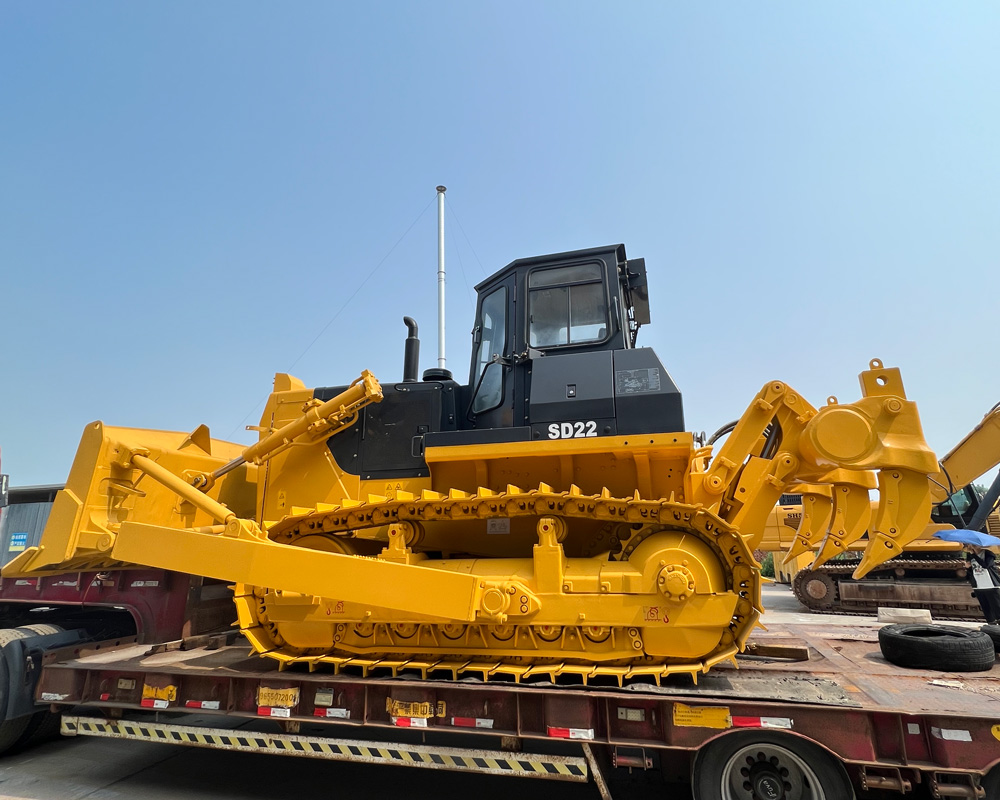
According to the model's public specifications, the SD22 Standard is equipped with a WP12/QSNT-C235 electronically controlled engine, rated power 175 kW (235 HP), rated speed 1800 rpm, and the data also describes a large torque reserve coefficient. On the drivetrain side, the data states that the transmission structure matches the engine power curve, the working range is relatively wide, and the drivetrain assembly has been verified by long-term market use.
Putting this information back into the push-dozing context, the judgment it supports is that the model's power and drivetrain are described as a matched set at the same power level, rather than listing engine parameters in isolation. The statement in the data about "stable output under heavy load" is a manufacturer description; this site has not obtained independent test data, so it should not be directly equated with working efficiency at a given earthwork volume during procurement.
Correspondence between gear speeds and push-dozing rhythm
Push-dozing typically includes several stages: cutting in, full-load pushing, dumping and reversing back. Different stages have different speed requirements. The travel speeds listed in the SD22 Standard data are as follows:
| Direction | Gear | Speed range (km/h) |
|---|---|---|
| Forward | F1 | 0–3.6 |
| Forward | F2 | 0–6.5 |
| Forward | F3 | 0–11.2 |
| Reverse | R1 | 0–4.3 |
| Reverse | R2 | 0–7.7 |
| Reverse | R3 | 0–13.2 |
The table shows that forward first gear covers the low-speed range, suitable for blade cutting in and full-load pushing; reverse gear speeds are slightly higher than the corresponding forward gears, consistent with the return trip in a push-dozing cycle being relatively unloaded. This is a conventional reading of the gear setup; the data itself does not state recommended use scenarios for each gear, and actual gear selection still needs to be determined by material, slope and operating habits.
What drivetrain matching data can and cannot explain
The model data's statements on the drivetrain focus on "matching the power curve," "a wider efficient working range," "higher power transmission efficiency" and "able to withstand 235 HP power load over the long term." These statements point to the matching relationship and structural load-bearing capacity, not to specific drawbar pull curves or transmission efficiency values.
What can be judged from this is that, at the data level, the model describes the engine and drivetrain as one assembly, and during procurement the supplier can be asked to provide details such as transmission type, number of gears and gear ratios so they can be compared with the specific push-dozing conditions. What cannot be inferred from this is how many cubic meters the blade can push in a given soil layer or on a slope, how much work can be completed per shift, or what fuel consumption level will be. These all need to be assessed in combination with material properties, haul distance, slope, operator skill and site organization, and the data contains no corresponding figures.
Checklist for applying power conditions to a specific push-dozing task
If you are assessing whether this model suits a particular push-dozing task, the following items can be confirmed during inquiry and technical communication:
- Type and condition of the working material (ordinary soil, compacted soil, crushed stone mixture, etc.), used to judge blade and undercarriage configuration;
- Single push distance and whether uphill work is involved, used to compare against gear speeds and traction requirements;
- Blade type selection: the data lists optional configurations such as straight blade, angle blade, U-blade and semi-U blade; different blades have different width, height and cutting depth, and must be determined by material and pushing method;
- Whether a ripper is needed: the data lists single-shank and three-shank rippers and their loosening depth, but these are optional items and not included in all delivered configurations;
- Specific form and maintenance requirements of the drivetrain assembly; request the relevant chapters of the manual;
- Fuel adaptability and emission requirements: the data marks China III off-road emissions, and the access conditions of the project location need to be checked.
Daily inspection and operating boundaries
The condition of the power and drivetrain depends on daily inspection to maintain. The model data mentions large open side guards and externally located lubrication and maintenance points for easy daily inspection; the vehicle wiring harness is protected with corrugated tubing. Specific inspection items, intervals and fluid requirements should be based on the manual supplied with the machine; this article does not provide unverified maintenance values or operating steps.
The boundary that needs to be stated is: the model data covers multiple versions including Standard, Coal, Rock, Forest, Desert, Extended, Sanitation and Wetland versions. Different versions differ in whole-machine weight, ground pressure, blade and track configuration, and the Standard version's parameters cannot be directly applied to other versions. If the work site involves soft ground, wetlands or rock ripping, the data and configuration of that version should be checked separately rather than replaced by the Standard version information in this article.