




















When earthmoving is organized by shift, what users really need to ensure is that the whole shift's workflow does not break down: the machine can keep pushing before and after shift changes, the operator does not tire prematurely from frequent gear shifting, steering and bumps, and the refueling rhythm does not disrupt site scheduling. Hydrostatic bulldozers are often mentioned in such working conditions, but exactly which part of operating intensity they reduce and under what conditions fuel consumption should be judged need to be examined separately.
Below, using verified information on the DH17-G (178HP hydrostatic bulldozer) as a reference, we explain the selection basis for operating intensity and fuel endurance in long-shift pushing, and list items not covered by the data that must be confirmed before purchase.
Two constraint points in long-shift pushing
Long shifts are not simply about who moves more material, but require the machine to maintain a stable working rhythm throughout the shift. Constraints often come from two places:
- Operating intensity: Pushing work involves repeated actions such as forward dozing, lifting the blade and reversing, and steering back to position. If gear shifting and steering are cumbersome and cab vibration and noise are high, the operator is prone to reduced attention in the later part of the shift.
- Fuel endurance: Fuel tank capacity and hourly fuel consumption together determine the refueling interval. Too-frequent refueling interrupts construction organization, but the tank volume given in the data cannot be directly converted into working hours; it must be judged together with actual fuel consumption.
Therefore, when selecting, look at which implementable configurations the machine offers on these two points, rather than only at rated power.
The practical significance of hydrostatic transmission for pushing operations
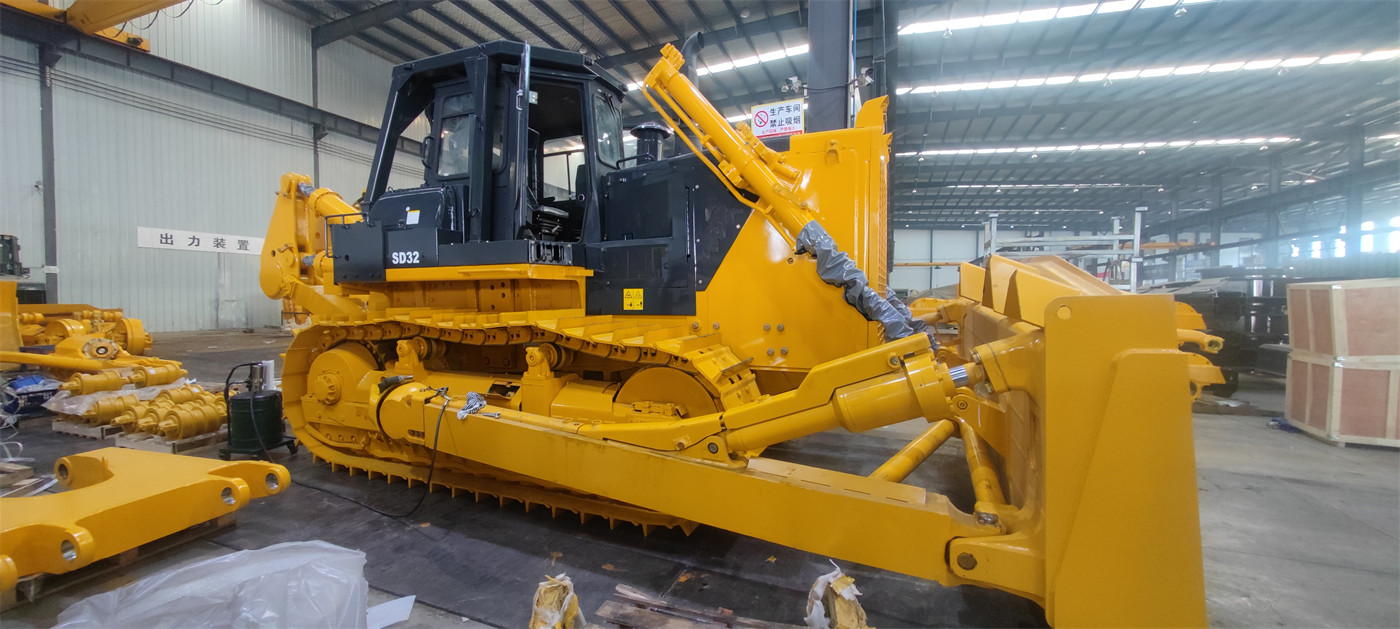
The DH17-G uses a dual-circuit electric hydrostatic drive system. The data states that it has load-adaptive function and supports stepless speed regulation for load steering and fixed steering. For long-shift pushing, the value of this structure lies in: steering and speed adjustment do not depend on frequent gear shifting, operating actions are relatively continuous, and the operator performs fewer mechanical gear-change actions in repeated pushing cycles.
At the same time, a distinction must be made: hydrostatic drive does not equal "working automatically"; what it changes is power transmission and control method. Pushing efficiency still depends on blade configuration, soil conditions, haul distance and operator skill. The statements "high efficiency, low fuel consumption" in the data are product positioning expressions and should not be directly treated as measured conclusions for a specific site.
Boundaries for judging power modes and fuel consumption
The machine's data states that it is equipped with three power modes that can be selected according to actual load, and mentions that the transfer case design optimizes the hydraulic system layout and reduces fuel consumption by 10%. This reminds buyers that fuel consumption performance is related to mode selection and load matching, and is not a fixed value.
In long-shift pushing, working conditions can be roughly divided into light-load return and heavy-load pushing segments, and operations can be organized using the idea of matching power modes to load. However, the data does not give specific fuel consumption values for each mode, nor does it explain unit fuel consumption under different soil types. Therefore:
- It is not possible to calculate the fuel cost or savings for a site based on "fuel consumption reduced by 10%";
- Before purchase, confirm with the supplier the operating logic of the power modes and the applicable load ranges;
- Actual refueling intervals need to be judged together with on-site fuel consumption records; the 352L tank capacity in the data is only one input for judging endurance.
Cab and control configurations correspond to operating intensity
Operating intensity comes not only from gear shifting, but also from vibration, noise, visibility and operating posture. Configurations related to this in the DH17-G data include:
- Travel and work equipment are controlled by a single joystick, with suspended single-pedal synchronized throttle and braking;
- Six-sided integrated cab, 4-point MDS damping, noise at the operator's ear can be reduced to 78dB, and the sealed cab maintains 45Pa positive pressure;
- Rear-mounted air conditioning system efficiency increased by 15%;
- 8-inch intelligent display terminal, providing data, fault self-diagnosis and rear-view camera.
These configurations illustrate the machine's design orientation in reducing operating frequency and improving the driving environment, but they are product data descriptions and do not mean that all sites will have the same experience. At purchase, attention should be paid to: whether the cab configuration is consistent with the selected version, and whether the display terminal and rear-view camera are standard for that version, to avoid treating optional items as standard configuration.
Version differences change suitability for long-shift operation
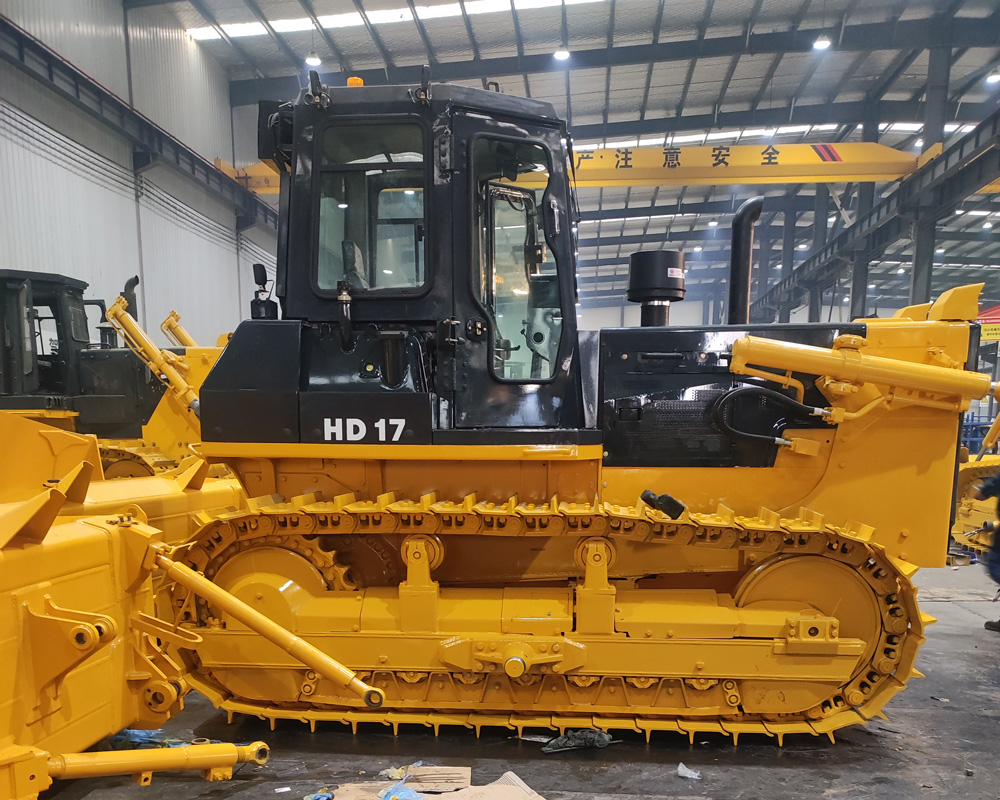
The DH17-G offers multiple versions including standard, super-wetland, coal, sanitation, forest and desert versions. Different versions have different blades, track shoe widths, operating weights and ground pressures. Long-shift earthmoving usually corresponds to the standard version or a version selected according to soil conditions, but version selection should be determined by site conditions, not only by shift length.
| Version | Operating weight | Blade type | Ground pressure |
|---|---|---|---|
| Standard (XL) | 17730kg (with ripper)/19290kg (with drawbar) | Straight tilt blade/semi-U blade | 65/77kPa |
| Super-wetland (LGP) | 19690kg | Straight tilt blade | 30.5kPa |
| Coal (CH) | 18140kg | Coal pushing blade | 60.5kPa |
The data in the table is only used to show that differences do exist between versions. For long-shift pushing on ordinary earthmoving sites, the standard version's blade and undercarriage configuration is closer to conventional pushing needs; if the site itself is soft ground or wetland, even for long shifts, ground pressure and passability should be evaluated first rather than applying the standard version. The data does not list fuel consumption or productivity differences among versions under long shifts, so superiority cannot be ranked on that basis.
Conditions to confirm before purchase
The following matters have no clear answers in the existing data and should be confirmed item by item during selection and contracting:
- The actual standard equipment list for the selected version, especially whether the rear-view camera, display terminal and power modes vary by version;
- The configuration relationship of attachments such as rippers and winches; in the data, the ripper column for some versions is "—", so it cannot be assumed that all versions can be equipped with one;
- The actual refueling interval corresponding to the 352L fuel tank capacity must be based on on-site fuel consumption records rather than data estimates;
- The test conditions corresponding to cab noise and positive pressure data;
- Fuel and urea usage requirements for the China IV engine, to be followed according to the manual and supplier instructions.
Putting operating intensity and fuel consumption back into construction organization
Hydrostatic drive, single-joystick control, damped cab and power modes form a set of conditions by which the DH17-G reduces operating intensity and matches load in long-shift pushing. But whether these conditions hold depends on whether the version selection is correct, whether attachments match, and whether on-site refueling and shift arrangements are reasonable. Purchasing decisions should not stop at generalizations such as "hydrostatic drive saves more fuel" or "the cab is more comfortable"; instead, the items to be confirmed above should be listed as a checklist, and comparisons should be made after the supplier answers each one.
For daily inspection, the data mentions that the external work valve and track rollers are easy to maintain, the side-opening protective cover provides maintenance space, and the engine compartment light facilitates nighttime inspection. Specific inspection items, intervals and judgment criteria should be based on the accompanying manual; this article does not provide maintenance values or operating steps.