
















Small bulldozers are often assigned to projects with limited work areas, such as site leveling, farmland improvement, and minor municipal earthworks. Compact equipment does not guarantee smooth entry: whether the access route can accommodate the machine, whether the work area has room for turning, whether the blade width matches the pushing route, and whether a ripper is needed at the rear—if these are checked only after the equipment arrives, workflow adjustments become reactive. The following sections explain the site and workflow conditions to be confirmed before entry, in the order of preparation, and use verified SD10 data to illustrate which machine characteristics these preparation items correspond to.
First confirm whether the equipment can reach the work area smoothly
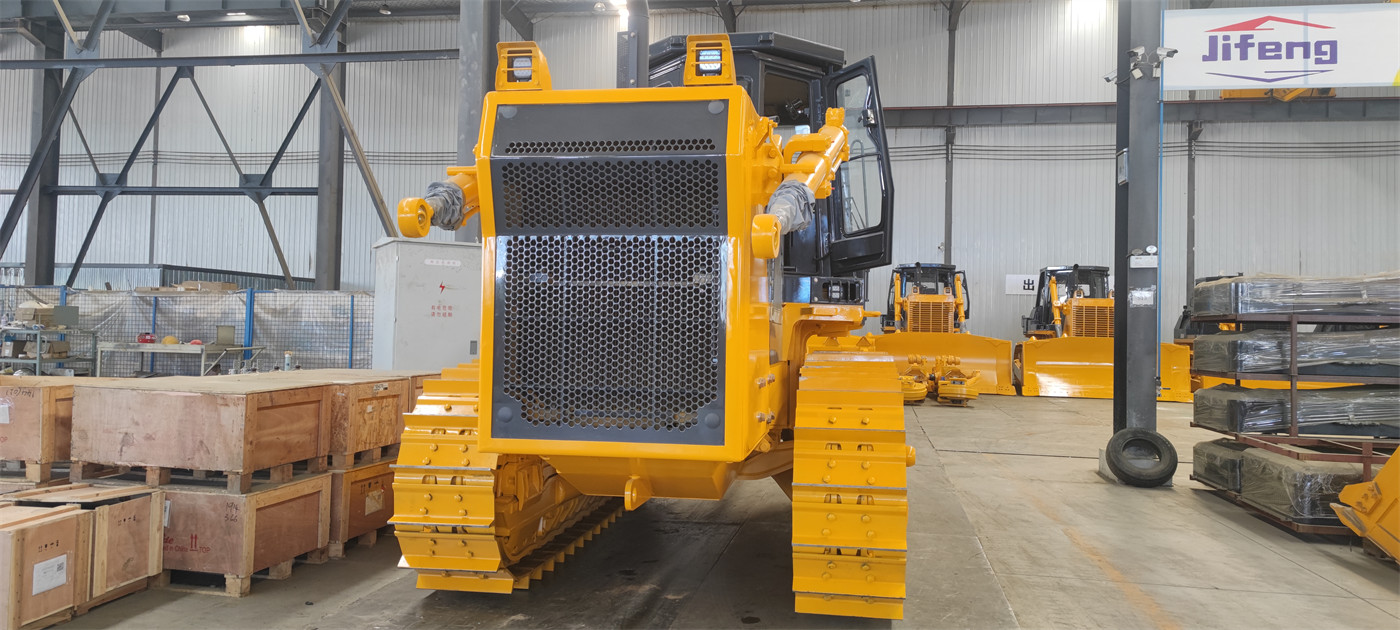
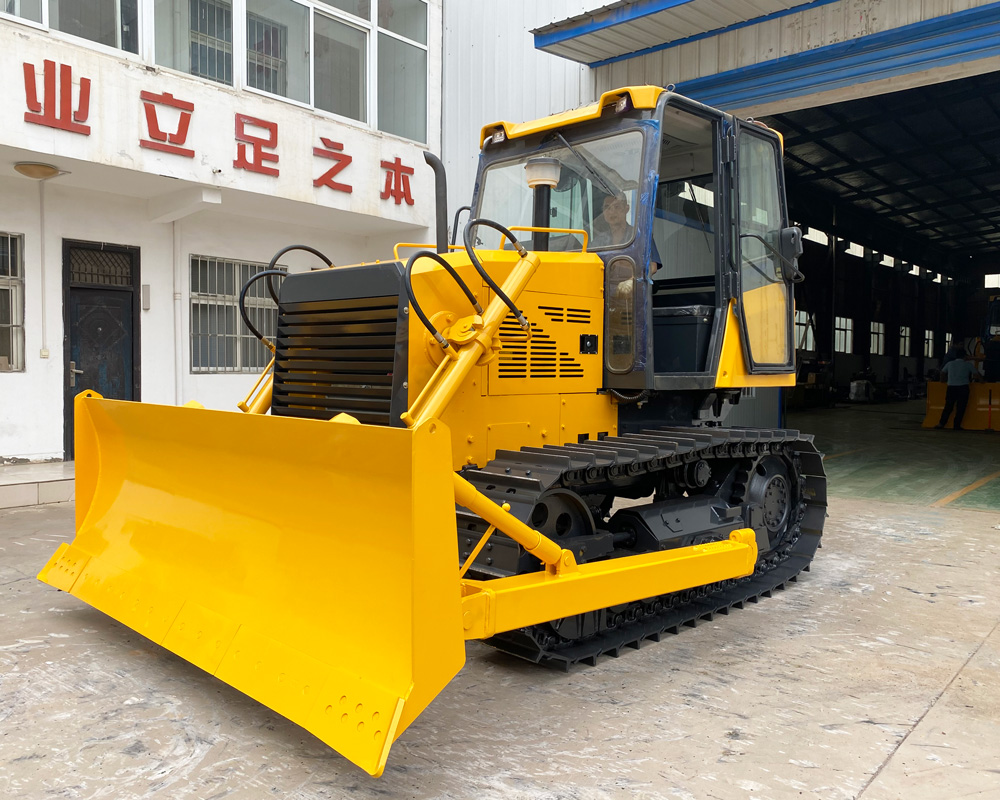
The first step in entry preparation is not blade selection but the transport route and unloading point. After a small bulldozer arrives with the transport vehicle, it needs to move from the unloading point to the work area either under its own power or over a short distance. The minimum clear width, turning radius, ground bearing capacity, and overhead clearance along this route must be checked in advance. The SD10's overall dimensions are 4400×2960×3030 mm, and the track shoe width is 450 mm. This width data means that transport and transfer routes should allow margin for a machine width of nearly 3 meters, rather than judging solely by the track ground contact width.
If the route between the unloading point and the work area passes through existing roads, backfilled pipe trenches, or temporary access roads, it is advisable to confirm in advance:
- Whether the road surface can withstand the ground pressure of the transport vehicle and the bulldozer; the SD10's ground pressure is 54.4 kPa, which can serve as a reference value when comparing with the bearing conditions of temporary access roads;
- Whether there is sufficient turning space at corners to avoid repeated reversing adjustments after the equipment arrives;
- Whether there are temporary power lines, scaffolding, or height restrictions overhead, which need to be checked against the overall height of 3030 mm;
- Whether the unloading point is level and suitable for the crawler equipment to drive off on its own.
These confirmation items do not involve specific operating steps; they are only used to determine whether the site meets entry conditions. Actual unloading and transfer should follow the equipment manual and on-site safety management requirements.
The work area and stockpile zone must be planned together
Bulldozing does not end with pushing soil flat; where the soil pushed by the blade goes and whether it will later be loaded or backfilled determines the layout of the work area. Small bulldozers have limited work areas, so if the stockpile zone is too far from the pushing endpoint, or if the pushing route crosses the transport vehicle route, workflows will wait on each other. Before entry, the work area should be divided into a pushing zone, a stockpile zone, and an equipment standby zone, and the relationship between the pushing direction and site drainage direction should be confirmed.
The SD10 blade size is 2960×960 mm, with a maximum lift height of 830 mm and a maximum digging depth of 350 mm. The direct implication for preparation is that the pushing lane width, stockpile zone entrance, and backfill boundary should be planned according to the blade width, not estimated based on experience with narrower equipment; the digging depth data can be used to compare with depth requirements for shallow stripping or leveling work, but should not be used to infer working capability in hard strata or large rock conditions—such conditions require separate confirmation.
If the project has only one small bulldozer, the coordination sequence with excavators, dump trucks, and other equipment must also be considered. During preparation, it can be clarified which section the bulldozer will handle for pushing and gathering material and which section is left for other equipment to load and transport, avoiding idle waiting due to workflow conflicts after the equipment arrives.
Blade and rear attachments are determined by the task, not by habit
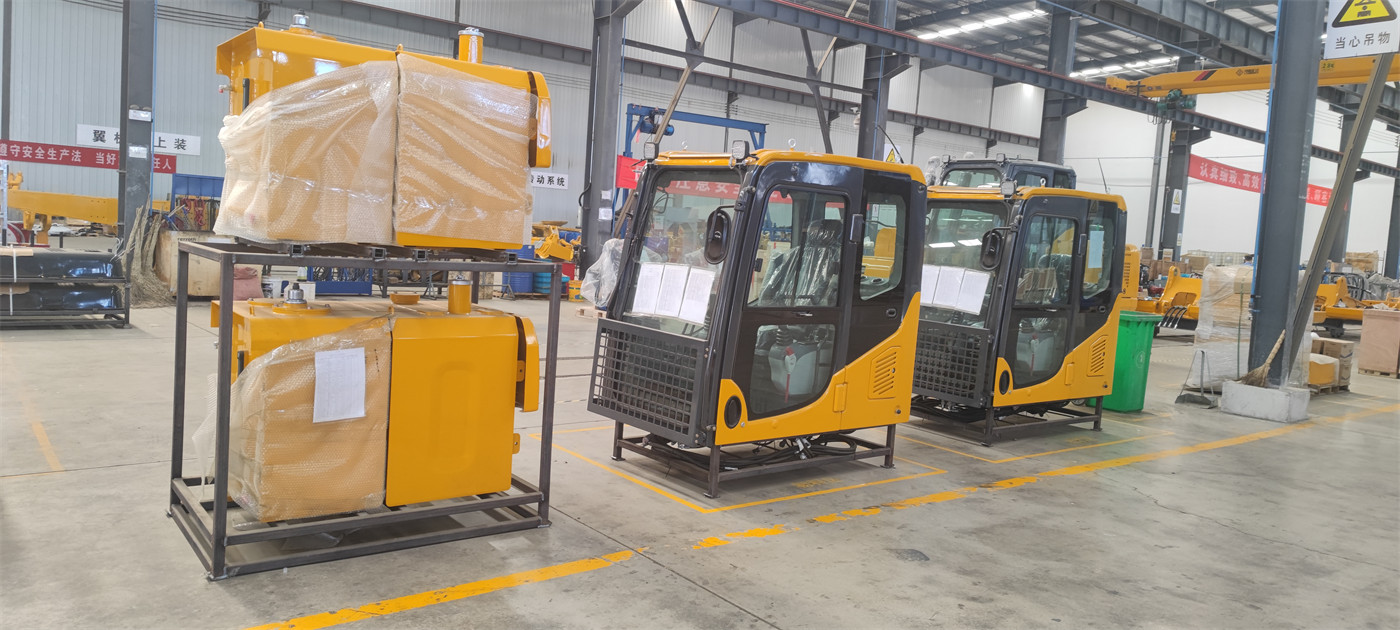
Configuration differences among small bulldozers often center on blade type and rear attachments. The SD10 documentation lists blade options including straight, curved, and coal blades, and rear options of a fixed towing device or a three-shank ripper. These are optional configurations, not standard on all machines; before purchase or entry, each item should be confirmed according to the actual workflow, rather than assuming that listing in the documentation means inclusion.
| Preparation item | Corresponding task | To confirm with supplier |
|---|---|---|
| Blade type | Site leveling, earth pushing, coal and other bulk material transfer | The blade type actually required for this project and whether it is supplied with the machine |
| Rear attachment | Ripping, towing operations | Whether the fixed towing device or three-shank ripper is optional, and whether it affects overall length and counterweight |
| Track shoe width | Mobility on soft ground | Compatibility of on-site ground conditions with 450 mm track shoes |
Note also that configurations such as coal blades are not intended for the same purpose as blades for ordinary earth pushing; selection should be based on the project's primary material, and multiple blade options should not be understood as universally applicable to any working condition. If the project involves both topsoil stripping and material pushing, it is advisable to clarify the priority of each workflow during entry preparation before deciding on configuration trade-offs.
What power and transmission data are used for during preparation
The SD10 uses a Cummins 4BT3.9-C125 diesel engine with a rated power of 81 kW (125 HP) at 2300 r/min and a maximum torque of 400 N·m; the transmission is a 4F+2R mechanical gearbox, with forward speeds of 2.6–10.4 km/h and reverse speeds of 3.7–6.7 km/h. During entry preparation, these data are used to check fuel supply arrangements and workflow pacing, not to estimate productivity or fuel consumption performance.
Specific preparation items that can be implemented include:
- Confirm fuel grade and supply method according to engine requirements; the distance between the on-site fuel storage point and the equipment work area should be incorporated into workflow planning;
- The gear range of the mechanical gearbox determines the speed range for pushing and return travel; during preparation, this can be used to judge whether the work area length is suitable for continuous pushing and to avoid poor workflow coordination caused by excessively long pushing distances;
- Fuel consumption values in the equipment documentation are engine fuel consumption statements under specific conditions and cannot be directly converted into on-site fuel use per shift; actual consumption must be calculated separately based on working conditions.
Assign personnel and forms for daily checks before entry
After a small bulldozer enters the site, usually a small number of personnel handle both operation and daily checks. During preparation, it should be clarified who checks, at what frequency, and where records are kept. A daily check sheet can first be established according to the equipment manual, focusing on track tension, external condition of travel components such as track shoes and track rollers, fluid levels, filter indicators, and the connection points of the blade and rear attachments. Inspection values, adjustment methods, and maintenance intervals not listed in the documentation should be based on the accompanying manual and maintenance information provided by the supplier, and should not be set independently during preparation.
If the project is in rainy or soft ground conditions, the equipment parking location and anti-sinking measures should also be confirmed in advance. The SD10's ground pressure of 54.4 kPa can serve as one reference for judging whether ground padding is needed, but whether it meets the bearing capacity of a specific site still requires separate confirmation based on on-site soil conditions.
Items still requiring supplier confirmation before entry
- Standard supply list: whether blade type, rear attachments, and track shoe specifications match the purchase agreement;
- Whether the overall dimensions and weight in transport condition match the documentation, and whether the transport vehicle is suitable;
- Fuel and lubricant grade requirements and first maintenance arrangements;
- Whether accompanying technical documents, manuals, and spare parts lists are complete;
- Whether on-site ground bearing capacity, slope, and drainage conditions exceed the range supported by the equipment documentation.
Only by confirming these conditions item by item before the equipment arrives can a small bulldozer truly be put into operation according to the workflow rhythm. Equipment documentation can answer basic conditions such as overall dimensions, blade and attachment options, power transmission type, and ground pressure; whether a specific site is suitable and whether the configuration meets the project still requires judgment based on site survey and supplier confirmation.