




















Tasks such as mine stripping and large-scale earthmoving involve long single-shift operating hours and large load fluctuations, with equipment often alternating between continuous pushing and brief direction changes. When rated power is treated as the primary or even sole indicator during procurement, it is easy to overlook a fact: power determines the upper limit of motive force, but whether continuous operation can remain stable depends on whether the transmission, undercarriage, and structure after power output can withstand repeated impacts together. This article uses verified information on the 600-hp-class crawler dozer SD46-6 as an example to explain what other conditions should be considered for continuous heavy-duty operation.
Beyond power, first check whether power output is stable
The SD46-6 is equipped with a Cummins KTA19-C525 turbocharged and intercooled diesel engine, with a rated power of 340 kW/600 hp, a rated speed of 2000 rpm, and a displacement of 18.9 L. The information also mentions that the cylinder block and cylinder head use an integrated design to avoid common faults such as water seepage and oil leakage. For continuous heavy-duty operation, this means that in addition to peak output, the power end should also be examined for stable sealing and cooling during long-term operation.
It should be noted that the information lists power parameters under rated conditions and does not provide actual fuel consumption or productivity data under different loads, slopes, or soil conditions. Therefore, these values can only be used to judge whether the power class matches the scale of the task and cannot be directly converted into per-shift output or fuel costs.
The transmission system determines where impact loads go
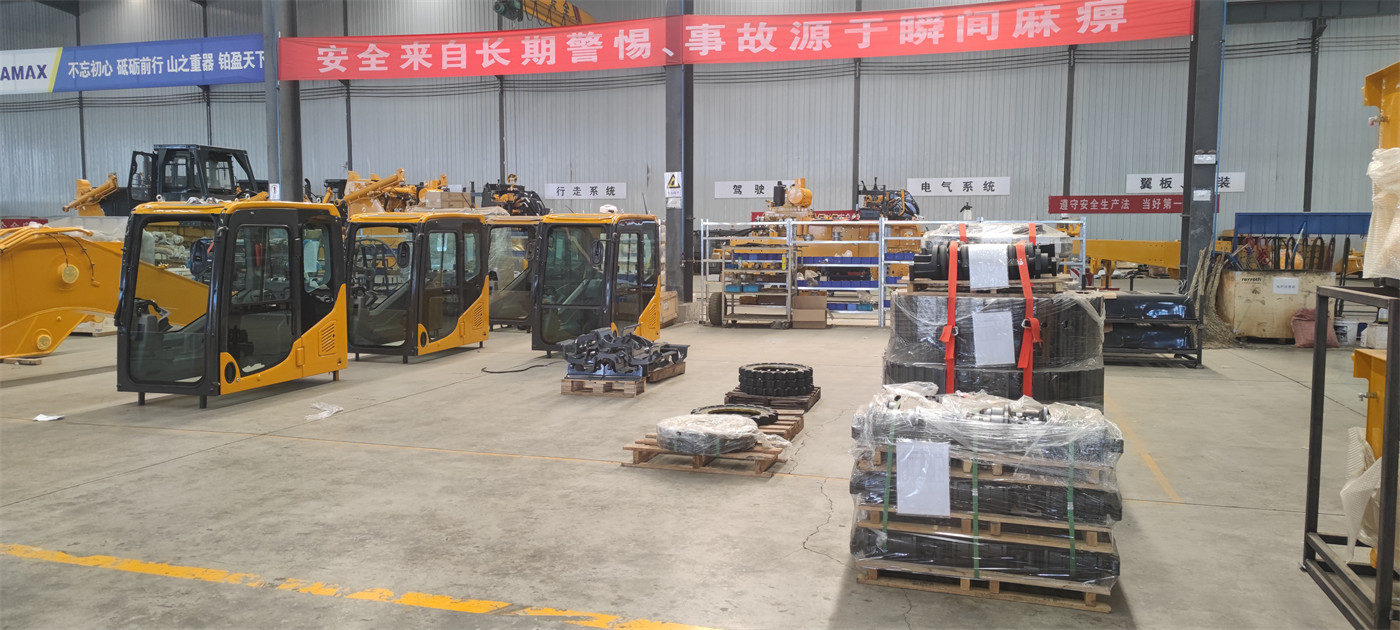
In heavy-duty pushing, instantaneous resistance changes when the blade cuts in, during full-load pushing, or when encountering hard layers or rocks are all transmitted to the entire machine through the transmission system. The SD46-6 uses a hydraulic power shift transmission with planetary final drives. The information states that the system can adjust power output according to changes in external load and has a built-in hydraulic buffer structure to absorb impact loads during power transmission; the transmission assembly is equipped with multi-plate hydraulic clutches and forced circulation lubrication, and the final drive uses spiral bevel gears with splash lubrication.
The selection question corresponding to these configurations is whether there are frequent sudden load changes during operation. If the task mainly involves large-area pushing of loose materials, the load is relatively smooth; if it involves rock stripping, hard-ground ripping, or mixed materials containing large blocks, the transmission is subjected to more frequent impacts, and buffer structures and lubrication methods deserve more attention in comparisons. However, the information does not provide shift response times, transmission efficiency, or durability hour data, so specific service life should not be inferred from it during procurement.
The undercarriage and main frame bear long-term torsional resistance
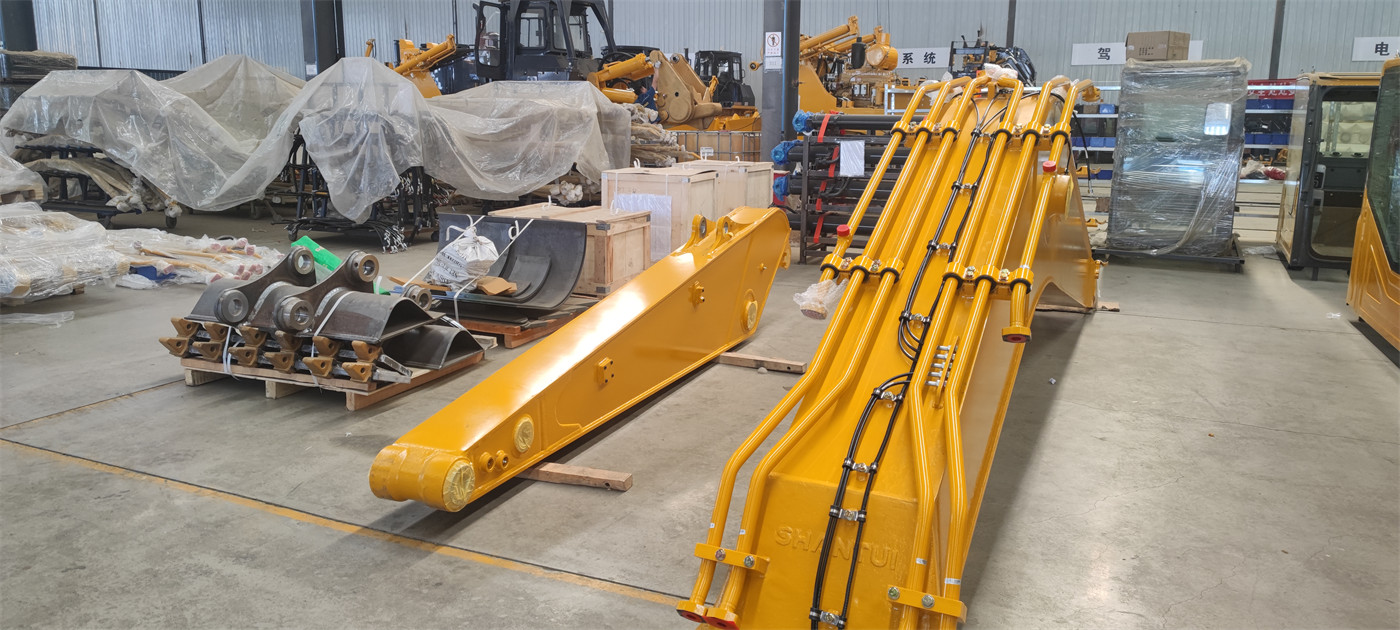
Another pressure point in continuous operation is the undercarriage and main frame. The SD46-6 uses a K-type floating undercarriage and an integral articulated undercarriage design, which the information says is used to buffer impact loads during travel and operation; the main frame is a fully enclosed box structure using high-strength wear-resistant steel and heavy cast steel components, and the information emphasizes its impact, bending, and torsion resistance. The operating weight is 54,000 kg, the minimum ground clearance is 525 mm, the ground pressure is 0.123 MPa, the gradeability is 30 degrees, and the track gauge is 2,260 mm.
These data help judge the match between the equipment and the site: ground pressure relates to the risk of sinking on ground with higher moisture content or weak bearing capacity, ground clearance relates to the possibility of bottom impacts when passing over uneven ground, and gradeability should be compared with the actual slopes of transport roads and working faces. However, the information does not provide traction curves under different soil conditions, nor does it explain stability during full-load pushing on specific slopes; these still need to be confirmed separately based on site conditions.
Work equipment configuration must align with operational objectives
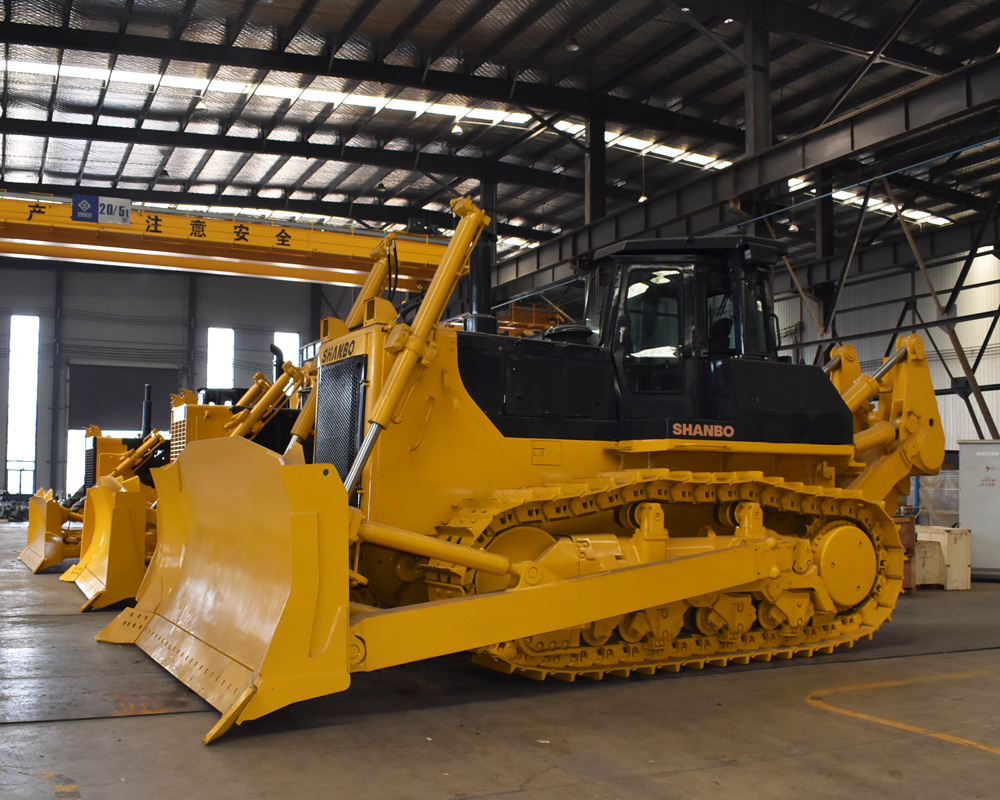
The SD46-6 is standard-equipped with a semi-U blade. The information gives a blade capacity of 16 m³, a width of 4,314 mm, a height of 1,841 mm, a maximum cutting depth of 700 mm, and a maximum blade tilt of 1,000 mm; at the rear is an adjustable-angle single-shank heavy-duty ripper. The semi-U blade is suitable for large-area stockpiling and bulk material pushing, while the ripper corresponds to hard ground or situations requiring pre-fracturing.
During procurement, standard configuration and optional items must be distinguished. The information clearly states that the ROPS/FOPS safety structure is standard configuration and also mentions that users can choose to install an upgraded integrated ROPS & FOPS protective frame; such "optional" items should not be treated as included configuration during comparison. Whether both the blade and ripper are included in the quotation scope also needs to be confirmed item by item in the contract.
Selection checklist for continuous heavy-duty operation
- What material dominates the task: loose earth, compacted hard soil, or rock-containing mixed material, each corresponding to different blade and ripper requirements.
- Whether the continuous running time per shift and the frequency of direction changes will keep the transmission and undercarriage under impact loads for long periods.
- Whether the actual slopes of the working face and transport roads, ground bearing capacity, and moisture conditions fall within the range that can be compared with the gradeability and ground pressure given in the information.
- Whether on-site fuel supply, cooling conditions, and dusty environment meet the basic conditions for long-term operation of a high-horsepower diesel engine.
- Whether the blade, ripper, and protective structure in the quotation are standard configuration or optional, and they must be listed item by item.
Judgments the information can and cannot support
Based on the verified information, the power class, transmission buffer structure, floating undercarriage, and box-type main frame of the SD46-6 form a configuration logic aimed at continuous heavy-duty operation in mining and large-scale earthmoving. These features can explain why, in scenarios with heavy loads and frequent sudden load changes, power alone cannot be used as the only basis for comparison.
However, the information does not provide actual productivity, unit fuel consumption, fault intervals under different working conditions, slope adaptability verification, or comparative tests with models of the same tonnage. Therefore, this article does not conclude that "this model is suitable for all heavy-duty sites" and does not replace on-site surveys. Before purchase, it is recommended to verify: actual materials and moisture conditions, transport road slope and width, maintenance support radius, and the manufacturer's written explanation of optional items and delivery configuration. Daily inspection and maintenance should be carried out according to the accompanying manual; this article does not cover specific maintenance values or operating steps.