



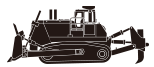















In the excavation and hauling stage of subgrade filling, the common question is not "can a dozer push it," but rather how the soil type at the borrow point, the haul distance and the connection with spreading determine the direction in which the equipment should be configured. Breaking the process down before selection and then checking which configurations in the machine data correspond to it is more useful than comparing power figures alone. This article uses the verified SD16 data as an example to explain the judgment path under this process; the working condition descriptions are general analysis and do not mean that this equipment has been adopted for a specific project.
First Break Excavation and Hauling into Four Verifiable Conditions
Subgrade filling usually includes excavation, loading or direct hauling, spreading and compaction. The dozer mainly handles excavation and material gathering and short-distance hauling, and its configuration requirements can be developed from the following four conditions:
- Soil type and whether ripping is needed: Whether clay, frozen soil or compacted layers need pre-ripping determines whether a ripping device enters the configuration list.
- Haul distance and work organization: Direct hauling onto the subgrade or working with loading affects requirements for blade capacity, travel speed and undercarriage durability.
- Site and ground contact conditions: In the early stage of subgrade filling, the surface is mostly original ground or backfill, and bearing capacity and flatness determine whether to use the standard undercarriage or wider tracks.
- Material and emission constraints: Different materials such as earth and coal correspond to different blades; local non-road emission requirements determine whether the engine version matches.
These four conditions do not all need to be precisely quantified before purchase, but at least the soil type, normal haul distance and whether soft-ground sections exist should be clarified; otherwise, configuration discussions tend to remain at the level of parameters.
Power and Transmission: What Output Characteristics Are Needed for Heavy-Duty Excavation
Excavation and hauling is not continuous full load, but short-term high loads occur when cutting into the material pile, climbing slopes and pushing. SD16 data shows that it is equipped with a WP10 electronically controlled engine, rated power 131 kW/178 hp, rated speed 1850 rpm, and the data also mentions a large torque reserve ratio for power reserve under heavy-load conditions. For excavation and hauling, the corresponding requirement is that the engine should not frequently drop speed when the blade cuts in and hauling resistance rises.
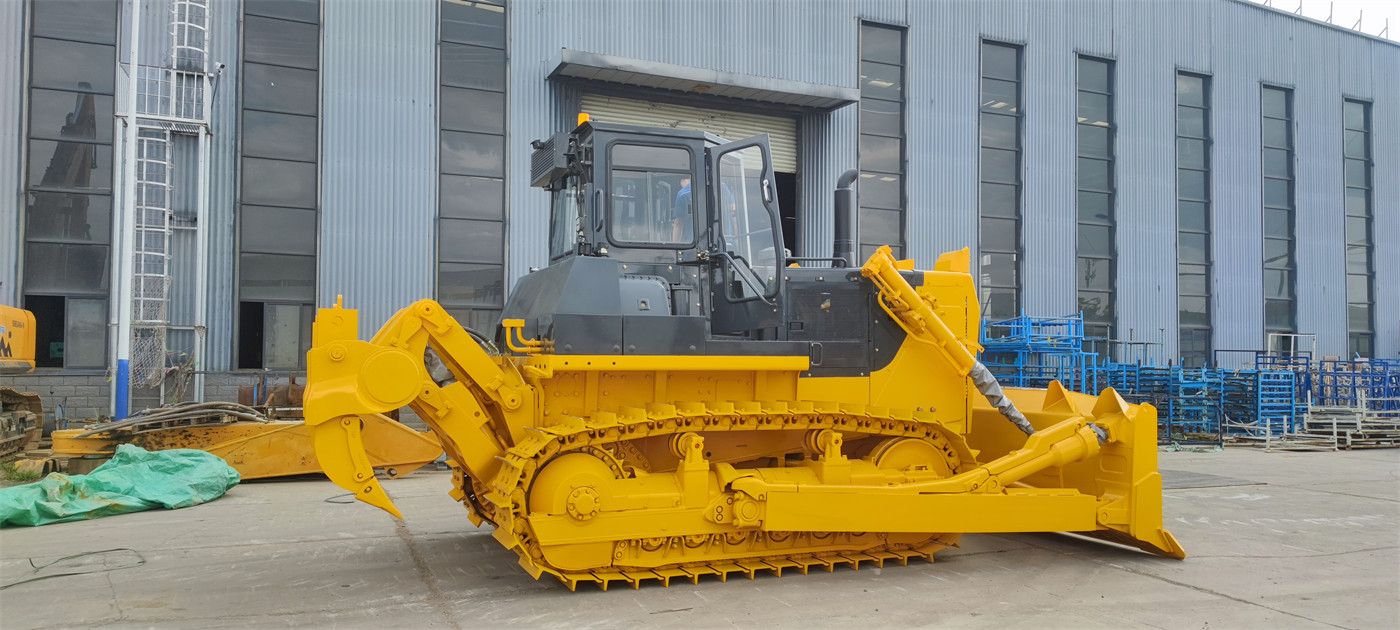
Regarding transmission, the data states that the transmission system matches the engine power curve, and that the gearbox and undercarriage system are self-manufactured and have been verified by the market over the long term. These statements can be used to judge that the transmission system is part of the model's mature package, but the data does not give tractive force values for each gear, so specific hauling capability or productivity cannot be calculated from it. If the project has clear requirements for slope hauling, the supplier should be asked to confirm tractive performance data under the corresponding working conditions rather than judging solely by power.
The SD16 standard version has travel speeds of 0–3.29/0–5.82/0–9.63 km/h in three forward gears and 0–4.28/0–7.59/0–12.53 km/h in reverse. Excavation and hauling are mostly completed in low gears; the speed range can serve as a reference for work organization but does not represent actual cycle time.
Blade and Ripper: Confirm Separately by Material and Soil Type
The blade types listed in the SD16 data include angle blade, straight blade and U-blade. For the standard version, the corresponding widths are 4011 mm, 3455 mm and 3556 mm, heights are 1040 mm, 1149 mm and 1120 mm, blade depth is 540 mm, and blade lift height is 1005 mm. The straight blade is standard; other blade forms are within the range of options selectable according to working conditions and should not be treated as the default configuration of every machine.
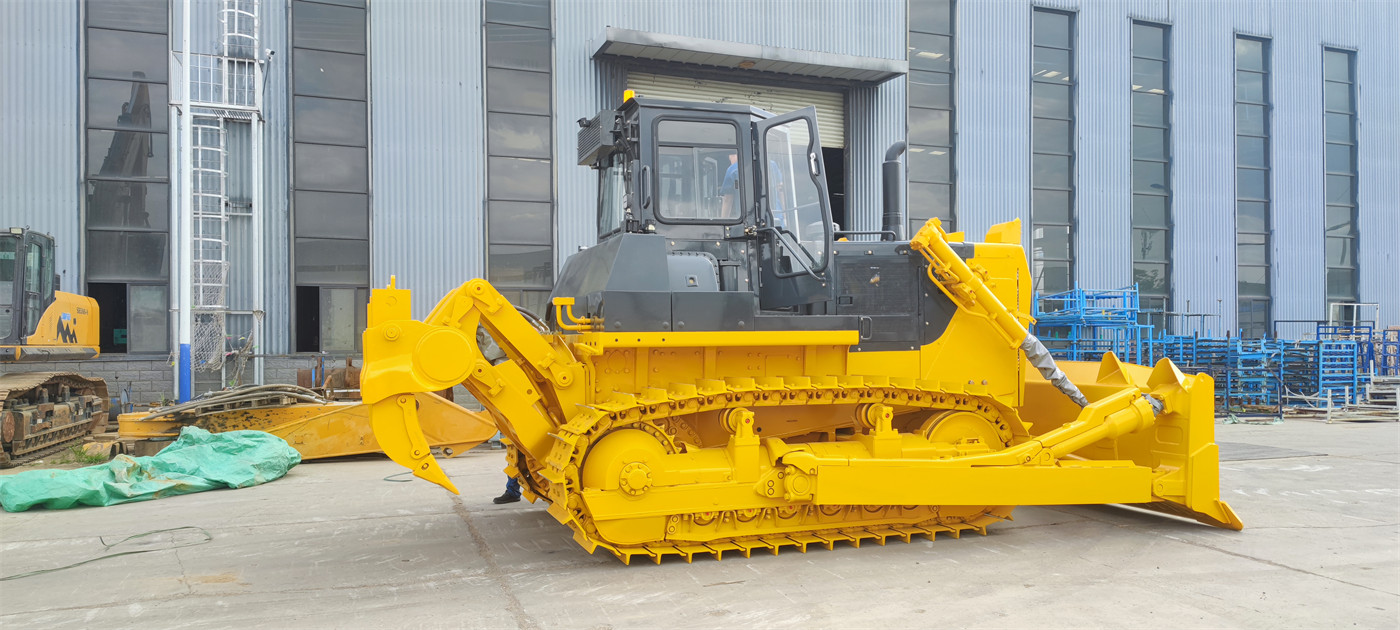
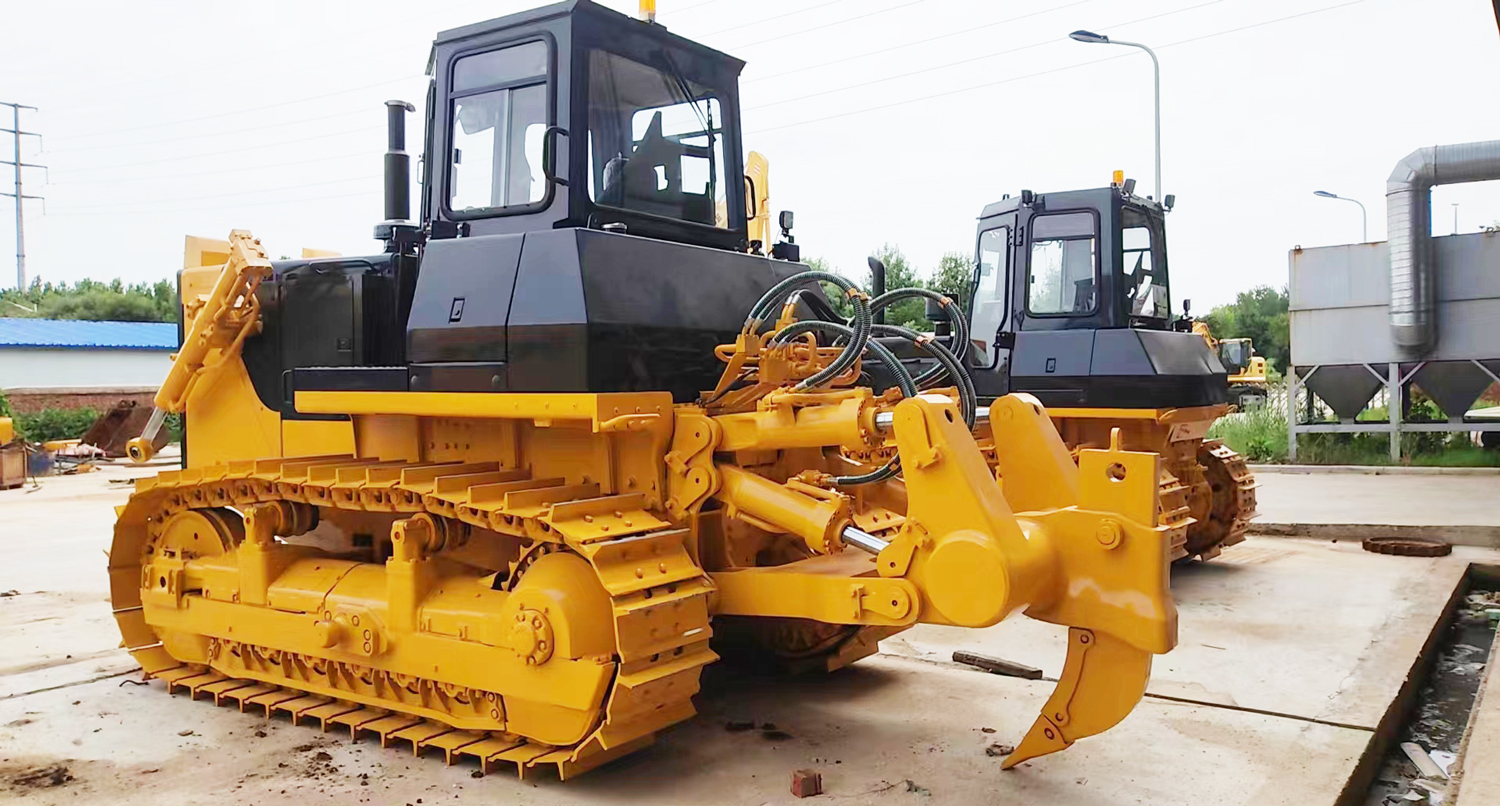
For subgrade fill excavation, the straight blade is suitable for conventional earth hauling; the U-blade data does not provide specific explanation for subgrade earthwork, so when selecting it, applicability should be confirmed with the supplier according to actual soil type and hauling organization. Regarding ripping, the data states that a three-shank ripper can be supplied, with a ripper lift height of 570 mm, and mentions that it can be used to break clay and frozen soil. If the borrow area is compacted clay or frozen soil, the ripping device should be included in the configuration discussion; if the soil is loose, the impact of adding this device on overall machine weight and work organization should be evaluated.
| Configuration Item | Content Listed in SD16 Data | Corresponding Excavation and Hauling Requirement |
|---|---|---|
| Engine | WP10, 131 kW/178 hp, rated speed 1850 rpm, China IV | Power reserve for heavy-load cutting and hauling |
| Operating weight | Standard version 17000 kg | Together with blade capacity and soil type, affects hauling stability |
| Blade | Straight blade standard; angle blade and U-blade optional | Select according to hauling method and material; options need confirmation |
| Ripper | Three-shank ripper, lift height 570 mm | Pre-ripping needs for clay and frozen soil |
| Tracks | Track shoe width 510 mm, ground contact length 2635 mm, ground pressure 58 kPa | Ground contact conditions for conventional subgrade and original ground passage |
Undercarriage and Passability: Look Separately at Conventional Subgrade Filling and Soft-Ground Sections
The SD16 standard version has a ground pressure of 58 kPa, track shoe width of 510 mm, ground contact length of 2635 mm and ground clearance of 400 mm. The data states that it has a relatively long ground contact length and high ground clearance for stable travel and site passability. For subgrade fill excavation, this set of data can serve as a reference for judging passage conditions on conventional original ground and backfill surfaces; however, if there are soft-ground sections with high moisture content in the borrow area, whether the 58 kPa ground pressure is suitable needs separate evaluation based on on-site bearing capacity.
The same product data also lists the super-wetland version SD16L, with a ground pressure of 22 kPa and track shoe width of 960 mm, for swamps and soft wetlands. This shows that undercarriage differences between versions of the same model are significant, and the ground contact data of one version cannot be applied to another during purchase. If a subgrade filling project encounters soft ground only in local sections, whether to use the standard version with operational measures or to adjust the version is a matter that needs confirmation based on the extent of soft ground and construction organization; this article does not draw a conclusion on behalf of the reader.
When Multiple Versions Coexist, First Lock in the Version Direction for the Project
The SD16 data lists multiple versions including standard, coal, extended, super-wetland, sanitation, desert and forestry logging. These versions correspond to different materials and site conditions and are not interchangeable on the same machine. Subgrade fill excavation and hauling usually starts by comparing the standard or extended version direction: the standard version has overall dimensions of 5140×3455×3024 mm, and the extended version 5241×3455×3025 mm; the latter is stated to be suitable for medium-distance continuous dozing and leveling on general engineering sites. The length difference between the two is small, but the version positioning differs, so the choice should be based on the project's haul distance and work organization.
The coal version is equipped with a coal blade, and the data clearly states it is for bulk material operations at power plants and port stockyards; it is not the default option for general subgrade earthwork excavation. Procurement documents should specify the required version and blade form to avoid substituting standard version data for the actual supplied configuration.
Boundary Items Still to Confirm Before Purchase
- Soil type and ripping needs: What soil type dominates the borrow area, whether a three-shank ripper is needed, and how work will be organized after ripping.
- Haul distance and slope: Normal one-way haul distance and length of heavy-load climbing sections; the data does not give tractive force or gradeability values, so corresponding working condition data should be requested from the supplier.
- Extent of soft ground: Whether soft ground exists in the borrow area and on the filling surface, and whether the 58 kPa ground pressure meets on-site bearing conditions.
- Emission and registration requirements: The data states compliance with China's national non-road machinery China IV emission standard, but specific local management requirements still need verification.
- Supply status of blades and attachments: The straight blade is standard, while angle blade, U-blade and ripper are optional configurations; quotations and delivery lists should itemize them.
- Daily inspection and maintenance: The data mentions that the fuel filter and air filter are arranged on the same side, lubrication points are exposed and side covers can be opened for daily inspection; specific inspection items, intervals and values should be based on the accompanying manual, and this article does not provide maintenance operation values.
Only after these conditions are clearly listed can the SD16's power, blade, undercarriage and multi-version data be compared to judge whether it enters the comparison scope for the project. If key conditions are missing, such as unclear soft-ground extent or a relatively steep haul slope, on-site data should be supplemented first before discussing configuration, rather than choosing the model first and adding justification afterward.